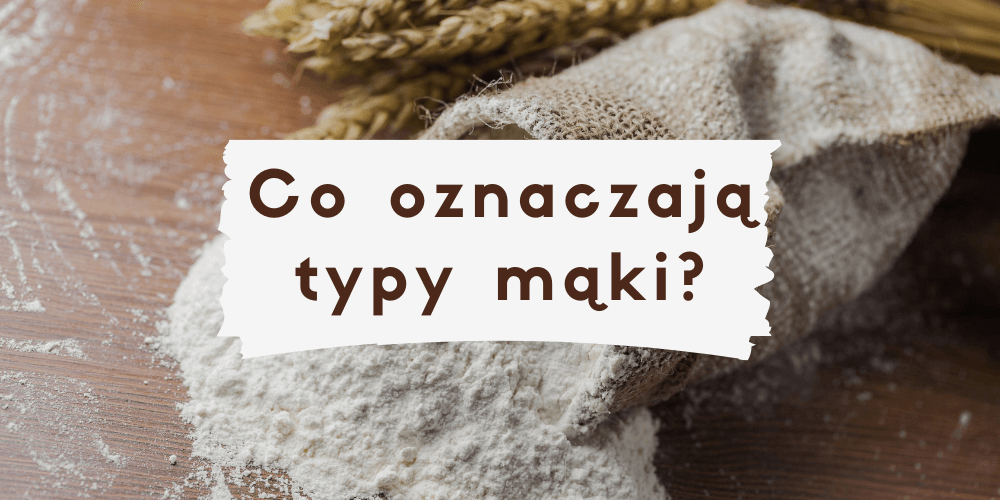
Have you ever wondered what the numbers on flour packages, such as 450, 500, or 2000, mean? This is the type designation, indicating the milling degree and mineral content. Choosing the right flour can have a huge impact on the final result of our baked goods—from delicate cakes, to fluffy rolls, to richly flavored whole-grain breads.

In this article, we'll explain what different types of flour mean, how they affect the texture and nutritional value of products, and how to choose the right type for your culinary needs. Whether you bake every day or are just starting out in home baking, knowing the types of organic flour will allow you to better understand its properties and consciously choose the best option for your recipes.
What is a flour type?
Flour type is a designation that indicates the amount of minerals remaining after burning 100g of dry product mass. In other words, it indicates the ash content, which is the mineral substances that remain after baking flour at high temperatures.
The higher the flour grade, the greater the amount of these ingredients, meaning the flour is less refined and contains more of the outer parts of the grain, such as bran and germ.
For example:
- Type 450 flour (e.g. cake flour) contains approximately 0.45% ash , which means it is very light and finely ground.
- Type 750 flour (e.g. bread flour) contains about 0.75% ash , is darker and richer in nutrients.
- Type 2000 flour (e.g. wholemeal) contains approximately 2% ash , which makes it wholegrain, rich in fiber and has a more pronounced flavor.
The flour type labeling system is primarily used in Poland and Europe, but other countries may have different classifications. In the United States and Great Britain, flours are typically labeled according to their intended use, for example, all-purpose flour or whole wheat flour , rather than by numerical type.

Flour type is crucial in baking—it influences the texture, flavor, and nutritional value of baked goods. Therefore, it's important to know which type works best in specific recipes. In the following sections, we'll explore how different types of flour are made and what uses they have in the kitchen.
How are different types of flour made?
The flour production process begins with cleaning and grinding cereal grains, but the processing method determines the final flour type. Depending on the degree of grinding and the amount of grain components removed, we obtain flours with varying fiber and mineral content, and baking properties.
1. How is flour made?
- Grain cleaning – the raw material, e.g. wheat or rye, is cleaned of dust, small stones and other impurities.
- Dehulling – in some cases, the grain is deprived of part of the fruit and seed coat, which affects the brightness and lightness of the flour.
- Grinding – the grain passes through a system of grinding rollers, which gradually grind it into a finer powder.
- Sifting – the resulting flour is sifted to separate larger particles, e.g. bran, from the finer, whiter flour.
- Mixing and standardization – mills often mix different batches of flour to obtain a product with specific parameters and baking properties.

2. What determines the type of flour?
The main factor influencing the type of flour is the degree of grinding , i.e. how much of the grain is retained in the final product:
- Low-grade flours (e.g. 450, 500, 550) are made mainly from the middle part of the grain, contain less bran and are light in color.
- Medium-sized flours (e.g. 750, 850, 1050) contain more minerals and are slightly darker in color.
- High-quality flours (e.g. 1400, 1850, 2000) have a large amount of bran and fiber, are darker and more nutritionally valuable.
It's worth knowing that the higher the grade of flour, the greater its water absorption, which affects the consistency of the dough. Light flours are better suited for light baked goods , while whole-wheat flours require longer kneading and more liquid .
In the next part of the article, we will take a closer look at the different types of flour and their uses in the kitchen.
The most popular types of flour and their uses
Choosing the right type of flour is crucial to the success of baked goods and dishes. Depending on their bran content, structure, and water absorption properties, different types of flour are suitable for different culinary purposes.
Below we present a breakdown of the most common flours and their uses.
1. Wheat flours
Wheat is the most commonly used grain for flour production, used in both confectionery and baking. Spelt flour, made from spelt, is also gaining popularity.
Here are the main types of wheat flour :
-
Flour type 450 (cake)
✅ The lightest and finest flour, perfect for light baked goods.
📌 Application: sponge cakes, cakes, pancakes, delicate cakes and filo pastry. -
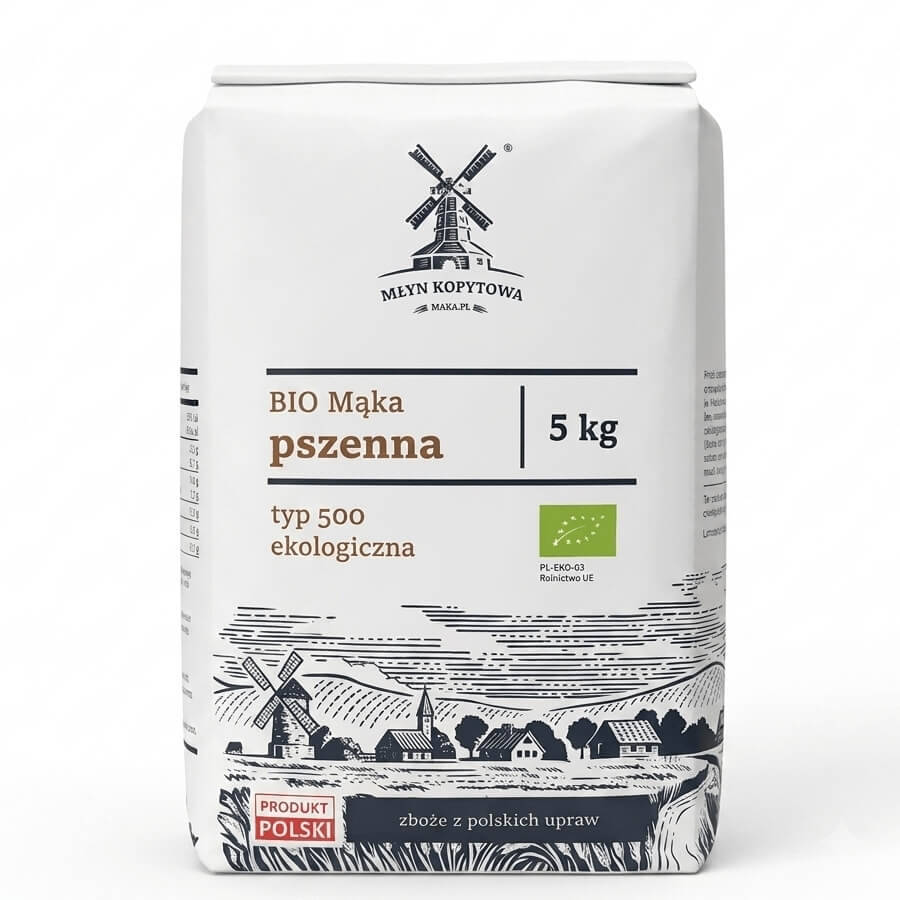
Flour type 500 (krupczatka, luxury, Wrocław, Poznań)
✅ Depending on the type, it may be slightly thicker than cake frosting, but still light.
📌 Application: shortcrust pastry, pierogi, dumplings, yeast cakes, angel wings, rolls.

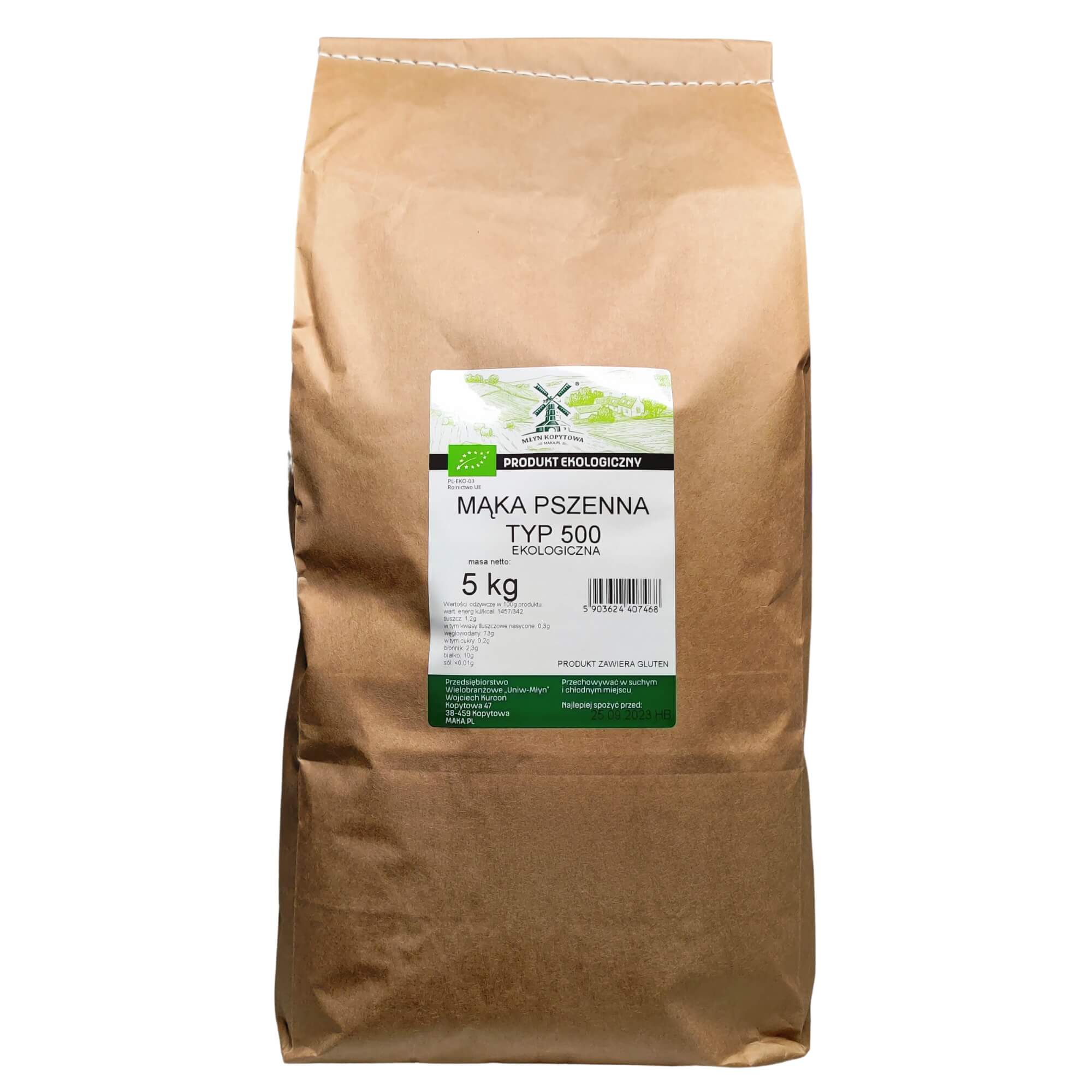
Wheat flour type 500 organic 5 kg - Kopytowa Mill
-
Flour type 650
✅ All-purpose flour, with a slightly higher mineral content and a slightly darker color.
📌 Application: wheat-rye bread, baguettes, yeast cakes, doughnuts. -
Flour type 750 (bread)
✅ It contains more bran, is more filling and gives the bread a characteristic structure.
📌 Application: wheat bread, whole grain rolls, sourdough cakes. -
Flour type 1050 (żurek)
✅ More whole grain, darker in color, often used for sourdough.
📌 Application: żurek soup, borscht, darker breads. -
Flour type 1400 (sieve)
✅ It comes from milling the whole grain, but still contains less bran than wholemeal flour.
📌 Application: wholemeal bread, flatbreads, country bread. -
Flour type 1850 (graham)
✅ It has a high fiber content, which makes the bread healthier and more filling.
📌 Application: graham bread, whole grain bread, muffins based on whole wheat flour. -
Flour type 2000 (whole wheat)
✅ Made by grinding the whole grain, including the bran and germ. Rich in fiber, magnesium, and iron.
📌 Application: sourdough breads, dietary baked goods, wholemeal dumplings.
2. Rye flour
Rye flour is denser and has a lower gluten content than wheat flour, so baked goods made with it are heavier and wetter.
-
Flour type 580 (light rye)
✅ Light and delicate, it gives the bread a slightly sour taste.
📌 Application: lighter rye breads, mixed wheat-rye breads. -
Flour type 720
✅ Popular in Polish baking, it has a darker color and higher nutritional content.
📌 Application: traditional rye bread, sourdough for żurek.

Rye flour type 720 BIO 5 kg - Kopytowa Mill
-
Flour type 1400 (sieved rye)
✅ Contains more bran than type 720, rich in fiber.
📌 Application: darker rye breads, flatbreads, homemade sourdoughs. -
Flour type 2000 (wholemeal)
✅ Whole grain, with a distinct flavor and heavy structure.
📌 Application: heavy sourdough rye breads, wholemeal bread.
3. Gluten-free and alternative flours
Flours derived from other cereals and plants are also increasingly being used. Their properties and uses differ from those of traditional wheat and rye flours.
-
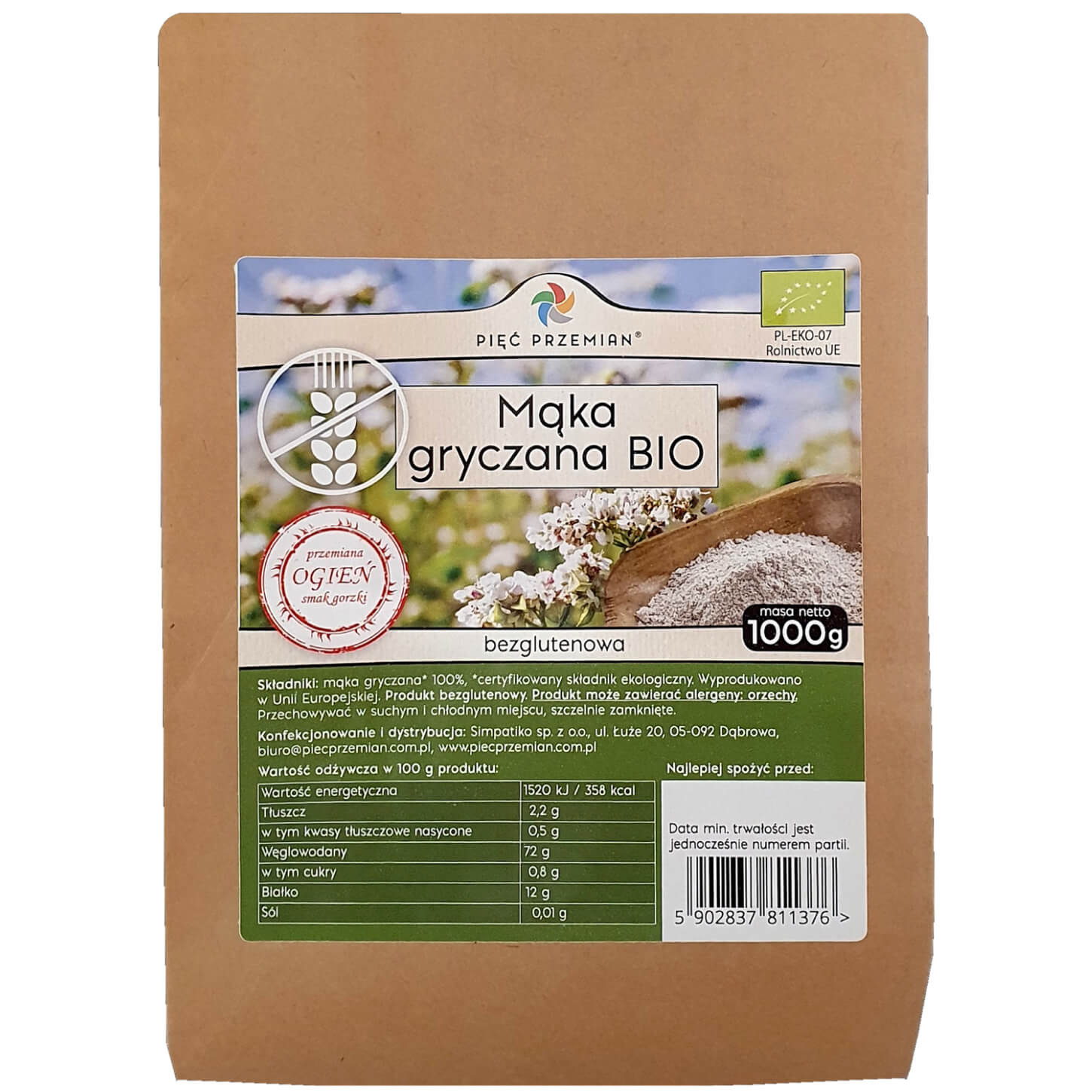
Buckwheat flour
✅ It does not contain gluten and has a slightly nutty flavor.
📌 Application: pancakes, blinis, gluten-free bread, dumplings.

Gluten-free whole grain buckwheat flour, organic, 1 kg - Piąty Przemiany
-
Coconut flour
✅ Rich in fiber, slightly sweet, absorbs moisture well.
📌 Application: gluten-free cakes, desserts, pancakes. -
Almond flour
✅ Naturally gluten-free, it gives baked goods lightness and moisture.
📌 Application: macaroons, keto baked goods, cake bases. -
Corn flour
✅ Gluten-free, gives a golden color to baked goods.
📌 Use: tortillas, cornbreads, breading. -
Rice flour
✅ Delicate, it works well as a substitute for wheat flour in a gluten-free diet.
📌 Application: rice dumplings, pancakes, gluten-free cakes.
The type of flour is crucial in the kitchen – it influences the consistency of dough, its ability to rise, and its final taste and nutritional value. When choosing the right flour, it's important to consider its intended use and the desired properties in your baked goods.
In the next chapter, we will discuss how to choose the right type of flour for specific recipes to ensure that our baked goods are always successful.
How to choose the right type of flour for a specific recipe?
Choosing the right type of flour is key to successful baking and cooking. Each type of flour has different properties – it varies in gluten content, water absorption capacity, and impact on dough structure. To avoid culinary failures, it's important to know which flour to choose for a specific application.
1. Flour for baking bread
Bread requires flour with a higher protein (gluten) content, which allows for the creation of an elastic dough and a well-developed structure.
✅ Top choices:
- Wheat flour type 750 – classic bread flour.
- Wheat flour type 1050 or 1400 – for darker, more aromatic bread.
- Rye flour type 720 or 1400 – for traditional sourdough rye bread.
- Spelt flour – an alternative to wheat flour, gives a slightly nutty flavor.

Wheat bread flour type 750 BIO 5 kg - Kopytowa Mill
❌ Not recommended:
- Cake flour (450) – too fine, too low gluten content.
- Gluten-free flours (rice, coconut, almond) – unless they contain binders, e.g. xanthan gum.
2. Flour for cakes and cookies
Pastry baking requires a fine flour that allows for a light and fluffy consistency.
✅ Top choices:
- Wheat flour type 450 (cake) – for sponge cakes, tarts, light cakes.
- Wheat flour type 500 (groats) – for shortcrust pastry, tarts, muffins.
- Light spelt flour – for delicate baked goods and sponge cakes.
❌ Not recommended:
- Bread flour (750, 1050) – cakes may turn out dense and heavy.
- Wholemeal flour (2000) – makes cakes dense and not very fluffy.
3. Flour for pancakes and dumplings
The dough for pancakes and dumplings should be elastic, easy to roll and not too hard after cooking.
✅ Top choices:
- Wheat flour type 500 (luxury, Poznań) – for pierogi and dumplings.
- Wheat flour type 650 – for more elastic pancakes.
- Spelt flour – for a healthier version of pancakes.

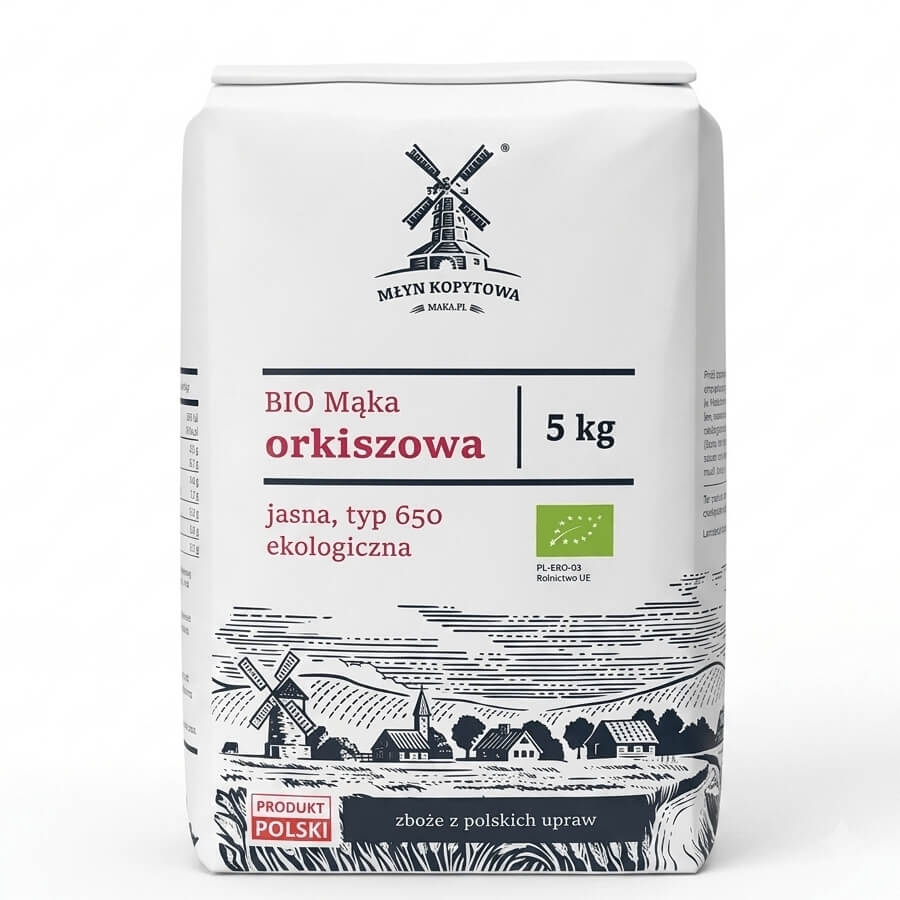
Light spelt flour type 650 BIO 5 kg - Kopytowa Mill
❌ Not recommended:
- Wholemeal flour – the dough may crumble and be less elastic.
4. Pasta flour
Homemade pasta requires flour with a high gluten content, which ensures its elasticity and proper structure.
✅ Top choices:
- Wheat flour type 500 (durum wheat semolina) – best for pasta.
- Wheat flour type 550 or 650 – for homemade pasta.
- Spelt flour – for whole grain pasta.
❌ Not recommended:
- Low-gluten flours (rice, coconut, almond) – the pasta will not stick together.
5. Flour for breading and thickening sauces
The flour used for breading and thickening should stick well and create a uniform consistency.
✅ Top choices:
- Wheat flour type 450 or 500 – for breading cutlets and pancakes.
- Corn flour – for crispy breading.
- Potato flour – for thickening sauces and soups.
❌ Not recommended:
- Wholemeal flours – cause lumps in sauces and are not suitable for breading.
6. Flour for gluten-free baking
People on a gluten-free diet can use alternative flours that require additional binding ingredients such as eggs, flaxseed or xanthan gum.
✅ Top choices:
- Buckwheat flour – for pancakes and fritters.
- Coconut flour – for cakes and cookies.
- Rice flour – for cakes, dumplings, pasta.
- Almond flour – for baking and desserts.
❌ Not recommended:
- Wheat and rye flours contain gluten.
Choosing the right type of flour has a huge impact on the final result of a dish. Remember that the lower the flour type number, the lighter and more delicate the baked texture, while the higher the number, the more nutritional value, but also the heavier and more compact the dough.
Whether we bake bread, cakes, or make homemade pasta, it's worth having several types of flour in the kitchen so that we can experiment and adapt them to different recipes.
Can you replace one type of flour with another?
It often happens that when cooking or baking, we run out of a particular type of flour. In such situations, you can try substituting another type, but it's worth remembering that this won't always be a perfect substitute. It's crucial to understand the differences between different flours and their impact on the final result.
1. Replacing wheat flour – is it possible?
Wheat flours can be swapped relatively easily, but their type and gluten content must be taken into account.
✅ Possible exchanges:
- Cake wheat flour (type 450) → luxury flour (type 500) – works well in cakes, although the baked product may be slightly less fluffy.
- Bread flour (type 750) → wheat flour 1050 – will produce darker, but equally tasty bread.
- Wheat flour type 500 → light spelt flour – a substitute with similar properties, but with greater nutritional value.

White spelt flour type 550 organic 1 kg - PROBIO
❌ Not recommended swaps:
- Cake flour (450) → whole wheat flour (2000) – the cake will be heavy and less fluffy.
- Bread flour (750) → cake flour (450) – the bread may not rise properly.
2. Can wheat flour be replaced with other flours?
Replacing wheat flour with other flours, such as gluten-free ones, requires considering their properties. Not all flours function equally – some absorb more moisture, while others don't form an elastic structure.
✅ Possible exchanges:
- Wheat flour → spelt flour – they can be used interchangeably in most recipes.
- Wheat flour → rye flour (with added wheat) – for bread, but may require longer rising.
- Wheat flour → gluten-free flour mix – for gluten-free baking, but you need to add a binder (e.g. xanthan gum, linseed).
❌ Not recommended swaps:
- Wheat flour → coconut flour (1:1) – coconut flour is very absorbent and requires more liquids.
- Wheat flour → almond flour – in most recipes the dough may fall apart.
3. How do I adjust the recipe when changing the flour?
If you substitute flour in a recipe, you'll need to adjust the liquid, fat, and baking time proportions. Here are some tips:
🔹 Wholemeal flours need more liquid – increase the amount of water or milk by 10-20%.
🔹 Gluten-free flours often require an additional binding ingredient – it is worth adding an egg, psyllium or xanthan gum.
🔹 Dough made with higher-quality flour needs a longer rising time – for example, wholemeal bread rises slower than white bread.
🔹 When replacing flour in shortcrust pastry, it is worth adding more fat – to maintain the appropriate structure.
Substituting flour in recipes is possible, but it doesn't always guarantee the same result. If you plan to substitute one type of flour for another, be aware of the differences in their structure and moisture absorption capacity.
It's worth experimenting, but for more demanding baked goods (e.g. bread, sponge cakes), it's best to stick to proven flour types.
Does the type of flour affect the nutritional value?
The type of flour has a huge impact on its nutritional value. The higher the typology number, the more minerals, fiber, and vitamins it contains, but also the more intense the flavor and darker the color. Lower-grade flours, on the other hand, are characterized by greater lightness and delicacy but are less nutritious.
1. Mineral content in different types of flour
The flour type number indicates the amount of mineral ash (mainly minerals such as calcium, magnesium, phosphorus, potassium, and iron) remaining after burning a flour sample. This means that flours with a higher type, such as 1850 or 2000, are richer in minerals than flours with a lower type (450, 500).
✅ Higher grade flours contain:
- More minerals, especially iron, magnesium and zinc.
- A larger amount of B vitamins (B1, B2, B6), which support the nervous system.
- Higher fiber content, supporting digestion.
❌ Lower-grade flours contain:
- Less minerals and fiber because they are more refined.
- Fewer vitamins because the milling and refining process removes the germ and bran, where they are most concentrated.
- More concentrated carbohydrates that raise blood sugar levels faster.
2. Fiber in different types of flour
Dietary fiber is a key dietary component that supports digestive health. It is found in high amounts in whole grains, and its content in flour depends on how the grain is processed.
🔹 Whole grain flours (type 1850, 2000) – contain a lot of fiber, which aids digestion, regulates blood sugar levels and gives a longer feeling of satiety.
🔹 Low-grade flours (450, 500) – have a minimal amount of fiber, making them easily digestible, but less filling.

A diet high in fiber reduces the risk of cardiovascular disease, supports weight control and improves intestinal peristalsis.
3. Glycemic index of flour
The glycemic index (GI) measures how quickly blood sugar levels rise after consuming a given food. The type of flour has a significant impact:
✅ Higher-quality flours (whole grain, whole wheat) have a lower glycemic index – they contain more fiber, which slows down the absorption of sugars and provides a longer feeling of satiety.
❌ Light flours (type 450, 500) have a high glycemic index - the sugars they contain quickly raise blood glucose levels, which can lead to sudden energy spikes and drops.
People with diabetes or insulin resistance should choose whole grain flours, which help maintain stable blood sugar levels, or avoid this product altogether.
4. Caloric content of different types of flour
The caloric content of flour does not differ significantly between types – both white and whole grain provide approximately 340-370 kcal per 100 g . However, the significant difference lies in the nutritional composition:
🔹 High-quality flours – more fiber and protein, which makes them more filling and healthier.
🔹 Low-fat flours – more digestible carbohydrates that can cause a quick feeling of hunger.
If you want a filling and nutrient-rich diet, whole wheat, graham and whole grain flours are a better choice.
The type of flour has a significant impact on its nutritional value. The higher the number, the more minerals, fiber, and vitamins, but also the more intense the flavor and the heavier the texture. Light flours (450, 500) are easily digestible and well-suited for delicate baking, but they have less nutritional value. Whole-grain flours, on the other hand, provide more fiber, which benefits intestinal health and stabilizes blood sugar levels.
Choosing the right type of flour should depend not only on the recipe, but also on your individual health and dietary needs.
Summary
Choosing the right type of flour is crucial for both the quality of baked goods and the nutritional value of the food consumed. The higher the flour's typological number, the more minerals, fiber, and vitamins it contains, but also a more pronounced texture and darker color. Low-type flours, on the other hand, are light, delicate, and ideal for fluffy baked goods, but have lower nutritional value.
When choosing flour, it's worth considering its intended use – some types are suitable for bread, others for cakes, and still others for pancakes or pasta. If you care about a healthy diet rich in fiber and minerals, whole-wheat flours are a better choice. However, for traditional baked goods requiring a fluffy consistency, light, lower-quality flours are more suitable.
A conscious approach to flour selection will not only allow you to prepare tastier dishes but also promote good health and provide your body with valuable nutrients. I hope this article helped you understand the flour type labels and their meanings. Now it will be easier for you to choose the right flour for your culinary and dietary needs!