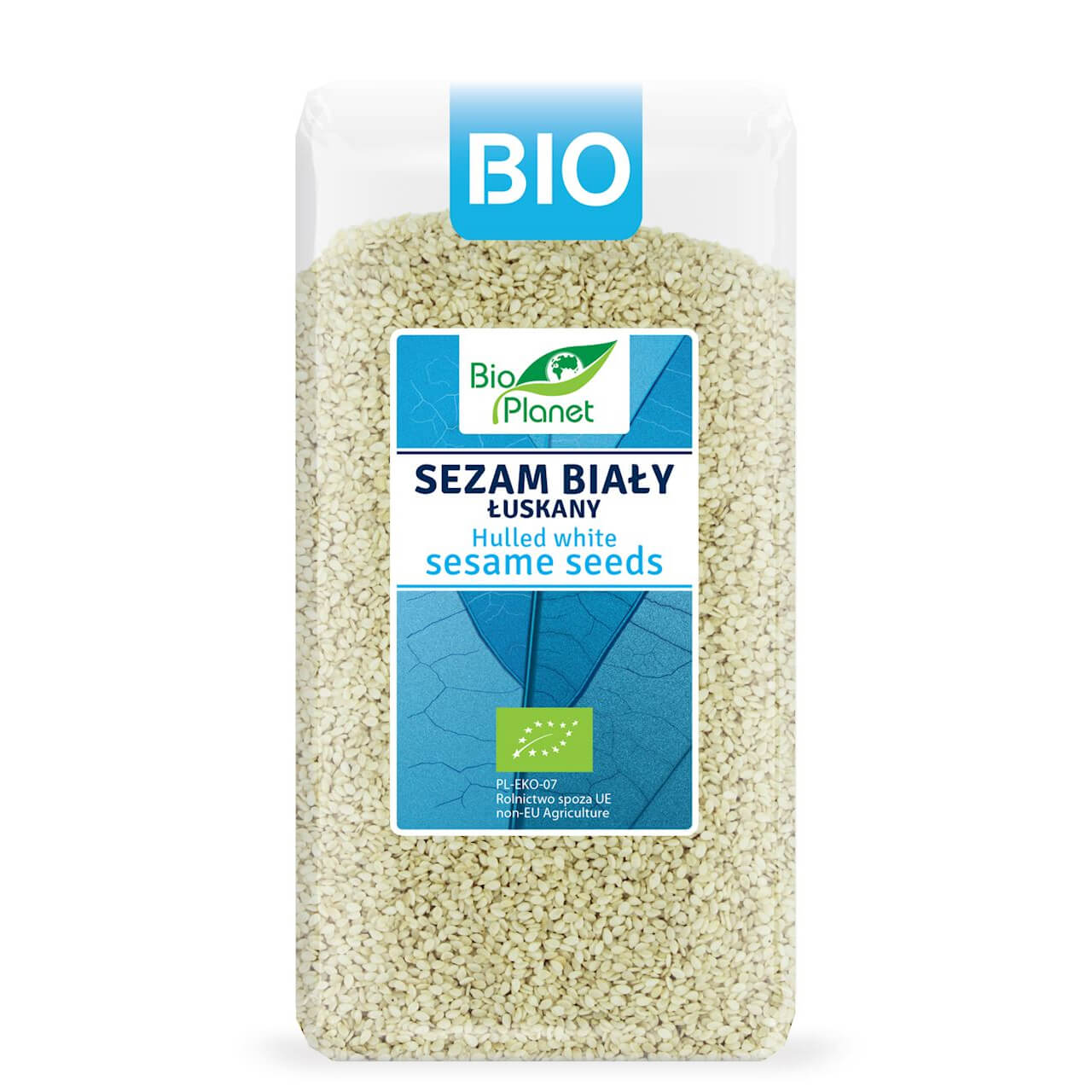
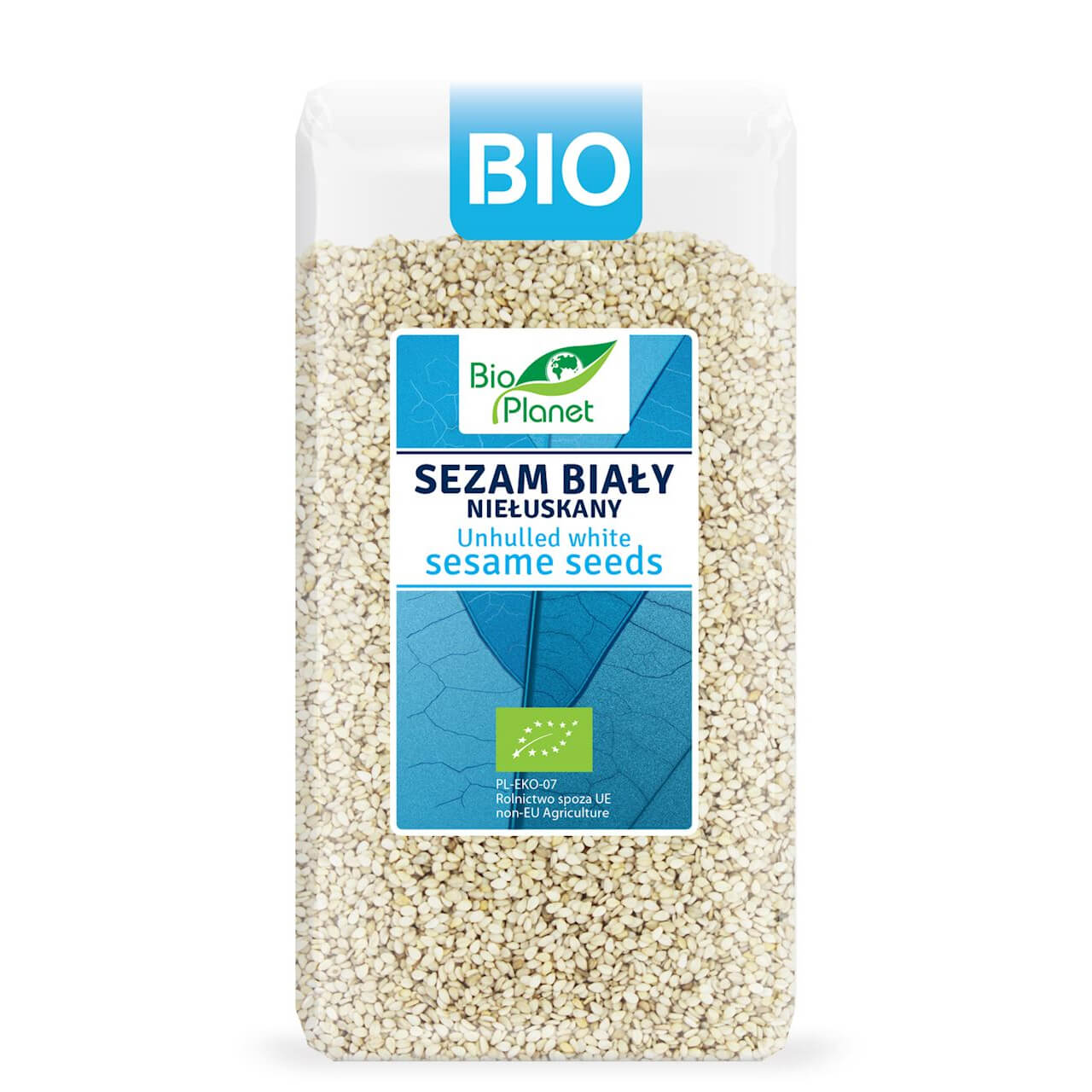
Organic sesame is one of the oldest oilseeds used in cooking – it has been with people for thousands of years, and today it finds its place in almost every cuisine around the world: from Middle Eastern hummus, through Japanese sushi, to European bread and pastries. Small but nutrient-dense, this seed works both as a flavour additive and as a raw material for producing pastes and snacks.
What is sesame and where does it come from?
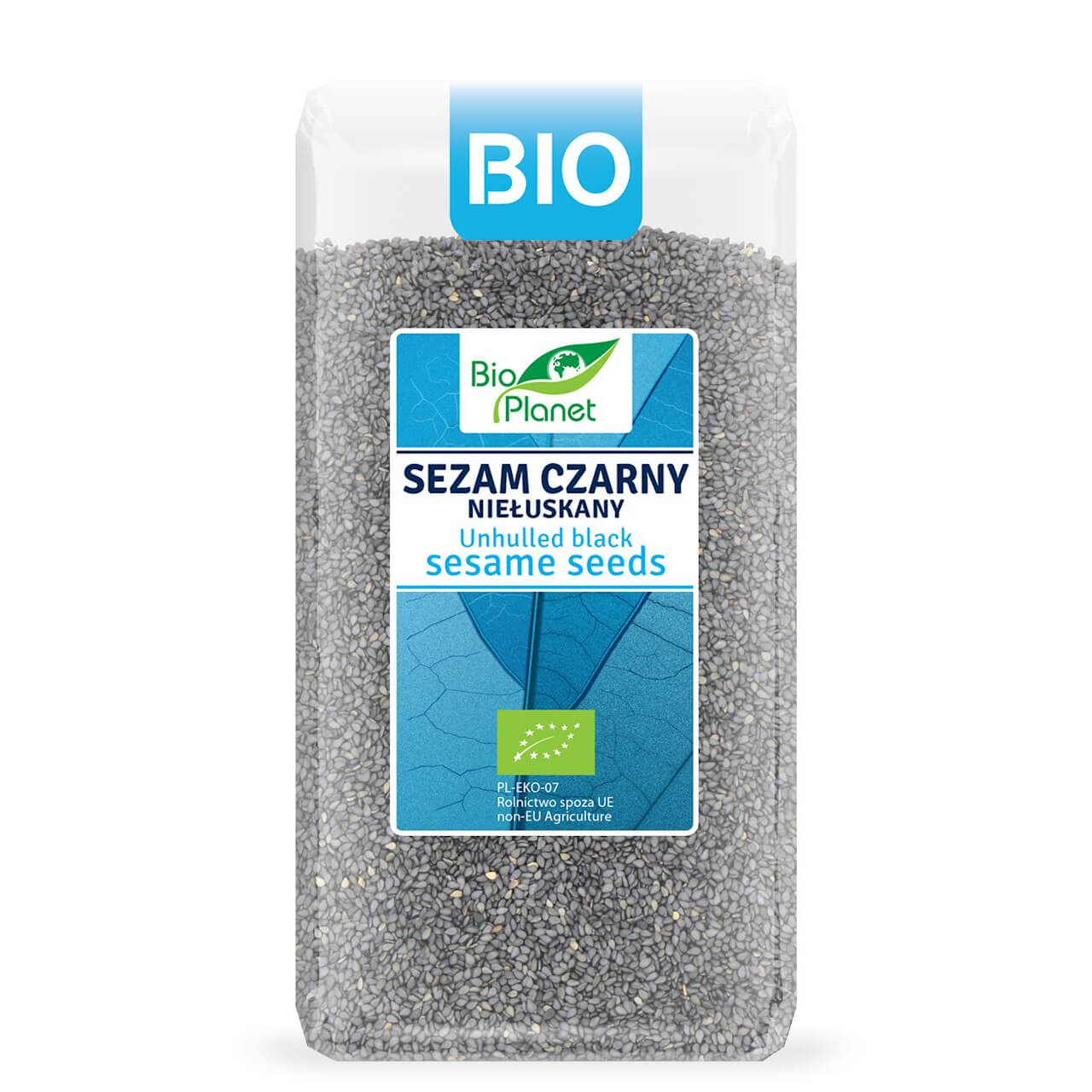
Sesame (Sesamum indicum) is an oilseed plant cultivated for thousands of years in Asia and Africa, now also growing in the Mediterranean region. Sesame oil is pressed from its seeds, and tahini paste, a base for hummus and halva, is prepared. Commercially available sesame comes in white (hulled and unhulled) and black varieties – they differ in processing method, taste, and appearance, rather than the plant species itself.
Properties and uses of sesame
Sesame seeds are a source of plant protein, fibre, and unsaturated fatty acids. They also contain calcium, magnesium, iron, zinc, copper, manganese, phosphorus, and selenium, as well as B vitamins and vitamin E. Sesame is also one of the richest plant sources of lignans – alongside flaxseed, it provides the most among commonly available seeds.
In the kitchen, you can use sesame in many ways:
as an addition to baked goods, muesli, salads, and sandwich spreads
for breading meat, fish, and vegetables – it adds crispiness
as a base for homemade tahini, hummus, or halva
black sesame is traditionally sprinkled on sushi and Asian dishes
Hulled sesame has a more delicate taste and lighter colour – the hull, which can be slightly bitter, has been removed. Unhulled sesame retains its full seed coat, thus containing more fibre and having a more distinct, slightly nutty flavour. Black sesame stands out with a more intense aroma and is traditionally used in Asian cuisine, including for decorating sushi. The choice of variant mainly depends on culinary application and individual taste preferences.