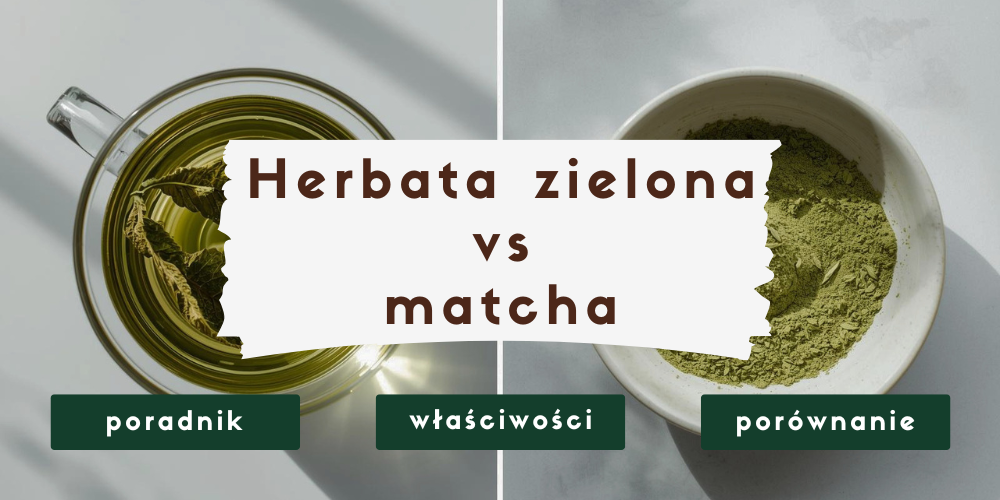
Green tea and matcha come from the same plant, but they are completely different products. Matcha is the finely ground entire leaf from plants shaded before harvest—it delivers more caffeine, significantly more L-theanine, and more antioxidants per serving than standard brewed green tea. Green tea, in turn, offers a wider spectrum of flavors, a lower price, and is easier for daily use. Neither of these forms is objectively better—the choice depends on what you're looking for in your cup.
In this article, you will find a complete comparison of both beverages: from botany and history, through detailed composition and properties, to a practical brewing guide and shopping tips. The article is intended for anyone who wants to consciously choose between green tea and matcha—whether they are just starting their journey with these beverages or are seeking in-depth knowledge.
1. Where do green tea and matcha come from? Shared roots, different paths
1.1. Camellia sinensis — one plant, many products
Green tea and matcha come from the same plant—Camellia sinensis—and are, botanically speaking, the same raw material. The difference lies solely in the method of cultivation, harvesting, and processing. It's like the same grape variety yielding completely different wine depending on the soil, microclimate, and the winemaker's touch.

Camellia sinensis is an evergreen shrub or small tree from the Theaceae family, naturally found in Southeast Asia. It is cultivated on plantations in China, Japan, India, Sri Lanka, and many other countries. Black tea, green tea, white tea, oolong, pu-erh—all come from the same plant. What differentiates them is the degree of oxidation (fermentation) and the leaf processing methods.
1.2. History of green tea in China and Japan
The history of green tea dates back over 4000 years. Chinese tradition attributes its discovery to Emperor Shennong, who—according to legend—in 2737 BCE, accidentally came across leaves falling into boiling water. Regardless of myths, historically documented tea cultivation in China dates back to the Han Dynasty (206 BCE – 220 CE).
Tea arrived in Japan through Buddhist monks—Eisai was the first to bring it in 1191, returning from China. He popularized tea drinking in Japanese Zen monasteries as a practice to aid meditation.
In China, green tea remains an everyday beverage, drunk by peasants and businessmen alike. In Japan, it evolved in a different direction—it became part of a ritual, a ceremony, a philosophy.
1.3. History of matcha — Zen culture, tea ceremony, and the path to Europe
Matcha originated as a by-product of the tea brewing method that Zen monks brought from China to Japan in the 12th century. The technique of whisking powdered tea (tencha) in a bowl with hot water—instead of brewing and straining it—resulted in what we know today as matcha. In the 14th-16th centuries, the art of the tea ceremony, chanoyu, developed in Japan, codified by Master Sen no Rikyū, and has survived in this form to this day.
Matcha only reached Europe in the late 20th century, with its global boom occurring between 2010 and 2020. Today, matcha lattes can be ordered in cafes worldwide, and green cookies, ice creams, and cakes have gained a separate segment of the culinary market. Its popularity in the Western world is partly due to its Instagrammable aesthetic and partly to the growing interest in low-caffeine beverages with a focus-enhancing effect—as an alternative to coffee.
1.4. How loose-leaf green tea is made — harvesting, fixation, drying
Green tea production varies by country. The crucial stage is fixation—the rapid halting of the oxidation process immediately after harvest. In China, this is done by pan-firing leaves in a hot wok or drum (the shaqing method), which gives the tea its characteristic, slightly nutty or grassy-sweet flavor. In Japan, leaves are steamed, which typically gives Japanese teas a more intense, marine, "green" flavor.
After fixation, the leaves are rolled into various shapes (needles, pearls, flat sheets) and then dried. Individual varieties—sencha, gyokuro, gunpowder, dragon well—differ in cultivation method, harvest time, rolling degree, and production region. What they have in common is that the leaves remain whole or in larger fragments—they are not ground into powder.

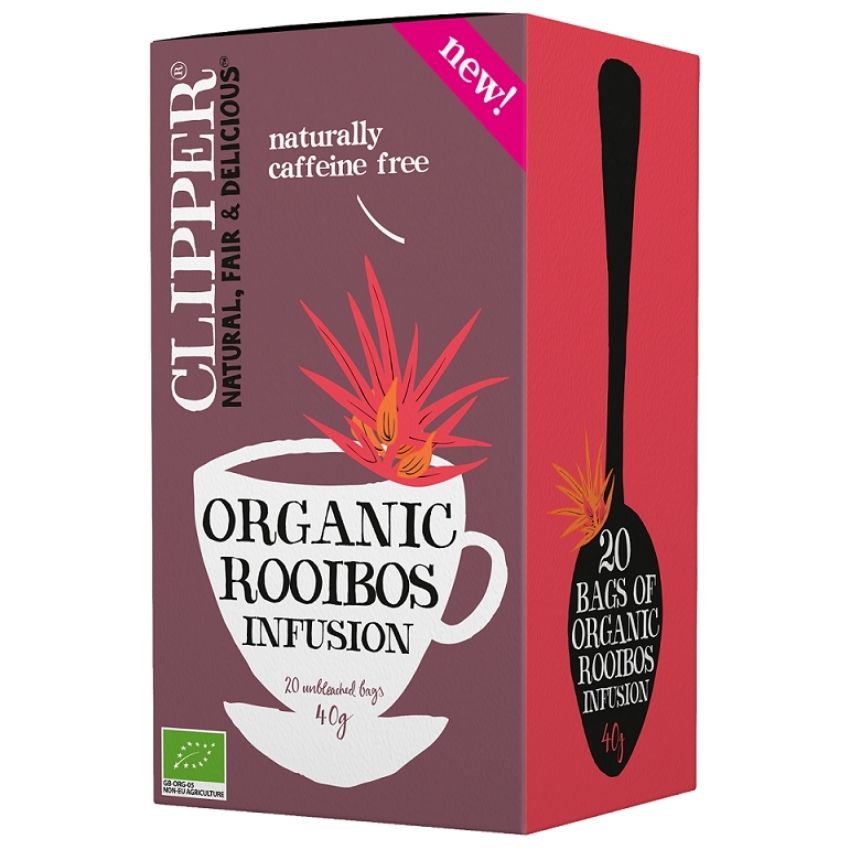
Organic Peach Flavored Jasmine Green Tea (20 × 2g) 40g - Clipper
1.5. How matcha is made — shading, tencha, stone grinding
Matcha production begins 3–4 weeks before harvest, when growers cover the bushes with dark cloth or mesh, reducing sunlight access by 70–90%. This is a crucial step: deprived of full sun, the plants intensely produce chlorophyll and L-theanine to "reach" for every available photon. The result is exceptionally vibrant green leaves and a higher concentration of amino acids.
After harvest, the leaves are steamed (like Japanese green tea), dried, and then sorted and stripped of their central veins and stems. This semi-finished product is called tencha. Only then does tencha go into stone mills (ishiusu), which grind it slowly to avoid heating, into a silky powder with particles 5–10 microns in size. Grinding 30 grams of matcha takes the stones from 30 minutes to an hour, depending on the stone and desired granulation.
The end result is a powder that is not brewed and strained, but suspended in water—so we consume the entire leaf, not just its extract.
2. How do the compositions of green tea and matcha differ?
2.1. Caffeine — how much is there and why matcha acts differently than coffee
Matcha contains more caffeine than typical brewed green tea in a tea bag, but less than an espresso. One serving of matcha (2 g powder) contains about 60–70 mg of caffeine. For comparison: a cup of brewed green tea leaves provides 20–40 mg of caffeine depending on the variety, water temperature, and brewing time, while a single espresso contains 60–80 mg.
However, the numbers alone don't tell the whole story. Caffeine in matcha is absorbed more slowly and evenly than in coffee, leading to a milder, longer-lasting stimulating effect without the characteristic "crash." This is primarily due to L-theanine—an amino acid naturally present in tea, which modulates the action of caffeine at the neurotransmitter level.
If you're curious how caffeine compares to other beverages, read our article The properties of coffee – friend or foe of the human body?
2.2. L-theanine — the amino acid responsible for calm energy
L-theanine is an amino acid found almost exclusively in the leaves of Camellia sinensis and in trace amounts in some mushroom species (e.g., Xerocomus badius). In regular green tea, its content is 5–10 mg per cup. In matcha—due to the shading of the bushes and the consumption of the entire leaf—there is significantly more: from 20 to even 45 mg per serving.
L-theanine crosses the blood-brain barrier and increases alpha wave activity in the brain—the same waves that dominate during meditation or deep relaxation while maintaining alertness. In combination with caffeine, it creates a synergistic effect that researchers describe as a state of calm concentration: without excessive stimulation, without hand tremors, without racing thoughts. People who experience tension or difficulty falling asleep after coffee often find that matcha affects them completely differently.
2.3. Catechins and EGCG — how shading affects polyphenol content
Catechins are the main group of polyphenols in tea, responsible for its antioxidant properties. The most important of these is EGCG (epigallocatechin gallate)—a substance that is the subject of numerous scientific studies concerning the protection of cells against oxidative stress.

Here an interesting correlation arises: shading the bushes reduces the content of catechins, because their synthesis is driven by sunlight. Matcha therefore has proportionally less EGCG than green tea grown in full sun—but since we consume the entire leaf (not an extract), the total amount of catechins in a cup of matcha still exceeds that of brewed tea, from which only a portion of the compounds passes into the infusion. It is estimated that matcha delivers about 3 times more EGCG than standard brewed green tea.
2.4. Chlorophyll and vitamins — why matcha is green
Matcha's intensely green color comes from its exceptionally high concentration of chlorophyll—a pigment the plant produces in excess during shading, trying to capture as much available light as possible. Green tea brewed from leaves has a much paler, yellowish-green brew color.
Chlorophyll is not the only micronutrient we gain from shading. Matcha also contains more vitamin K, vitamin C, and beta-carotene than standard green tea. Because we consume the entire ground leaf, and not just the infusion, we also absorb fiber, small amounts of protein, and trace amounts of minerals. These are not quantities that will revolutionize a daily diet, but they represent a real difference compared to traditionally brewed tea.
2.5. Comparative table of composition: green tea vs. matcha
| Ingredient | Green Tea (1 cup, ~200 ml) |
Matcha (1 serving, 2 g powder) |
|---|---|---|
| Caffeine | 20–40 mg | 60–70 mg |
| L-theanine | 5–10 mg | 20–45 mg |
| EGCG (catechins) | 50–100 mg | 100–200 mg |
| Chlorophyll | low | very high |
| Calories per serving | ~2 kcal | ~5–7 kcal |
| Form of consumption | extract (infusion) | whole leaf (suspended) |
Scroll right to see the full table (on mobile devices)
Values are approximate — they depend on the variety, raw material quality, and preparation method.
3. Health benefits — what do studies say?
Green tea is one of the best-researched beverages in the world. However, the vast majority of studies focus on individual active ingredients—EGCG and L-theanine—not always the entire beverage as a product. It's worth keeping this in mind when reading health claims on packaging.
3.1. Antioxidant action and cell protection
EGCG is one of the most powerfully studied plant antioxidants. It neutralizes free radicals that damage cells in processes associated with aging and chronic inflammation. Studies on the antioxidant capacity of matcha suggest that it may surpass products such as goji berries or dark chocolate, although direct comparisons depend on the measurement method used (ORAC, FRAP).
Loose-leaf green tea also contains significant amounts of catechins—the difference is that in brewed tea, only a portion of the active ingredients passes into the water, while when drinking matcha, we consume them in their entirety.
3.2. Impact on concentration and focus — the synergy of caffeine and L-theanine
The combination of caffeine and L-theanine is one of the better-documented nootropic duos in scientific literature. A review of studies published in Nutritional Neuroscience (2008, Biological Psychology) showed that the simultaneous consumption of both substances improved performance on attention tests, information processing speed, and task accuracy compared to placebo and each substance administered separately.
In practice, this means that matcha—due to its high L-theanine content—can support focus and alertness without the anxiety sometimes associated with coffee. Green tea acts similarly, though more mildly due to lower concentrations of both substances.
If you are looking for natural ways to improve energy and concentration, you might also want to check out our article Constant fatigue and lack of energy – causes and ways to regain vitality.
3.3. Metabolism support and weight management
Green tea catechins, especially EGCG, have been the subject of many studies regarding their effect on fat metabolism. A meta-analysis published in the International Journal of Obesity (Hursel et al., 2009) indicates that green tea extracts may slightly increase thermogenesis and fat oxidation—however, the effect is moderate and depends on individual sensitivity to caffeine and overall lifestyle.
Green tea and matcha are not weight loss remedies. However, they can be a valuable part of a diet, replacing sugary drinks and providing antioxidants with minimal caloric intake. In the context of metabolism, the beverage itself is less important than its place in the overall pattern of diet and physical activity.
3.4. Effects on the cardiovascular system
Regular consumption of green tea has long been associated with a lower risk of cardiovascular diseases in Asian populations. A prospective cohort study conducted in Japan (Kuriyama et al., 2006, JAMA) on a group of over 40,000 adults showed a link between green tea consumption and lower mortality from cardiovascular causes—with 5 or more cups per day. This study was observational, so no causal conclusions can be drawn from it.
The mechanisms considered here include the beneficial effect of EGCG on blood vessel elasticity and lipid profile — however, none of these actions are covered by an EFSA-approved health claim for green tea.
3.5. Is matcha healthier than green tea? — an honest answer
Matcha provides more active ingredients per serving — more L-theanine, more EGCG, more chlorophyll. In this respect, it is more "concentrated." However, this does not mean that good loose-leaf green tea is a worse choice for health — especially if you drink several cups a day.
More important than the form of the beverage is regularity and raw material quality. Matcha from a cheap, oxidized batch with a yellowish powder color may provide fewer active ingredients than fresh sencha from a good source. If you enjoy the ritual of brewing loose-leaf tea — green tea is an excellent choice. If you are looking for the maximum concentration of ingredients in one small serving or want to experiment culinarily — matcha has an advantage.

Green Matcha Tea Powder BIO 100 g - Bio Planet
4. Taste, Aroma, Experience, and Cultural Dimension
4.1. Green tea flavor profile — from grassy to sweet umami
Green tea is not one flavor, but a whole spectrum — dependent on the variety, growing region, harvest time, and processing method. Japanese sencha has a distinct, fresh, slightly marine character with a hint of grass and delicate sweetness. Gyokuro — shaded like matcha — is creamy, intense, and sweet, with strong umami. Chinese longjing (Dragonwell) is roasted, mild, with a nutty aftertaste. Gunpowder — rolled and fired — yields a heavier, smoky brew.
A common denominator of good green tea is umami — the fifth taste, induced by amino acids, primarily L-theanine and glutamate. The more L-theanine, the sweeter and creamier the tea. Bitterness, if it appears, is usually a sign of too high water temperature or too long brewing time — not a characteristic of the tea itself.
4.2. Matcha flavor profile — umami, bitterness, and creaminess
Matcha has a more intense and complex flavor than brewed green tea. Good ceremonial grade matcha is creamy, distinctly sweet with strong umami and only a delicate, pleasant bitterness in the finish. Bad matcha — old, oxidized, or from low-quality raw material — tastes harsh, astringent, and has a distinct, unpleasant bitterness that lingers in the mouth.
Culinary grade matcha is more bitter and less sweet — intentionally so, as its purpose is to cut through the taste of milk, sugar, or cake. In lattes or baked goods, this characteristic green color and slight bitterness are desirable. Drunk traditionally, without milk and sugar, culinary matcha can be too harsh for those unaccustomed to it.
4.3. Why matcha quality is of paramount importance for taste
The difference in taste between matcha costing PLN 15/100g and PLN 80/100g is clear and indisputable. Cheap matcha often comes from later harvests (second or third cut of the season), from unshaded plantations, or from blends of raw materials of various origins. Older or poorly stored powder oxidizes and yellows — the taste becomes flat, and the bitterness is difficult to mask even with milk.
Good ceremonial grade matcha comes from the first spring harvest (ichibancha), from plantations shaded for at least 3–4 weeks, and is stone-ground from tencha without leaf veins. The color should be intensely green, almost emerald. The powder should be silky to the touch, not grainy. The aroma should be fresh, vegetal, and slightly sweet.
4.4. For whom is green tea, for whom is matcha?
Loose-leaf green tea will work better if you appreciate the brewing ritual, like to explore different varieties and flavors, want to drink more than one or two cups a day, or are sensitive to caffeine. It's also a cheaper way to regularly benefit from tea.
Matcha is a better choice if you are looking for a more pronounced focus effect, like creamy drinks, want to use tea as a culinary ingredient (lattes, smoothies, baked goods), or care about the maximum L-theanine and EGCG content in one serving. It is also convenient for travel — just a teaspoon of powder.
In our store, people who are looking for an alternative to their morning coffee or want to add a second drink without excessive caffeine during the day most often reach for matcha. Loose-leaf and bagged green tea, on the other hand, are popular among customers who treat it as an everyday, multifunctional beverage.
4.5. Tea ceremony and cultural dimension — can it be practiced at home?
Matcha is inextricably linked with the Japanese tea ceremony chanoyu (literally: "hot water for tea"). Codified in the 16th century by master Sen no Rikyū, this ceremony expresses the philosophy of wabi-sabi — the beauty of imperfect, ephemeral, and simple things. Every movement — from scooping powder with a bamboo spoon chashaku, through whisking matcha with a bamboo whisk chasen, to serving the bowl chawan to a guest — has an established meaning and form.
In the Zen tradition, tea was primarily a tool for concentration: monks drank it before long meditation sessions to stay alert without drowsiness. Matcha was for centuries an elite drink — available in monasteries and at court, not among ordinary people.
The Chinese green tea brewing culture — gongfu cha — proceeds differently: numerous, short infusions of the same leaves in a small teapot gaiwan, tasting subsequent "passages" of water through the leaves, observing the evolution of taste. This is more a meditation through the senses than a ritual of gestures.
Can the tea ceremony be practiced at home? Yes — and you don't need Japanese utensils worth hundreds of zlotys for it. All you need is a bowl, a bamboo whisk, and a few minutes without a phone. The essence of both chanoyu and gongfu cha is presence — full attention directed to what is happening in the cup and in that moment. In this sense, anyone can practice the tea ceremony, even by drinking tea from a teabag by the window.

Green Tea BIO (20 × 2 g) 40 g - Clipper
5. How to brew green tea and matcha? A practical guide
5.1. Loose-leaf green tea — temperature, time, proportions, subsequent infusions
The biggest mistake when brewing green tea is using water that is too hot. Temperatures above 85°C destroy L-theanine and release an excessive amount of tannins, making the brew bitter and astringent — and that's how green tea tastes to many people who have never liked it. The optimal temperature is 70–80°C for most Japanese teas, 75–85°C for Chinese teas.
Infuse the leaves for 1–2 minutes for the first brew — no longer. One serving of good quality green tea leaves is usually suitable for 2–4 subsequent infusions, each slightly longer than the previous one. The second and third infusions often taste better than the first — the leaves open up, the flavor mellows, and umami intensifies.
Proportions: approximately 2–3 g of leaves per 150–200 ml of water. For gyokuro and high-quality senchas, you can use more leaves and a shorter time — the tea will be creamier.
5.2. Bagged and pressed green tea — when is it a sensible choice?
Bagged tea is a compromise between convenience and quality — but it doesn't automatically mean a bad choice. Good quality bagged tea with a BIO certificate, from a reputable manufacturer, is definitely better than anonymous powder in a paper envelope.
Pressed tea, on the other hand, is a product made from pressed leaves, which is easy to dose and withstands transport well. It works well for travel and in the office. Brewing parameters are the same as for loose-leaf tea — low temperature and short brewing time are still the number one rule.

Green tea in cubes 125 g - Meridian
5.3. Ceremonial grade matcha — chasen, chawan, usucha, and koicha
Traditional matcha preparation requires three elements: a chawan bowl, a bamboo chasen whisk, and a bamboo chashaku spoon. A metal whisk or blender cannot replace a chasen — at least not in the traditional sense, although in practice they are acceptable.

Usucha (thin tea) is the basic, everyday form: 1.5–2 g of powder (approx. 1 teaspoon) per 60–80 ml of water at 70–75°C. Sift the powder, pour water over it, and whisk with the whisk in an "M" or "W" motion for 20–30 seconds until a thick foam forms. There is no place for boiling water here — matcha at too high a temperature loses its taste and turns olive green.
Koicha (thick tea) is a ceremonial form reserved for the highest quality matcha: 3–4 g of powder per 40–50 ml of water, slowly whisked without foam. The taste is intense, creamy, distinctly sweet — almost like a liquid chocolate fondant, but green. Koicha is an experience for those who have mastered usucha and want to go deeper into the subject.
5.4. Culinary grade matcha — lattes, smoothies, baked goods
Culinary matcha is ground coarser and has a more intense, bitter note — which is why it pairs well with milk, sweetener, and other ingredients. For matcha latte: mix 1.5–2 g of powder with 30 ml of hot water (70-75°C) into a smooth paste, then add frothed plant or cow's milk. Without first dissolving the powder in a small amount of water, matcha will form lumps.
In baked goods and smoothies, matcha is resistant to higher temperatures to a limited extent — the taste changes slightly during baking, but the color and some of its properties remain. For green smoothies, just 1 g of powder mixed with a small amount of liquid before adding the other ingredients is enough.
5.5. Common brewing mistakes
Too hot water is mistake number one — it applies to both green tea and matcha. The second is brewing loose-leaf tea for too long, which extracts tannins and makes the infusion astringent. The third mistake — specific to matcha — is not sifting the powder before adding water: the lumps that form are then almost impossible to break up with a whisk.
It is also worth avoiding brewing green tea in metal mesh filters with too large holes — tiny leaf particles get into the infusion and continue "brewing" even after the filter is removed. It is best to use a dense ceramic or porcelain strainer.
5.6. Table: brewing parameters for green tea vs. matcha
| Parameter | Loose-leaf green tea | Matcha usucha | Matcha koicha |
|---|---|---|---|
| Water temperature | 70–85°C | 70–75°C | 70–75°C |
| Amount of raw material | 2–3 g / 150–200 ml | 1.5–2 g / 70–80 ml | 3–4 g / 40–50 ml |
| Brewing / whisking time | 1–2 min (1st brew) | 20–30 sec whisking | 40–60 sec mixing |
| Vessel | teapot, gaiwan, mug with strainer | chawan bowl | chawan bowl |
| Accessories | strainer, optionally gaiwan | chasen, chashaku, sifter | chasen, chashaku, sifter |
| Subsequent infusions | 2–4 (each longer) | not applicable | not applicable |
Scroll right to see the full table (on mobile devices)

Green tea with lime and ginger BIO (20 × 2 g) 40 g - Clipper
6. How to buy green tea and matcha? A buying guide
6.1. Types of green tea — sencha, gyokuro, dragonwell, gunpowder — what's the difference?
Green tea is a broad family, and individual varieties differ in taste, price, and intended use so significantly that it's worth knowing what to look for on the label.
Sencha is the most common Japanese green tea — steamed, rolled into needles, with a fresh, slightly marine taste with hints of grass and sweetness. It's a good starting point for those new to green tea.
Gyokuro is shaded like matcha, which results in an exceptionally high L-theanine content and a sweet, creamy, intense umami flavor — it's one of the most expensive Japanese teas and an experience for more advanced enthusiasts.
Longjing (Dragon Well) comes from China's Zhejiang province — it's pan-fried, has flat leaves, and a mild, nutty-sweet taste without marine notes.
Gunpowder is a Chinese tea rolled into tight pellets, with a smoky, full-bodied flavor — popular in Morocco as a base for mint tea.
You can also find flavored green teas on the market — with jasmine, lemon, ginger, fruits — which are an excellent solution for people who like the aroma of green tea but prefer to soften its grassy character with additions.

Organic Jasmine Green Loose Leaf Tea 75 g - Lebensbaum
6.2. How to read a green tea label — country of origin, harvest year, region
The country and region of origin are the first information worth looking for. Japan and China have established traditions of cultivation and easily verifiable quality regions — if the producer specifies a particular prefecture (Shizuoka, Uji, Kagoshima) or region (Zhejiang, Yunnan), it's a good sign. A generic "green tea from Asia" without specifying the country is a warning sign.
The year and season of harvest are important for higher-end loose-leaf tea — fresh tea from the current or previous year is more aromatic and richer in active ingredients.
A BIO (organic) certificate confirms the absence of pesticides—this is particularly important for tea, as the leaves are not washed before brewing. When choosing organic teas, it's worth checking if the certificate is from the EU (green EU leaf) or equivalent.
6.3. Matcha grades – ceremonial grade vs culinary grade – what they mean in practice
The division into ceremonial grade and culinary grade is not an official standard regulated by any institution—it's more of an industry convention, applied differently by various producers. In practice, however, the difference is real.

Ceremonial grade comes from the first spring harvest, from the upper, youngest leaves, from plantations shaded for a minimum of 3–4 weeks. It is stone-ground, has an intense green color, and a sweet, creamy taste. It is intended for traditional drinking—on its own with water, without additions.
Culinary grade comes from later harvests or older leaves, and can be mixed from different batches. It has a more bitter taste and a darker, yellowish-green hue. It is perfectly suitable for lattes, baked goods, and cocktails—in these applications, the subtlety of ceremonial grade would be lost anyway, and overpaying for it makes no sense.
6.4. How to recognize good matcha – color, smell, powder consistency
Three senses are enough to evaluate matcha before buying—if you have the opportunity to see and smell a sample.
The color should be intensely green, vibrant, almost emerald. A yellowish or olive hue indicates oxidation—the powder is old or has been poorly stored.
The smell of good matcha is fresh, vegetal, slightly sweet, with a delicate marine or grassy note. A musty, papery, or odorless powder is a bad sign.
The consistency should be silky—the powder almost floats in the air when poured. A grainy, clumpy texture signals coarser grinding or moisture.
6.5. How much does good matcha and green tea cost – price ranges and what to watch out for
Good ceremonial grade matcha in Poland costs from 50 to 150 PLN per 30–100 g – depending on the producer, region, and certification. Below 30 PLN per 100 g, it's hard to speak of ceremonial grade – it is most likely culinary or a blend without documented origin. Good quality culinary matcha falls within the range of 20–50 PLN per 100 g.
High-quality loose leaf green tea costs from 15 to 60 PLN per 50–100 g for Japanese senchas and gyokuros. Chinese varieties can be cheaper with similar quality. Bagged tea from a trusted organic producer costs 10–25 PLN for a pack of 20–25 bags – an economical and convenient option for everyday use.
You can find the full selection in our green tea category.
6.6. Storage – how to protect tea and matcha from oxidation
Green tea and matcha have four enemies: light, air, moisture, and heat. Each of them accelerates the oxidation and degradation of active ingredients.
Store matcha in an airtight, opaque container—preferably in the refrigerator if you won't use it within a month of opening. Before opening the refrigerator, remove the container and wait for it to reach room temperature—condensation inside the package is the fastest way for the powder to clump and lose flavor. An opened pack of matcha should be used within 4–6 weeks.
Store loose leaf green tea in an airtight metal or ceramic tin, away from heat sources (stove, window) and aromatic products (coffee, spices). Do not store it in the refrigerator—it absorbs odors. Good loose leaf tea stays fresh for 6–12 months from the harvest date if stored properly.

Green tea with acerola, guarana and matcha "Awakening" BIO (20 × 2 g) 40 g - Clipper
7. FAQ – frequently asked questions
Can matcha and green tea be consumed during pregnancy?
During pregnancy, it is recommended to limit caffeine intake to 200 mg per day (WHO and EFSA guidelines). One serving of matcha provides 60–70 mg of caffeine, a cup of green tea provides 20–40 mg, so moderate consumption (1 cup per day) falls within safe limits.
However, it is worth consulting with your doctor, especially if you also consume coffee or other sources of caffeine.
Can matcha be drunk on an empty stomach?
Technically yes, but for many people, matcha on an empty stomach causes digestive discomfort, nausea, or a sour feeling. This is due to the combination of caffeine and catechins, which stimulate the secretion of stomach acids. If you react similarly to coffee on an empty stomach, it's highly likely that matcha won't suit you without a prior meal. The best time is 30–60 minutes after breakfast.
Does drinking green tea in the evening disturb sleep?
It depends on individual sensitivity to caffeine and the type of tea. Caffeine has a half-life in the body of 5–7 hours, so tea drunk at 6 PM can still be active at midnight. Sensitive individuals should avoid both green tea and matcha after 3–4 PM. Gyokuro and matcha—due to their higher caffeine content—are more problematic here than lighter senchas or flavored teas.
Evening alternatives are herbal teas without caffeine.
Does matcha interact with medications?
Catechins from green tea can affect the absorption of some medications—including iron supplements (tea reduces its absorption), blood thinners, and some antidepressants.
If you are taking medication regularly, consult your doctor or pharmacist about consuming larger quantities of matcha or green tea. With normal, moderate consumption, the risk of interaction for healthy individuals is low.
Can children drink green tea or matcha?
Due to its caffeine content, green tea and matcha are not recommended for young children. The European Food Safety Authority (EFSA) has not established a safe caffeine intake threshold for children under 3 years of age—in practice, this means that caffeinated teas are best not given to them.
Older children can occasionally be given one weak cup of green tea, but it should not be a daily habit. Better alternatives are herbal teas specifically for children.
Does matcha latte have the same properties as traditionally prepared matcha?
Matcha powder retains its components regardless of the serving method—L-theanine, EGCG, and caffeine are present in both usucha and latte.
The difference is that milk (especially cow's milk) can partially bind catechins and limit their absorption—a similar effect is observed when adding milk to black tea. However, the effect is moderate and does not deprive matcha latte of its value.
For maximum bioavailability of active ingredients, matcha prepared traditionally, with water only, is best.
8. Summary
Green tea and matcha are the same raw material—Camellia sinensis leaves—processed in completely different ways, which translates into real differences in composition, taste, preparation method, and price. Matcha provides more L-theanine, more EGCG, and more caffeine per serving because we consume the entire ground leaf, not its extract. Loose leaf green tea offers a wider spectrum of flavors, lower daily drinking cost, and the possibility of multiple infusions from the same leaves.
Neither of these beverages is objectively better—the choice depends on what you are looking for. If you want the maximum concentration of active ingredients, enjoy creamy drinks, or need an ingredient for cooking—matcha has the advantage. If you value the brewing ritual, variety of flavors, and an economical daily drink—loose leaf green tea is the natural choice. Both forms can be successfully combined throughout the day.
Key rules to remember: never boiling water, always from a good source, stored away from light and air. The rest is a matter of taste—literally and figuratively.
You can read more about why regular tea consumption can support daily health in the article 10 reasons why it's worth drinking herbal teas.
You can find the full range of teas in the teas, coffees and drinks category.
9. Sources
- Haskell C.F. et al. (2008), The effects of L-theanine, caffeine and their combination on cognition and mood, Biological Psychology, 77(2): 113–122. PubMed
- Hursel R. et al. (2009), The effects of green tea on weight loss and weight maintenance: a meta-analysis, International Journal of Obesity, 33(9): 956–961. PubMed
- Kuriyama S. et al. (2006), Green tea consumption and mortality due to cardiovascular disease, cancer, and all causes in Japan, JAMA, 296(10): 1255–1265. PubMed
- Commission Regulation (EU) No 432/2012 of 16 May 2012 establishing a list of permitted health claims made on foods. EUR-Lex
- EFSA (2011), Scientific Opinion on the substantiation of health claims related to Camellia sinensis (L.) Kuntze (tea), EFSA Journal, 9(4): 2055. EFSA Journal