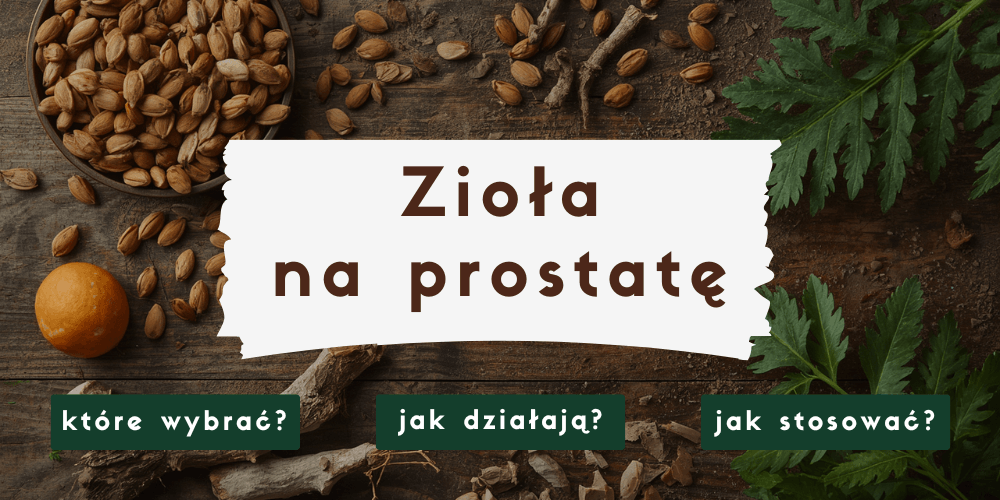
The best-documented herbs supporting prostate health are saw palmetto (Serenoa repens), nettle root (Urtica dioica), pumpkin seeds (Cucurbita pepo), and African plum bark (Pygeum africanum) – all four have their own European Medicines Agency (EMA/HMPC) monographs regarding the alleviation of benign prostatic hyperplasia symptoms. However, this is symptomatic support, not a substitute for medication or standalone therapy — they work best after more serious causes of symptoms have been ruled out by a doctor.
This guide is aimed at men over 50 who are experiencing initial prostate-related symptoms – such as more frequent nighttime urination, a weakened urine stream, or a feeling of incomplete bladder emptying. You will find precise dosages based on EMA/HMPC monographs, information on drug interactions, practical dietary tips, and signals indicating when herbs are not enough and a visit to a doctor is necessary.

1. What herbs have a documented effect on prostate health?
Four plants have a solid foundation in European regulations and clinical studies regarding prostate-related ailments: saw palmetto (Serenoa repens), nettle root (Urtica dioica), pumpkin seeds (Cucurbita pepo), and African plum bark, or Pygeum africanum (currently botanically classified as Prunus africana). All four have their monographs in the Committee on Herbal Medicinal Products (HMPC) at the European Medicines Agency (EMA) — these documents, not anecdotal internet opinions, are the most reliable reference point when choosing herbs for the prostate.
What do "well-established use" and "traditional use" mean?
EMA/HMPC classifies herbs into two categories. Well-established use means that efficacy and safety have been confirmed by clinical data from at least 10 years of use in the EU. Traditional use means that there is insufficient clinical evidence, but the plant is likely effective and has documented safe use for a minimum of 30 years (including 15 years in the EU) — without the need for medical supervision. Below, for each herb, we indicate which category it falls under.
1.1. Saw palmetto (Serenoa repens) – what do studies say?
Saw palmetto is the herb with the strongest regulatory backing among all those used for prostate ailments. Serenoa repens fruit has two distinct statuses depending on the extraction method: hexane extract of saw palmetto fruit can be used to treat symptoms of benign prostatic hyperplasia (BPH) as a well-established use, while ethanol extract, based on long-term use, can be used to relieve lower urinary tract symptoms associated with BPH — after serious conditions have been ruled out by a doctor — as a traditional use.
The mechanism of action is not fully understood, but laboratory studies indicate that saw palmetto may weaken the action of male hormones, such as testosterone, which play a role in prostate enlargement, and may also exhibit anti-inflammatory effects. Importantly for assessing the reliability of this herb: some clinical studies evaluating hexane extract have shown efficacy comparable to finasteride and tamsulosin — drugs commonly used in BPH treatment — for observation periods up to one year.
The typical dose used in clinical studies is 320 mg of Serenoa repens fruit extract per day, most often in the form of 160 mg twice daily. The most commonly reported side effects include abdominal discomfort and headache, occurring in 1–10 out of 100 patients — relatively rarely.
1.2. Nettle root and benign prostatic hyperplasia
Common nettle root (Urtica dioica) and dwarf nettle (Urtica urens) have traditional use status in alleviating lower urinary tract symptoms associated with BPH. Unlike saw palmetto, nettle root is rarely used alone — most often as an ingredient in combined preparations, precisely with Serenoa repens.
Studies suggest that nettle root may limit the binding of sex hormone-binding globulin (SHBG) to prostate cell receptors and hinder the attachment of dihydrotestosterone (DHT) to SHBG, which theoretically slows down the processes underlying prostate enlargement. However, this mechanism is partly hypothetical — one newer randomized clinical study showed that nettle root extract did not significantly affect PSA levels, prostate volume, or the feeling of incomplete bladder emptying, but it did improve other parameters related to urinary symptoms — which is why nettle should be considered complementary support, not a standalone therapy.

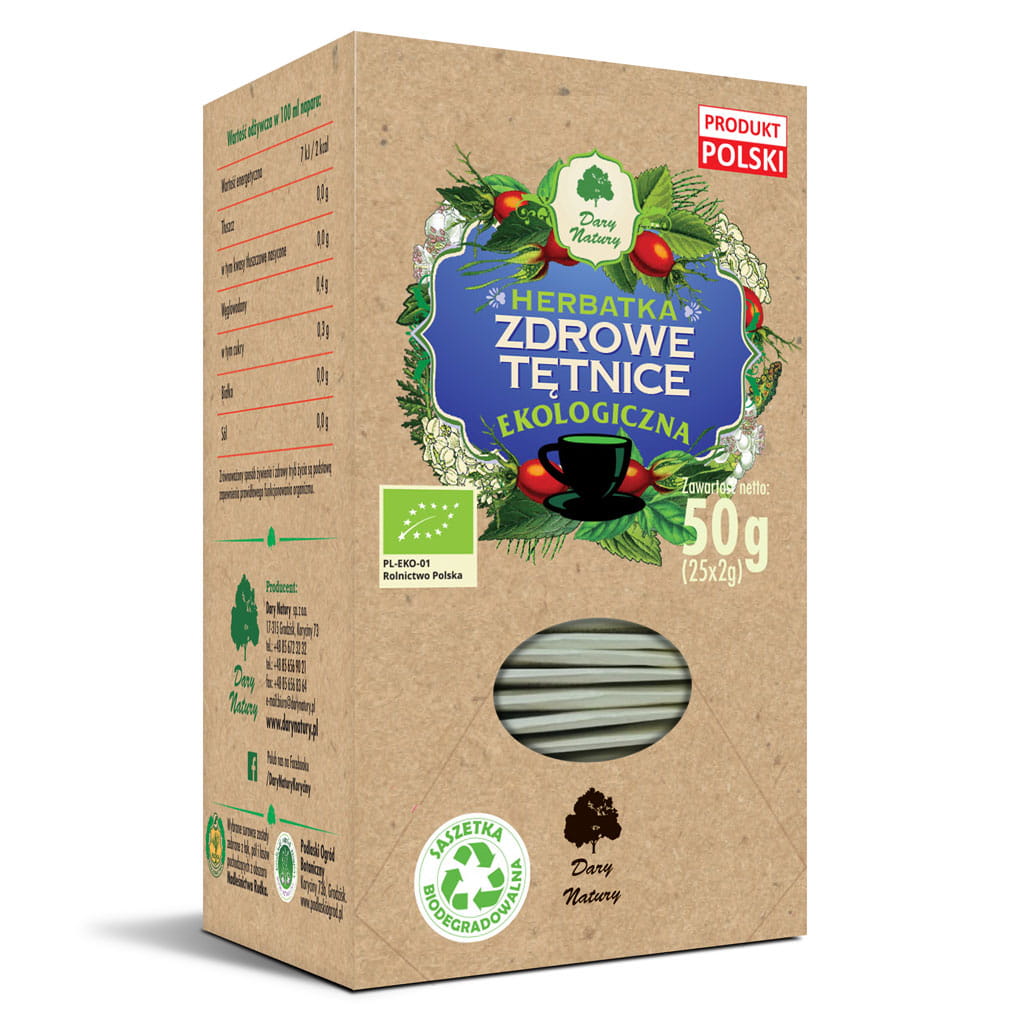
Nettle Root Tea BIO 50g - Dary Natury
According to the EMA/HMPC monograph, the typical dosage of dry nettle root extract is 150–190 mg twice daily (for extract with a DER ratio of 12-16:1) or 240 mg three times daily for other preparations, and the maximum dose of liquid extract is 5 ml per day, divided into 3–4 doses.
1.3. Pumpkin seeds and pumpkin seed oil for prostate
Pumpkin seeds (Cucurbita pepo) have traditional use status for lower urinary tract symptoms associated with benign prostatic hyperplasia or overactive bladder. This herb has the best safety profile among those described in this article — it is also the most accessible in edible form, as edible seeds or pumpkin seed oil.
The European Association of Urology (EAU), in its guidelines for the management of lower urinary tract symptoms, highlights the traditional use of Cucurbita pepo and the HMPC therapeutic indication for relieving symptoms associated with benign prostatic hyperplasia. The action is mainly due to phytosterols and fatty acids contained in the seeds, which can affect the activity of the 5-alpha-reductase enzyme — crucial in the process of converting testosterone to DHT.

Dark green European pumpkin seeds BIO 1 kg - Bio Planet
According to the EMA/HMPC monograph, dosage depends on the form of the preparation: comminuted herbal substance 10–20 g per day (single dose or divided into 2–3 doses), dry extract 300–320 mg divided into 2–3 doses, or fatty oil 1–4 g per day divided into several doses.
1.4. African plum bark (Pygeum africanum) – the fourth pillar of urological phytotherapy
Pygeum africanum — botanically classified today as Prunus africana — is the bark of an African tree that has held an established position in European urological phytotherapy for decades.
Current European Association of Urology guidelines (2022) do not offer a positive recommendation, but refer to the EU herbal monograph on the traditional use of Prunus africana bark in alleviating lower urinary tract symptoms associated with BPH, after serious conditions have been ruled out. The basis for this use is sufficient safety and reliable efficacy resulting from long-term use and clinical experience, rather than large clinical trials — therefore, as with nettle root, moderate expectations should be maintained.
Standardized bark extracts usually contain 13–14% phytosterols. Typical dosages used in studies and preparations available in Europe are 25–200 mg per day, with 100 mg daily being most common, in cycles lasting 6–8 weeks.
Curiosity: an herb to buy consciously
Prunus africana is an endangered species. Due to intensive bark harvesting, since 1995, the tree has been listed in Appendix II of the Washington Convention (CITES), and the International Union for Conservation of Nature (IUCN) classifies this species as vulnerable. When choosing supplements with Pygeum africanum, it is important to look for certifications confirming that the raw material is sourced from sustainable, controlled cultivation, not from wild populations.
1.5. Beta-sitosterol and lycopene – accompanying ingredients, not herbs
In prostate preparations, two ingredients often appear together that are not herbs themselves, but chemical compounds isolated from plants — it's worth knowing them, as they are often added to mixtures with Serenoa repens or Cucurbita pepo.
Beta-sitosterol
Beta-sitosterol is a phytosterol found, among others, in pumpkin seed oil and Pygeum bark. It has the most solid evidence to date among "accompanying" ingredients — a Cochrane systematic review covering four randomized studies with 519 men showed an improvement in IPSS score by an average of 4.9 points and an improvement in peak urinary flow rate by almost 4 ml/s compared to placebo, although no significant reduction in prostate volume itself was observed.
Lycopene
Lycopene, a red carotenoid from tomatoes, is often advertised as supporting prostate health, but caution is advised here. The European Food Safety Authority (EFSA) in 2011 rejected requested health claims regarding lycopene and the protection of DNA, proteins, and lipids from oxidative damage due to insufficient evidence from intervention studies — thus, there is no approved EFSA health claim for lycopene in the context of the prostate.
Observational data on prostate cancer risk are inconsistent: one meta-analysis indicated a link between higher lycopene intake or blood concentration and a lower risk of prostate cancer, while a nested study within the Prostate Cancer Prevention Trial found no such link.
Lycopene from tomatoes (preferably heat-processed, which increases its bioavailability) can be treated as part of a healthy diet, but not as a confirmed therapy.

1.6. Comparison of prostate herbs
| Herb | EMA/HMPC Status | Dosage | Contraindications / Notes |
|---|---|---|---|
| Saw Palmetto (Serenoa repens) | Well-established (hexane extract) / traditional (ethanol extract) | 320 mg/day (usually 160 mg twice daily) | Hypersensitivity to the active substance; rarely abdominal pain, headache |
| Nettle Root (Urtica dioica) | Traditional | 150–190 mg twice daily (dry extract) or 240 mg three times daily | Hypersensitivity to the active substance; no data for children and adolescents |
| Pumpkin Seeds (Cucurbita pepo) | Traditional | 300–320 mg dry extract 2–3 times daily or 1–4 g oil/day | Very good safety profile; no significant contraindications |
| African Plum Bark (Pygeum africanum) | Traditional | 25–200 mg/day (usually 100 mg/day) | Endangered species (CITES) – choose certified, sustainable sources |
Scroll right to see the full table (on mobile devices) →
2. What symptoms suggest it's worth trying prostate herbs?
The herbs described in the previous chapter are used for so-called lower urinary tract symptoms (LUTS) related to benign prostatic hyperplasia. This is not a disease entity in itself, but a collection of symptoms — so before reaching for any herbal preparation, it is worth knowing how to recognize that this is precisely the type of problem.
What is benign prostatic hyperplasia (BPH)?
Benign prostatic hyperplasia is a non-cancerous enlargement of the prostate gland, which surrounds the urethra. Histological changes characteristic of BPH are found in 50–60% of men over 60 and up to 80–90% of men over 70 — it is therefore a natural part of the aging genitourinary system, not a rarity. Prostate enlargement itself does not always produce noticeable symptoms: some men with histological BPH report no symptoms.

Doctors divide LUTS symptoms into two groups, and this division is also practical from the perspective of choosing appropriate herbal support:
Voiding symptoms (obstructive):
- weak or intermittent urine stream,
- difficulty starting urination (hesitancy),
- necessity to strain abdominal muscles to urinate,
- feeling of incomplete bladder emptying,
- prolonged urination time,
- dribbling after urination.
Storage symptoms:
- frequent daytime urination,
- nocturia, i.e., needing to wake up at night to urinate,
- sudden, difficult-to-control urge to urinate,
- in some cases, urge incontinence.
Nocturia deserves a separate mention, as it is one of the most bothersome symptoms—its frequency reaches 80% in men over 80 years old and is one of the main causes of sleep disorders in this age group. It is worth remembering that LUTS symptoms do not always correlate with prostate size—a man with a small prostate enlargement can experience severe symptoms, while a man with a significant enlargement might not have any symptoms at all.
If you recognize several of the listed symptoms of mild to moderate severity—e.g., more frequent waking at night, a weakened stream, or a feeling of incomplete bladder emptying—this is a typical moment to consider herbal support as described in Chapter 1, alongside a consultation with a doctor who can rule out more serious causes (more on this in Chapter 6).
For initial self-assessment of symptom severity, urologists use the international IPSS (International Prostate Symptom Score) scale—a publicly available questionnaire consisting of 7 questions that helps determine whether the symptoms are mild, moderate, or severe.
3. How to use prostate herbs – dosage and form?
The effectiveness of prostate herbs largely depends on two things: choosing the right form of preparation and consistent use for a sufficiently long time. This is one reason why some people are disappointed with phytotherapy—they either choose the wrong form or give up too quickly.
3.1. Capsules, standardized extracts, or dried herbs – what makes sense?
All four herbs described contain active ingredients that are fat-soluble—free fatty acids (saw palmetto), phytosterols (nettle, pumpkin, Pygeum), and lipophilic compounds in general. This directly translates to the choice of form:
- Standardized extracts in capsules (best choice for most) — Preparations standardized to a specific percentage of active substance (e.g., 85–95% fatty acids for saw palmetto or 13–14% phytosterols for Pygeum) guarantee a consistent dose in each capsule. This is important because the natural variability of active ingredient content in dried plant material can be several dozen percent between batches of raw material, making it difficult to determine an effective dose.
- Softgel / oil capsule extracts — Due to the lipophilic nature of the active ingredients, the oil form (soft gel capsules) usually provides better absorption than dry powder tablets, especially for saw palmetto and pumpkin seed oil.
- Dried herbs / infusion — A sensible choice mainly for nettle root, which has an approved form of comminuted raw material for preparing an herbal infusion in the EMA/HMPC monograph. For saw palmetto, pumpkin, or Pygeum, dried herbs have limited practical application—it is difficult to achieve therapeutic doses used in clinical studies this way.
What to look for on the label
Look for information on standardization (e.g., "standardized to min. 85% fatty acids" for saw palmetto) and on the DER (drug-extract ratio)—this determines how much raw plant material corresponds to one dose of the extract. Combined preparations (e.g., saw palmetto + nettle + Pygeum) are common and justified, as individual herbs act partly through different mechanisms—but ensure that the doses of individual ingredients in such a preparation correspond to the ranges in the table in Chapter 1, and are not merely trace amounts.

3.2. How long to expect effects?
This is one of the most common sources of disappointment with phytotherapy: prostate herbs work slower than prescription drugs and require regular use for weeks, not days.
- First noticeable changes — usually after 4–6 weeks of systematic use, although earlier in some men.
- Full assessment of a given herb's effectiveness — Clinical studies evaluating beta-sitosterol lasted from 4 to 26 weeks, protocols with Pygeum africanum usually include 6–8-week cycles, and studies with nettle root—up to 3 months. Only after such a period does it make sense to assess whether a given herb truly brings an effect.
- Long-term comparisons with medications — In studies comparing saw palmetto extract with finasteride or tamsulosin, observations were conducted for up to a year, which shows that phytotherapy in this area is intended as a long-term therapy, not an ad hoc one.
Practical recommendation: give one herb (or one combination) at least 8–12 weeks of consistent use at a dose compliant with the monograph before assessing whether it works. If after this time you see no improvement in symptoms, it's a sign to change strategy—preferably after consulting a doctor, rather than self-escalating doses above recommended ranges.
4. Can prostate herbs interact with medications?
Yes—although these are herbs with a good safety profile, each has documented or theoretical interactions that are worth knowing, especially after the age of 50, when medications are more often taken regularly.
4.1. Saw Palmetto (Serenoa repens)
- Anticoagulants and antiplatelet drugs (warfarin, clopidogrel, acetylsalicylic acid in therapeutic doses) — isolated cases of increased bleeding and elevated INR have been reported with concomitant use with warfarin; the mechanism is not fully understood, likely related to inhibition of the CYP2C9 enzyme and effects on platelet aggregation.
- Other medications for benign prostatic hyperplasia (finasteride, dutasteride, tamsulosin) — combining with saw palmetto should only be done under medical supervision, as both types of substances can affect the same hormonal pathways.
- Hormonal contraceptives — theoretical interaction due to possible antiandrogenic-like effects; this mainly applies to situations where the preparation is used by someone in the patient's environment (rare, but described in literature).
Clinical studies involving healthy volunteers did not show a significant effect of multiple doses of saw palmetto on the activity of CYP2D6 and CYP3A4 enzymes—so the risk of interaction with most drugs metabolized by these pathways seems low, in contrast to the aforementioned CYP2C9.
4.2. Nettle Root (Urtica dioica)
- Diuretics — Nettle root has its own mild diuretic effect; combining it with diuretic drugs can increase the risk of dehydration and electrolyte disturbances.
- Lithium — Increased diuretic effect can reduce the excretion of lithium from the body, leading to an increase in its blood concentration and a risk of toxicity; this combination absolutely requires medical consultation.
- Antidiabetic drugs — Nettle can enhance the effect of insulin and oral hypoglycemic drugs, increasing the risk of hypoglycemia; glucose level monitoring is recommended.
- Blood pressure-lowering drugs — Possible additive hypotensive effect.
4.3. Pumpkin Seeds and African Plum Bark
Pumpkin seeds (Cucurbita pepo) have the best documented safety profile among the four described herbs—no clinically significant drug interactions have been identified to date, which is also confirmed by reviews conducted as part of the periodic verification of the EMA/HMPC monograph.
For Pygeum africanum bark, data on interactions are limited, however, due to a similar mechanism of action to saw palmetto (effect on steroid hormone metabolism), the same caution is recommended when using medications for prostatic hyperplasia concurrently.
Safety Rule
If you are taking anticoagulants, medications for prostatic hyperplasia, lithium, antidiabetic drugs, or diuretics regularly, inform your doctor or pharmacist before starting herbal supplementation—regardless of how "natural" the preparation seems. This applies particularly to planned surgical procedures: due to the possible effect on blood clotting, it is advisable to stop using saw palmetto and nettle root 1–2 weeks before planned surgery, after consulting your treating physician.
5. What diet additionally supports prostate health?
No diet will shrink an enlarged prostate overnight, but diet and a few simple habits have a real impact on the severity of LUTS symptoms—this is confirmed by both American Urological Association guidelines and observational studies. This element complements herbal support from Chapter 1, rather than replacing it.
Limit caffeine and alcohol, especially in the afternoon
Caffeine stimulates bladder activity and increases urine production, intensifying urgency and frequent urination, while alcohol acts as a diuretic and irritates the bladder. Guidelines for LUTS/BPH management indicate limiting coffee, alcohol, and heavily spiced and irritating foods as one of the basic, though based on moderate quality evidence, methods of self-managing symptoms.
Control fluid intake in the evening
Limiting fluid intake several hours before bedtime is one of the best-documented methods for reducing nocturia—studies show a clear link between the volume of fluids consumed in the evening and directly before sleep and the number of nocturnal awakenings due to bladder urgency.
This does not mean limiting hydration throughout the day—it is solely about shifting most fluid intake to earlier hours.
Eat more vegetables and fruits
A cohort study involving over 1500 older men showed that high consumption of vegetables and fruits (over 350g per 1000 kcal of diet) significantly reduced the severity of LUTS storage symptoms—i.e., frequent urination, urgency, and nocturia—compared to moderate consumption. An anti-inflammatory diet rich in vegetables, whole grains, legumes, and fish fits this same direction.

Take care of your metabolic health
Obesity, type 2 diabetes, hypertension, and metabolic syndrome are linked to a higher incidence and faster progression of LUTS/BPH—likely through insulin resistance and chronic low-grade inflammation. Maintaining a healthy body weight and regular physical activity are among the recommendations with the best confirmation in urological guidelines.
Zinc
Zinc is a mineral that is worth remembering in the context of male hormonal health—it contributes to maintaining normal testosterone levels in the blood and contributes to normal fertility and reproduction. These are EFSA-approved health claims, although they concern general hormonal balance, not directly prostate size or LUTS symptoms. Natural sources of zinc include pumpkin seeds (which also ties in with the green section from Chapter 1), seafood, eggs, and legumes.

BICAPS ZINC Zinc Citrate 60 capsules - ForMeds
Tomatoes and lycopene
Tomatoes and lycopene were discussed in more detail in subsection 1.5—it is worth recalling here that including thermally processed tomatoes (e.g., in the form of sauce or passata, which increases lycopene bioavailability) in the diet makes sense as part of a generally healthy diet, although the evidence for a direct link to the risk of prostate diseases remains inconclusive.
From our customers' observations
Men who reach for prostate herbs most often simultaneously ask us about limiting caffeine in the evening and about coffee substitutes—this is one of the simplest habits to implement, and at the same time one of the best documented in the context of nocturia reduction.
6. When herbs are not enough and medical consultation is necessary?
The herbs described in this article are only applicable for alleviating symptoms of benign prostatic hyperplasia—after more serious causes have been ruled out by a doctor. This reservation is not a formality: some symptoms that at first glance appear to be "typical ailments of old age" may indicate a condition requiring urgent diagnosis, including prostate cancer, acute prostatitis, or urinary retention.
Alarming symptoms – do not wait, consult a doctor
- Blood in the urine (visible to the naked eye or detected in a urine test) – always requires diagnosis, regardless of severity.
- Sudden, complete inability to urinate (acute urinary retention) – this is a condition requiring immediate medical attention.
- Severe pain in the lower abdomen, perineum, or lumbar region, especially with fever or chills – possible acute prostatitis or urinary tract infection.
- Unexplained weight loss or new, persistent bone pain – symptoms requiring urgent oncological diagnosis.
- Abnormal result of a digital rectal exam (hard, irregular gland) or significantly elevated or rising PSA levels in control tests.
Beyond alarming situations, every man over 50 with persistent LUTS symptoms should undergo a basic digital rectal exam and a general urine test, and the decision to measure PSA should be made jointly with a doctor—this test is not routinely recommended for all men, but it can be helpful in differentiating the causes of symptoms.
It is worth remembering that PSA can be elevated not only in prostate cancer but also in benign hyperplasia, inflammation, or even after a recent infection—therefore, the interpretation of the result always belongs to the doctor, and not to a self-assessment based on a single measurement.
Prostate herbs make sense as support for mild to moderate LUTS symptoms, after more serious causes have been ruled out—not as a first diagnostic step or a substitute for medical consultation, especially when symptoms first appear after the age of 50.

7. FAQ
7.1. Do prostate herbs reduce the risk of prostate cancer?
There is no convincing evidence for this in humans. Isolated studies on animal models and in vitro suggested that some components, e.g., from Pygeum africanum bark, may affect prostate cancer cells under laboratory conditions, but these are preliminary observations that have not been confirmed in clinical studies involving humans. The herbs described in this article have documented use only in alleviating symptoms of benign prostatic hyperplasia, not in oncological prevention.
7.2. Can several prostate herbs be combined simultaneously, e.g., saw palmetto with nettle?
Yes, this is a common and justified practice—combined preparations are widely available because individual herbs act partially through different mechanisms. However, it is worth checking whether the doses of individual ingredients in such a preparation correspond to the ranges in the table in Chapter 1, and are not merely trace amounts, and to exercise caution when using medications listed in Chapter 4 concurrently.
7.3. Do prostate herbs affect libido and potency?
In studies comparing saw palmetto extract with finasteride, the herbal preparation was better tolerated in this regard—finasteride caused a decrease in libido and erectile dysfunction in some patients, which was not observed to a similar extent with herbal use. However, this does not mean that herbs improve potency—simply, in this specific comparison, they had a more favorable side effect profile in the sexual sphere.
7.4. From what age should one prophylactically reach for prostate herbs?
Symptoms of benign prostatic hyperplasia most often appear after the age of 50, although histological changes can develop earlier. Using herbs "preventatively" before any symptoms appear is not supported by research—a more sensible approach is a healthy diet and lifestyle as described in Chapter 5, and to reach for herbs only with the first real ailments, preferably after consulting a doctor.
7.5. Are prostate herbal preparations suitable for vegans?
This depends on the capsule form, not the herb itself – standard softgel capsules are usually made from animal-derived gelatin. Vegans should look for preparations labelled as vegan or vegetarian, where the capsule is made from plant cellulose (HPMC).
7.6. Does frequent urination always indicate a prostate problem?
No. Frequent urination and urgency can also result from an overactive bladder syndrome unrelated to the prostate, urinary tract infections, diabetes, certain diuretic medications, or excessive fluid intake in the evening. Therefore, with new symptoms, it's best to determine the actual cause with a doctor first, rather than assuming it's a prostate issue.
8. Summary
Four herbs have a real, EMA/HMPC monograph-confirmed application in supporting the symptoms of benign prostatic hyperplasia: saw palmetto (strongest regulatory backing, 320 mg/day), nettle root (150–190 mg twice daily, usually in combination preparations), pumpkin seeds (best safety profile, 300–320 mg extract or 1–4 g oil), and Pygeum africanum bark (100 mg/day, but choose sources with sustainable harvesting certification, as it is an endangered species).
A few things to remember from this guide:
- Herbs work slower than prescription drugs – look for effects after 8–12 weeks of regular use, not after a few days.
- Form matters: standardized extracts in capsules provide a consistent dose; dried herbs are mainly effective for nettle root.
- Herbs for the prostate can interact with anticoagulants, lithium, antidiabetic drugs, and other preparations for prostate enlargement – always consult your doctor or pharmacist.
- A diet limiting caffeine and alcohol in the evening, fluid control before bedtime, and a healthy body weight genuinely support symptom reduction, regardless of herbal supplementation.
- Blood in the urine, sudden urinary retention, fever with lower abdominal pain, or unexplained weight loss are signals that require an urgent doctor's visit, not just herbal remedies.
Herbs for the prostate are sensible, well-documented support for mild to moderate symptoms – but as part of a broader strategy, alongside diet and regular check-ups, and not as a standalone therapy replacing medical diagnosis.
If, in addition to prostate-related ailments, you are struggling with kidney or urinary tract problems, you may also be interested in our article Herbs for Kidneys and Urinary Tract – Which to Choose and How to Use?
9. Sources
EMA/HMPC Monographs and Regulatory Documents
- Sabalis serrulatae fructus (Serenoa repens) – product page, European Medicines Agency
- Saw palmetto fruit: summary for the public, EMA/823974/2015
- Urticae radix (Urtica dioica L.; Urtica urens L.) – product page, European Medicines Agency
- Cucurbitae semen (Cucurbita pepo L.) – product page, European Medicines Agency
- Pruni africanae cortex (Prunus africana / Pygeum africanum) – product page, European Medicines Agency
Clinical Studies and Systematic Reviews
- Wilt TJ et al., Beta-sitosterols for benign prostatic hyperplasia, Cochrane Database of Systematic Reviews
- The effect of nettle root extract on urinary problems in older men with BPH: randomized clinical trial, ScienceDirect
- Benign Prostatic Hyperplasia: Rapid Evidence Review, American Family Physician (2023)
- Benign prostatic hyperplasia and urinary symptoms: Evaluation and treatment, PubMed
- Benign Prostatic Hyperplasia, StatPearls – NCBI Bookshelf
- Dietary considerations in the evaluation and management of nocturia, PMC
- Lycopene and Risk of Prostate Cancer: A Systematic Review and Meta-Analysis, PMC
- Serum lycopene concentration and prostate cancer risk – Prostate Cancer Prevention Trial, PubMed
Protection of the species Prunus africana