Table of Contents
- What is guar gum and what are its properties?
- Applications of guar gum
- How to use guar gum in the kitchen?
- Is guar gum healthy?
- Summary
Guar gum is a natural polysaccharide derived from the seeds of the Cyamopsis tetragonoloba plant, cultivated primarily in India. It is valued for its thickening and stabilizing properties, making it useful in many industries—from food to cosmetics. In the food industry, guar gum is added to products such as ice cream, sauces, and beverages to improve their texture and prevent separation.
However, guar gum is not just an industrial additive. Thanks to its water-binding properties, it is also used in home kitchens as a thickener for soups and sauces, and as an ingredient in gluten-free baking mixes. This is especially important for people with gluten intolerance, as guar gum can mimic some of gluten's properties, facilitating the baking of bread or cakes.

In this article, we will take a closer look at guar gum—its origin, properties, and applications. You will learn how to use this versatile ingredient in your kitchen, and what health benefits its consumption can bring.
What is guar gum and what are its properties?
Guar gum is a white to yellowish powder that is water-soluble and forms viscous solutions even at low concentrations. It is a polysaccharide composed mainly of two sugars: galactose and mannose.
The unique chemical structure of guar gum makes it an excellent thickening, stabilizing, and emulsifying agent, making it extremely useful in many industries.
Properties of guar gum
- Thickening: Guar gum can increase the viscosity of liquids, which is used in food products such as sauces and ice cream.
- Stabilization: It prevents separation of ingredients in products like flavored milk or dressings.
- Emulsification: It allows oils and water to mix, which is crucial in the production of mayonnaise or cosmetics.
- Gluten-free: It is an alternative to gluten in products for people on a gluten-free diet.
- Low-calorie: It can be used as a fat substitute in low-calorie products.

Organic Guar Gum 200 g - Bio Planet
Thanks to these properties, guar gum finds wide application not only in the food industry but also in cosmetics, pharmaceuticals, and many others.
Applications of guar gum
Guar gum, thanks to its unique properties, finds wide application in various fields. Below are its main uses:
1. Food industry:
- Thickening: Guar gum is most commonly used as a thickener in sauces, soups, yogurts, ice creams, jams, mayonnaises, ketchups, and other food products. It gives them a thick, creamy consistency without altering the taste.
- Emulsion stabilization: It prevents the separation of ingredients with different consistencies, e.g., oil and water in sauces or dressings.
- Texture improvement: Used in bread and baked goods, especially gluten-free ones, it gives dough elasticity and helps achieve the right texture.
- Volume increase: In frozen products like ice cream, guar gum helps retain moisture and increase product volume.
- Fat substitute: In some food products, guar gum can be used as a fat substitute, which reduces their calorie content.
2. Pharmaceutical industry:
- Binding agent: Guar gum is used as a binding agent in tablets and capsules, giving them the right consistency and facilitating their dissolution in the body.
- Active ingredient carrier: It can be used as a carrier for active ingredients in medicines, facilitating their transport and release in the body.
3. Cosmetics:
- Thickener: In creams, lotions, and other cosmetic products, guar gum is used as a thickener, giving them the appropriate consistency.
- Emulsifier: It helps combine ingredients of different consistencies, e.g., water and oil, creating a uniform emulsion.
- Stabilizer: It prevents the separation of cosmetic ingredients and extends their shelf life.
4. Other applications:
- Textile industry: Guar gum is used as a thickener in fabric dyes and other finishing agents.
- Paper industry: It improves paper quality, increasing its strength and smoothness.
- Petroleum industry: Used as a thickening agent in drilling fluids.
- Mining industry: In mineral flotation processes, guar gum is used as a flocculant, facilitating the separation of minerals from gangue.
It should be noted that these are just some examples of guar gum applications. It is an extremely versatile ingredient that can be used in many other products and industrial processes.

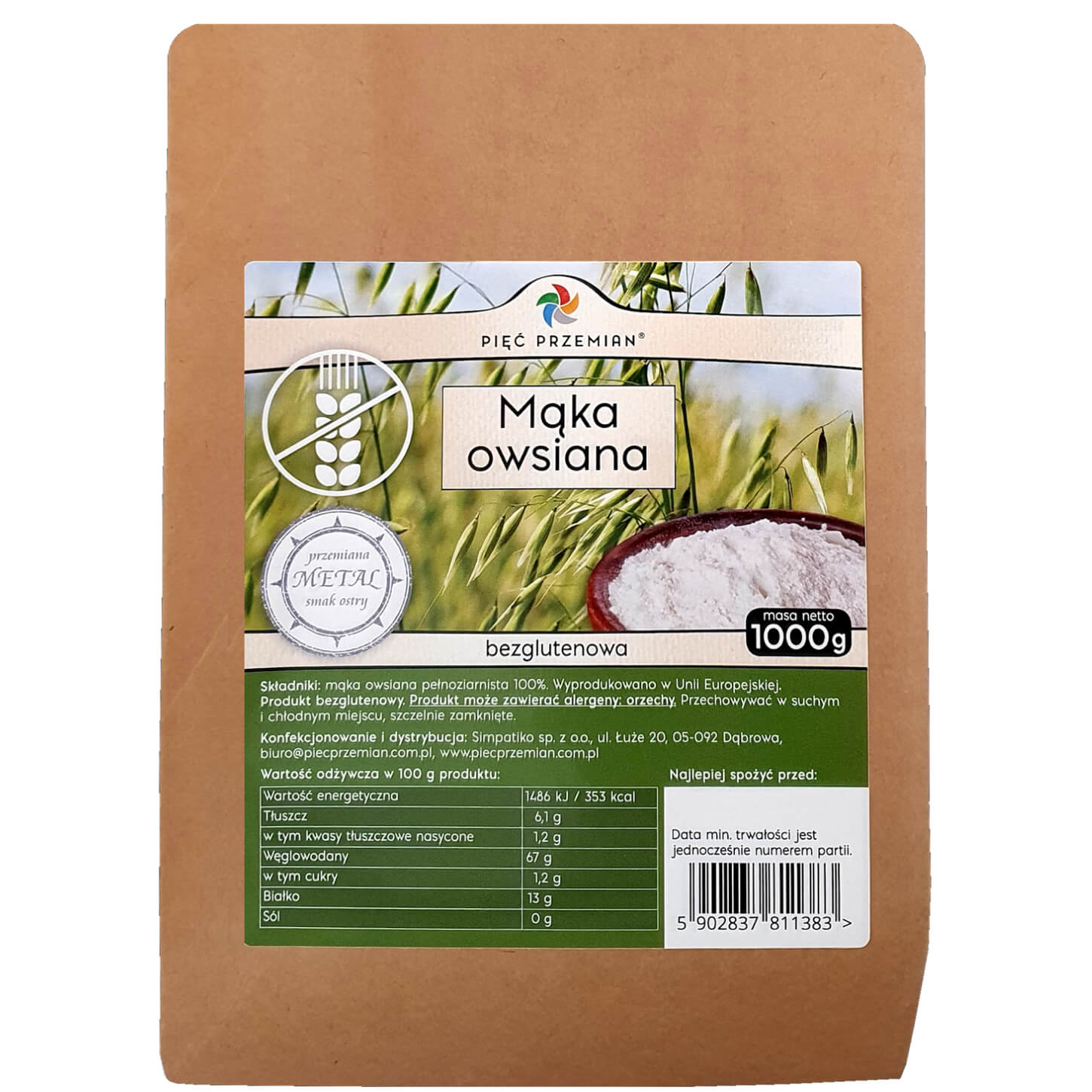
Guar gum 300 g - Pięć Przemian
Remember that before using guar gum for any purpose, you should consult the manufacturer's recommendations and select the appropriate amount and type of gum for the specific application.
How to use guar gum in the kitchen?
Using guar gum is simple and does not require specialized knowledge. Here are some tips on how to use it:
- Preparation: Guar gum is a whitish powder that is very soluble in water. Before use, prepare the appropriate amount of gum, usually about 1-2% of the total mass of the product to which it is to be added.
- Adding to liquids: Guar gum can be added to various liquids, such as water, juices, milk, or sauces. It is important to add it slowly and gradually, stirring continuously to avoid lumps.
- Thickening: After adding guar gum to the liquid, mix the ingredients thoroughly and leave for a few minutes. Guar gum will begin to thicken the liquid, reaching full viscosity after about 5 minutes.
- Cooking: Guar gum can be used in cooked dishes, as it does not lose its properties under high temperatures. It can be added to soups, sauces, or desserts.
- Gluten-free baking: For people on a gluten-free diet, guar gum can serve as a gluten substitute, helping to maintain the structure of the dough and preventing baked goods from crumbling.
- Diet and health: Guar gum is also valued for its health-promoting properties. As a water-soluble fiber, it can contribute to improved digestion and regulation of blood sugar levels.
The dosage of guar gum may vary depending on the recipe and desired consistency, but usually ranges from ¼ to ½ teaspoon per 1 liter of liquid.
Remember that guar gum is a highly viscous ingredient, and an excess can make dishes too thick or sticky. Therefore, it is important to use it sparingly and adjust the amount to your own preferences and needs.
Is guar gum healthy?
From a health perspective, guar gum is a source of soluble fiber, which can offer benefits for the digestive system. This fiber can help lower blood cholesterol levels, improve intestinal peristalsis, and enhance the composition of gut microbiota. Furthermore, it contributes to reducing post-meal glycemia, which can be beneficial for individuals with diabetes.
However, like any ingredient, guar gum can cause side effects, especially when consumed in excess. This can lead to ailments such as nausea, diarrhea, or bloating. Therefore, it is important to consume it in moderation and remember to maintain adequate hydration, as guar gum has the ability to bind water.
Summary
Guar gum is a versatile plant-based ingredient with a wide range of applications, from the food industry to cosmetics. Thanks to its thickening, stabilizing, and emulsifying properties, guar gum is a valuable addition to many products. It is also gluten-free and low-calorie, making it attractive to people on special diets. Although guar gum is considered safe and can offer health benefits, like any ingredient, it should be used in moderation.
In this article, we took a closer look at what guar gum is, its properties, applications, and how it can be safely used in everyday life. We hope this information will be helpful in better understanding this ingredient.