The article was updated on 08.03.2026
Ceremonial cacao is a paste made from ground whole cacao beans — minimally processed, full-fat, and free of any additives. What distinguishes it from regular cacao powder is primarily what has not been removed: natural cocoa butter, flavonoids, and theobromine preserved in the form in which they naturally occur in the bean. This is why a drink made from cacao paste tastes and acts differently than a sweet cup of cacao from a packet.
In this article, you will find everything you need to know before your first purchase and first cup: what exactly ceremonial cacao is and how it is made, what research says about its active ingredients, how to dose it safely, what to look for when choosing it, and how to prepare the drink at home — from a basic recipe to variants with spices and superfoods. At the end, a FAQ section with answers to the most common questions.

1. What is ceremonial cacao and how does it differ from regular cacao?
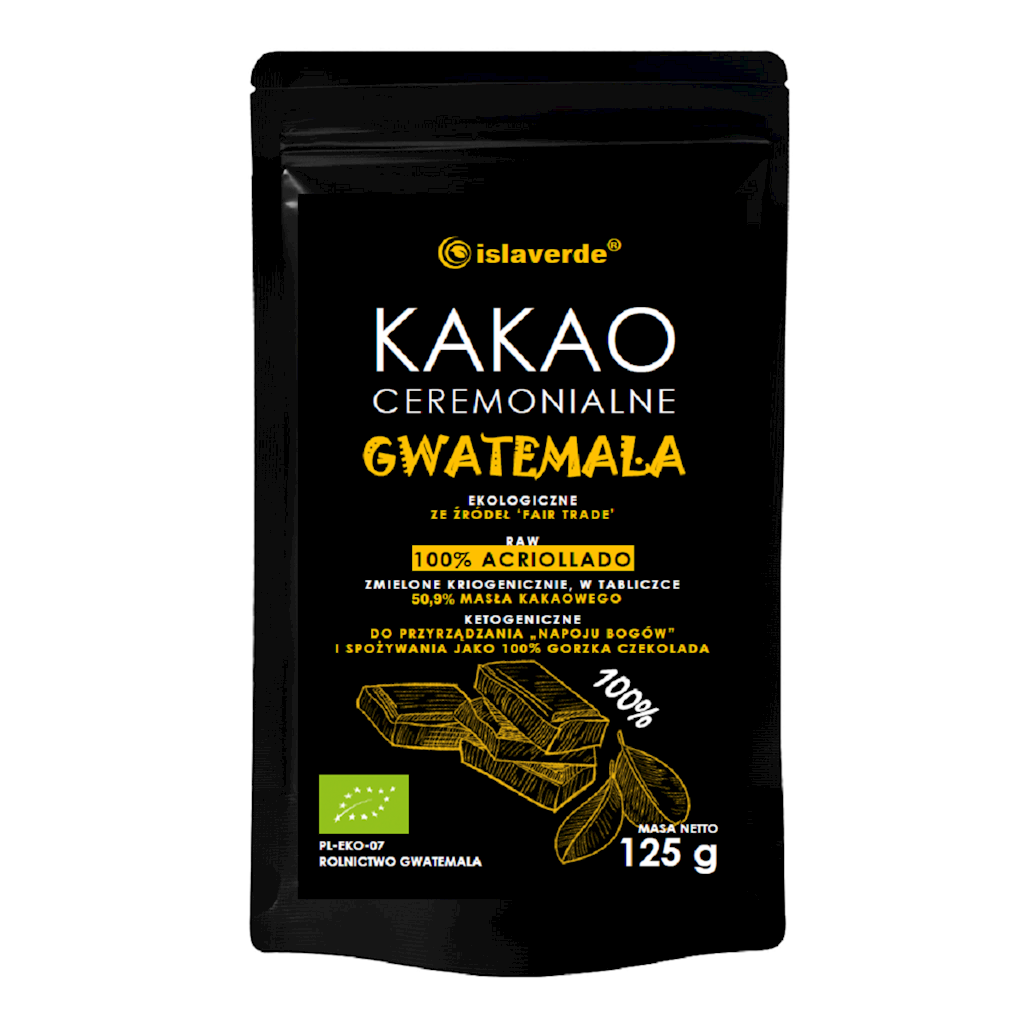
Ceremonial cacao is minimally processed cacao in paste form – ground whole cacao beans that retain their natural fat, active compounds, and full flavor profile. Unlike cacao powder available in supermarkets, it is not defatted, alkalized, or enriched with any additives. This product most closely resembles how cacao was consumed for centuries in Central and South America.
1.1. How ceremonial cacao is made – fermentation, drying, roasting
The production of ceremonial cacao begins in the orchard – with the careful selection of cacao bean varieties. It then goes through three key stages:
1. Fermentation is the foundation of good taste and nutritional value of cacao. Freshly harvested beans, along with their surrounding fruit pulp, are placed in wooden boxes for 5–9 days, where natural yeasts and bacteria break down the sugars from the pulp. During this process, the temperature inside the boxes naturally rises to up to 50°C – so it is not a "raw" product in the strict sense. Fermentation reduces bitter tannins, develops complex aromatic notes, and activates the nutritional components of the bean. Skipping this stage – which unfortunately happens with some producers – results in a flat taste and reduced nutritional value.
2. Drying stops fermentation and reduces the moisture content of the beans to about 7%. The highest quality ceremonial cacao is sun-dried or dried on airy racks, ensuring even moisture evaporation without spoiling the aroma.
3. Light roasting is a stage that sometimes raises controversy among advocates of "raw" cacao – however, it is worth knowing that Mayan tradition treats roasting as an integral part of the process. Roasting at a low temperature disinfects the beans, facilitates shelling, deepens the flavor through the Maillard reaction, and – according to available data – preserves over 80% of the flavonoids present in the raw bean. Ceremonial cacao differs from industrial cacao here precisely in temperature and intention: low temperatures instead of high, minimal intervention instead of mass standardization.
After roasting, the beans are shelled, crushed into nibs, and then ground – traditionally on stone mills – into a thick, uniform cacao paste. The friction heat during grinding liquefies the natural cocoa butter, creating the characteristic creamy consistency.
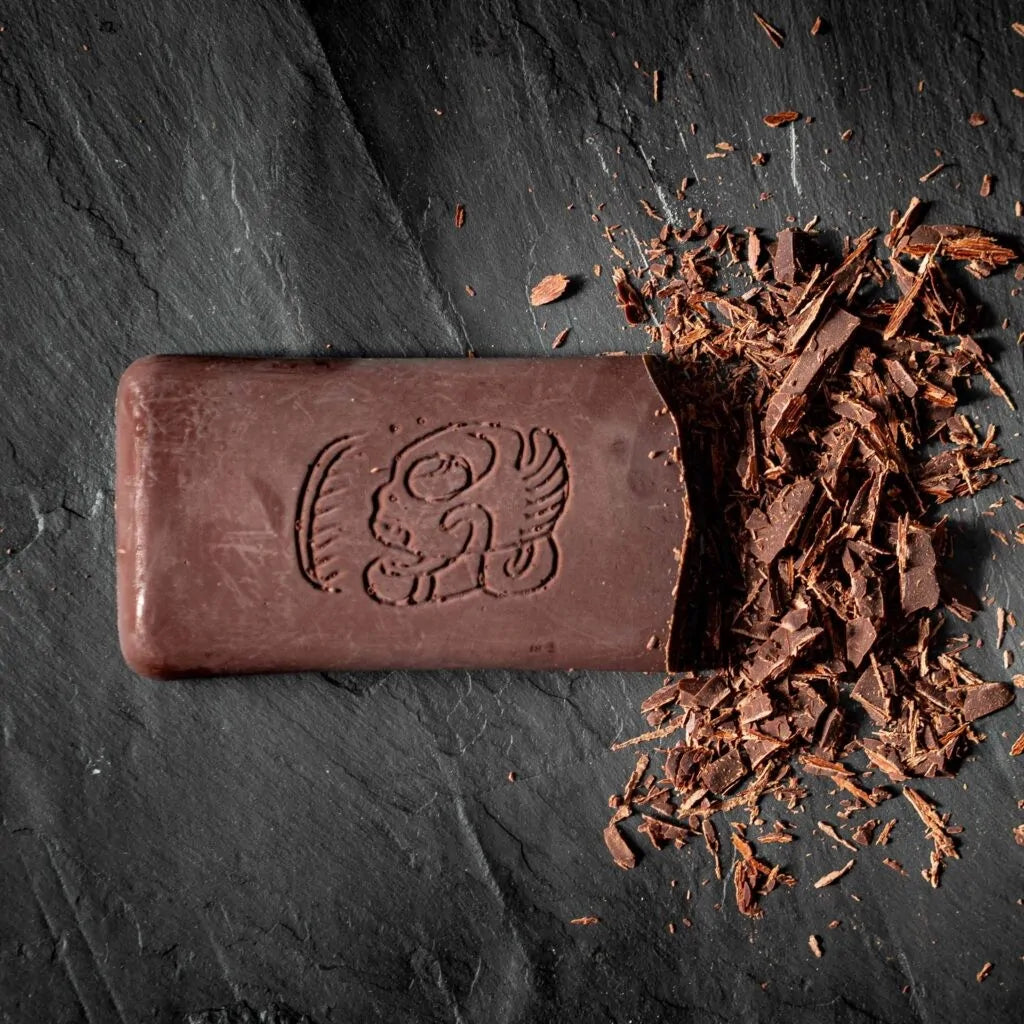
Good ceremonial cacao contains a minimum of 50% natural cocoa butter – this is a technical quality indicator that distinguishes it from cacao powder.
1.2. Ceremonial cacao, cacao powder, nibs – what's the difference?
Several forms of cacao are available on the market, which are often confused. The table below shows the key differences worth knowing before purchasing.
| Feature | Ceremonial cacao (paste) | Cacao powder | Cacao nibs |
|---|---|---|---|
| Form | Paste / bar / block | Fine powder | Crushed beans |
| Fat content | approx. 50–55% | 10–22% (defatted) | approx. 45–50% |
| Processing level | Minimal | High (defatting, often alkalization) | Low (unground) |
| Taste | Intense, creamy, bitter | Milder, easily dissolves | Crunchy, very intense, bitter |
| Application | Ceremonial drink, smoothie, baking | Drinks, baking, desserts | Granola, salads, snack, baking |
| For whom | People seeking whole, unprocessed cacao | Convenient for daily use, baking | Snack lovers, raw diet |
* Fat content in cacao powder depends on the manufacturer and the degree of defatting. Alkalized (dutched) cacao additionally loses some flavonoids and theobromine compared to natural non-alkalized cacao.
It's worth knowing that cacao powder available in most grocery stores is a byproduct of cocoa butter production – effectively the press cake after the fat has been squeezed out. Ceremonial cacao, on the other hand, is ground whole bean, which retains the natural proportion of all ingredients.
2. What is the history of ceremonial cacao?
Cacao has been accompanying humanity for over 3,000 years. Before it became an ingredient in chocolate bars, for centuries it was a sacred drink, a currency, and an element of rituals that gave meaning to the daily lives of successive Mesoamerican civilizations.
2.1. Olmecs – the forgotten pioneers of cacao
The history of cacao begins earlier than commonly thought. Chemical analysis of pottery found in Olmec culture areas – the first great civilization of Mesoamerica – indicates that cacao beans were processed and consumed there as early as around 1000 BCE.
It is likely that the Olmecs were the first people to domesticate the cacao tree and develop the initial processing method: fermentation, drying, and roasting of the beans.
The word kakawa, from which our modern "cacao" comes, most likely originates from the Olmec language or related Mixe-Zoque languages.
2.2. Mayans and cacao – the drink of gods and currency in one
Mayan culture adopted cacao from the Olmecs and elevated it to a completely new level of significance. For the Mayans, cacao was literally a gift from the deities – in their mythology, it appears as one of the ingredients from which humans were created (Popol Vuh, the sacred book of the K'iche' people). The deity Ek Chuah was the patron of cacao, and a festival dedicated to him was held every April.
In the Mayan language, cacao was called kakaw – and this word became the source of modern names in most languages worldwide. The drink made from cacao beans was called chocolhaa by the Mayans, which in their language meant "bitter water."
The Mayans cultivated cacao trees in home gardens, and cacao beans served as a medium of exchange – archaeologists have even discovered fake beans made of fired clay, which best illustrates the value attributed to them. Cacao was consumed during weddings, funerals, ritual offerings, and initiation ceremonies.
The drink was prepared by fermenting, drying, and roasting the beans, grinding them on a stone (metate) into a thick paste, and then mixing it with water, chili, vanilla, and other spices. The characteristic foam, obtained by pouring the drink from vessel to vessel from a height, was a sign of quality.
The Mayans cultivated cacao trees as early as around 600 CE. The Criollo variety, now considered the most noble, originates directly from Mayan orchards.

Ancient tribes of Central America considered cacao a unique, divine drink
2.3. Aztecs and xocolatl – the drink of the elite and warriors
The Aztecs adopted the cult of cacao from the Mayans and gave it an even more exclusive character. According to their mythology, cacao was given to humans by the god of wisdom Quetzalcoatl, which elevated it to the status of a divine gift. Nahuatl – the language of the Aztecs – introduced the word xocolatl (or cacahuatl) into the history of cacao, meaning "bitter water" or "cacao drink," from which the modern word "chocolate" is derived.
Among the Aztecs, cacao consumption was strictly reserved for the elite – rulers, priests, and experienced warriors. The Aztec emperor Montezuma II reportedly stored over a billion cacao beans in his granaries and consumed cacao drink daily in golden goblets. Cacao also served as currency – Aztec tax documents from 1545 recorded that a small rabbit could be bought for 30 beans.

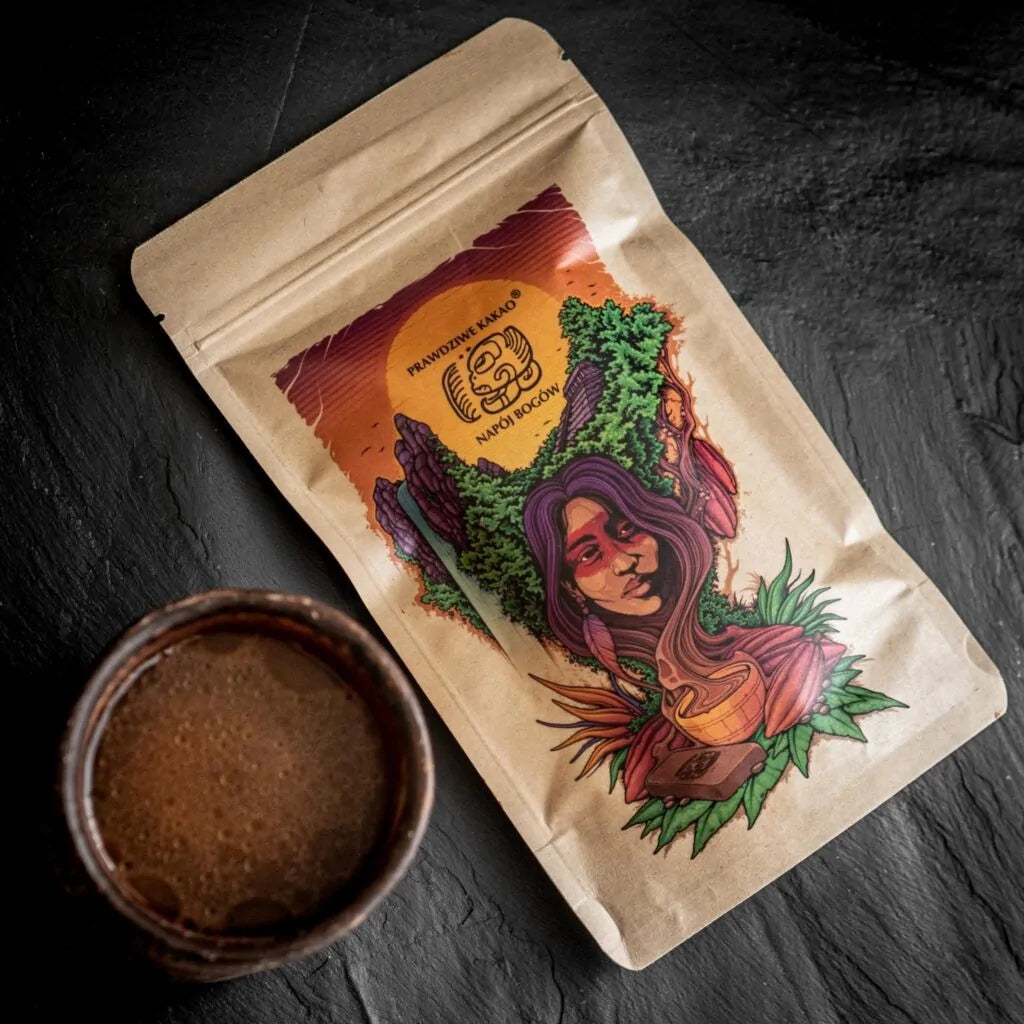
True Ceremonial Cacao from Peru
2.4. Traditional cacao ceremonies – what were they and what was their purpose?
Cacao accompanied the most important moments of community life. Ceremonies involving cacao were organized during weddings, initiations, fertility and harvest rituals, funeral ceremonies, and also before battles. The drink was then prepared together, often with the addition of plants with symbolic meaning, such as jaguar ear flowers, annatto seeds (which dyed the drink red, giving it associations with blood), or local herbs.
These ceremonies had both a spiritual and social dimension – communal drinking of cacao strengthened bonds between participants and signaled belonging to the community. In the context of weddings, cacao symbolized the union of two people; in the context of funerals, it accompanied the soul on its journey to the afterlife.
2.5. Cacao in Europe – from royal luxury to mass production
The first European to encounter cacao was Christopher Columbus during his fourth voyage – on August 15, 1502, his crew seized a Mayan merchant ship off the coast of present-day Honduras and found cacao beans on board. Columbus brought them to Spain, but they did not arouse interest – neither he nor the royal court knew how to process them or appreciate their value.
The breakthrough occurred in 1519, when Hernán Cortés reached the court of the Aztec emperor Montezuma II. It was there that Europeans first saw cacao in its ceremonial context – as a drink consumed from golden goblets by the most powerful ruler of America. Cortés recognized the economic value of cacao and started plantations in Mexico and the Caribbean. Cacao reached Spain and the royal court most likely in 1544 through a delegation of Mayan nobles, and the first official shipments to Europe were recorded in 1585.
In the 17th century, the cacao drink spread throughout Europe, gaining popularity in Paris, London, and Madrid, where elegant "chocolate houses" accessible only to the elite opened. The situation changed radically in the 19th century – in 1828, the Dutch chemist Coenraad van Houten patented the process of defatting cacao and producing cacao powder, which initiated the mass, industrial production of chocolate. From then on, ceremonial cacao – unprocessed, full-fat, directly from the bean – ceased to be the standard and became a niche product.

When a cheap way to produce chocolate was invented in the 19th century, cacao became much more accessible to society
Only recent decades have brought a renaissance of ceremonial cacao – growing interest in minimally processed foods and a return to traditional cultivation methods mean that more and more people are reaching for a product not far removed from what the Mayans drank almost 1500 years ago.
3. What active ingredients does ceremonial cacao contain?
Ceremonial cacao owes its active profile primarily to three groups of compounds: flavonoids and other polyphenols, theobromine, and minerals – mainly magnesium and iron. Below, we describe each of them reliably – based on what research actually confirms, and clearly indicating where science still has open questions.
3.1. Flavonoids and antioxidants – what does research say?
Cacao is one of the richest plant sources of flavonoids – these primarily include epicatechin, catechin, and proanthocyanidins. Cacao beans consist of about 37% (catechins), 58% (proanthocyanidins), and 4% (anthocyanidins) of the total polyphenol content [2].
Flavonoids are powerful antioxidants – they neutralize free radicals and exhibit anti-inflammatory effects in in vitro and in vivo studies. Epicatechin is particularly well-researched: human studies suggest that it influences nitric oxide production in vascular endothelium, which may translate into better tissue perfusion [2]. However, it is important to remember that most studies have been conducted on cacao extracts or dark chocolate, not directly on ceremonial paste – the results are therefore promising, but cannot be directly applied to a specific product.
The degree of cocoa processing is also important: alkalization (the so-called Dutch process) used in the production of industrial cocoa powder can reduce the flavonoid content by as much as 60-90% compared to non-alkalized cocoa [2]. Ceremonial cacao, as a minimally processed and non-alkalized product, retains a significantly higher level of these compounds.
3.2. Theobromine - how does it differ from caffeine?
Theobromine is the main alkaloid in cocoa – its content in the bean is approximately 1.0–2.5% of dry mass, while caffeine is much less: only 0.06–0.4% [3]. This disproportion is precisely what makes ceremonial cacao act differently from coffee.
| Feature | Theobromine | Caffeine |
|---|---|---|
| Content in cocoa | 1.0–2.5% dry mass | 0.06–0.4% dry mass |
| Effect on CNS | Mild, long-lasting | Strong, short-lasting |
| Duration of action | approx. 6–10 hours | approx. 3–5 hours |
| Mechanism | Adenosine receptor blockade, phosphodiesterase inhibition | Adenosine receptor blockade |
| Typical effect | Mild stimulation without a "spike" and sudden energy crash | Noticeable stimulation, possible "crash" effect |
| Toxicity for dogs and cats | Yes – very toxic | Yes – toxic |
Sources: Smit HJ., Theobromine and the pharmacology of cocoa, Handb Exp Pharmacol 2011 [3]; Nehlig A., PMC3575938 [4]
It is characteristic of cacao that theobromine crosses the blood-brain barrier and – according to animal model studies – can stimulate the production of brain-derived neurotrophic factor (BDNF) [4]. Human studies in this area are still ongoing and do not allow for definitive conclusions.
Ceremonial cacao contains several times more theobromine than caffeine. This is why a drink made from cacao paste provides milder and longer-lasting stimulation than coffee – without the typical "spike" and sudden energy crash.
3.3. Magnesium, iron, and other minerals – how much is actually in cacao?
Ceremonial cacao is a valuable source of minerals. According to USDA FoodData Central, 100g of non-alkalized cocoa powder provides approx. 499 mg of magnesium and approx. 13.9 mg of iron [5]. For cacao paste (ceremonial cacao), these values are similar, though slightly lower per 100g due to the high fat content – with a typical serving of the drink (10-20g of paste), cacao actually provides several to a dozen percent of the daily requirement for these minerals.
What do these minerals mean in practice? Here we can rely on health claims approved by EFSA (EU Regulation 432/2012):
- Magnesium contributes to the normal functioning of muscles and the nervous system, to maintaining normal energy metabolism, and to the reduction of tiredness and fatigue [EFSA, Reg. 432/2012].
- Iron contributes to the normal functioning of the immune system, normal red blood cell and haemoglobin formation, and to the reduction of tiredness and fatigue [EFSA, Reg. 432/2012].
It is important to keep things in perspective: ceremonial cacao is a beverage, not a dietary supplement. With a serving of 10-20g of paste daily, magnesium and iron from cacao supplement the diet, but do not replace a balanced meal plan. Furthermore, the absorption of non-heme iron (plant-based) is lower than that of heme iron from meat products – it can be increased by combining cacao with vitamin C-rich foods.

4. How much ceremonial cacao per day? Dosage and safety
Ceremonial cacao is a safe beverage for the vast majority of adults – provided it is consumed in reasonable doses. The key factor here is the theobromine content, which in large quantities can have undesirable effects: accelerated heartbeat, headaches, and excessive nervousness.
4.1. What dose of ceremonial cacao should be used?
Cacao paste contains approximately 1.0–2.5% theobromine in dry mass, which means that a typical 20g serving of paste provides about 200–500 mg of theobromine. Clinical studies on healthy volunteers showed that 250 mg of theobromine has a mild effect and is well tolerated, while at 500 mg and above, some individuals experience adverse effects—including increased heart rate and worsening mood [PMC3672386].
In practice, we distinguish two consumption modes:
| Mode | Paste dose | When to use |
|---|---|---|
| Daily drink | 10–20 g | Daily or several times a week as an alternative to coffee |
| Ceremonial portion | 30–42 g | Occasionally — during ceremonies, meditations, workshops; no more often than every few days |
If you're new to ceremonial cacao, start with 10–15g and observe your body's reaction. Cacao consumed on an empty stomach works more intensely — if you have a sensitive stomach, eat a light meal beforehand.
It's also worth remembering that cacao contains small amounts of caffeine – approximately 6–35 mg per 20 g of paste, depending on the variety and origin of the bean. For comparison: a cup of espresso contains about 60–80 mg of caffeine. Therefore, ceremonial cacao is not a strong source of caffeine, but individuals particularly sensitive to stimulants should avoid consuming it in the evening.

Ceremonial cacao can be prepared in many ways - adjusting the dose to the purpose and time of day
4.2. Who should exercise caution or consult a doctor?
Ceremonial cacao is not a dietary supplement – it is food. For most healthy adults, it is safe with moderate consumption. However, there are groups who should approach it with greater caution:
Individuals taking MAOI drugs (monoamine oxidase inhibitors)
Cacao contains phenylethylamine (PEA) and trace amounts of MAO inhibitors. Combining these compounds with MAOI drugs can potentially lead to an excessive increase in blood pressure and serotonin syndrome – a condition requiring medical intervention. Individuals taking any type of antidepressant medication should consult a doctor or pharmacist before introducing ceremonial cacao.
Individuals with cardiovascular diseases and heart rhythm disorders
Theobromine stimulates heart function and can accelerate heart rate, especially at higher doses. Individuals with arrhythmia, after a heart attack, or with other cardiac conditions should exercise caution and not exceed a dose of 10-15g of paste per day – preferably after consulting a specialist.
Individuals with hypertension taking medication
Cacao can help lower blood pressure due to flavonoids affecting blood vessels. When hypotensive drugs are used simultaneously, excessive blood pressure drop may occur. Consultation with a doctor is recommended.
Pregnant and breastfeeding women
Ceremonial cacao is generally permissible during pregnancy, but due to its caffeine and theobromine content, it is recommended to limit portions to approximately 10g per day. The European Food Safety Authority (EFSA) recommends that pregnant women do not exceed 200mg of caffeine per day from all sources combined [EFSA, 2015]. With a dose of 10-20g of cacao paste, the caffeine content is low and should not be an issue with moderate consumption, however, every pregnancy is different – it is worth asking your doctor.
Children
Ceremonial cacao can be given to children in small quantities – about 5-10g, diluted with more water or plant-based milk. However, due to its theobromine and caffeine content, it is not recommended as a daily drink for the youngest children. EFSA recommends a lower safe caffeine intake threshold for children and adolescents than for adults.
Individuals with reflux and stomach ulcers
Theobromine can relax the lower esophageal sphincter, which promotes the reflux of stomach contents. Individuals with gastroesophageal reflux or stomach ulcers should avoid consuming cacao on an empty stomach and observe their body's reactions.
Note for pet owners: Theobromine is very toxic to dogs and cats, which metabolize it much slower than humans. Ceremonial cacao (or any chocolate products) should not be given to pets.
5. How to choose good ceremonial cacao?
Many products are sold on the market under the name "ceremonial cacao" — however, the quality and production methods can vary greatly. Below you will find specific criteria to help distinguish a valuable product from a marketing imitation.
5.1. Where does the best ceremonial cacao come from?
The origin of the beans is one of the most important indicators of quality. The most prized ceremonial cacao comes from Guatemala, Mexico, Peru, and Ecuador — regions where cacao trees have been cultivated for thousands of years in small, family-owned farms, using methods passed down through generations.
Equally important as the country of origin is the cacao variety. Three main varieties dominate the market, differing in taste, availability, and price:
| Variety | Flavor characteristics | Availability | Notes |
|---|---|---|---|
| Criollo | Delicate, fruity, not very bitter, complex aroma | Rare — approx. 5% of world production | The most noble, most expensive, originated from Mayan gardens |
| Forastero | Intense, strongly bitter, less complex | Dominant — approx. 80–85% of production | Most disease-resistant, basis of industrial chocolate production |
| Trinitario | Intermediate — fruity with distinct bitterness | Approx. 10–15% of production | A hybrid of Criollo and Forastero, good balance of quality and yield |
Ceremonial cacao most often comes from Criollo or Trinitario varieties — their complex flavor profile works best in the preparation of ceremonial beverages.

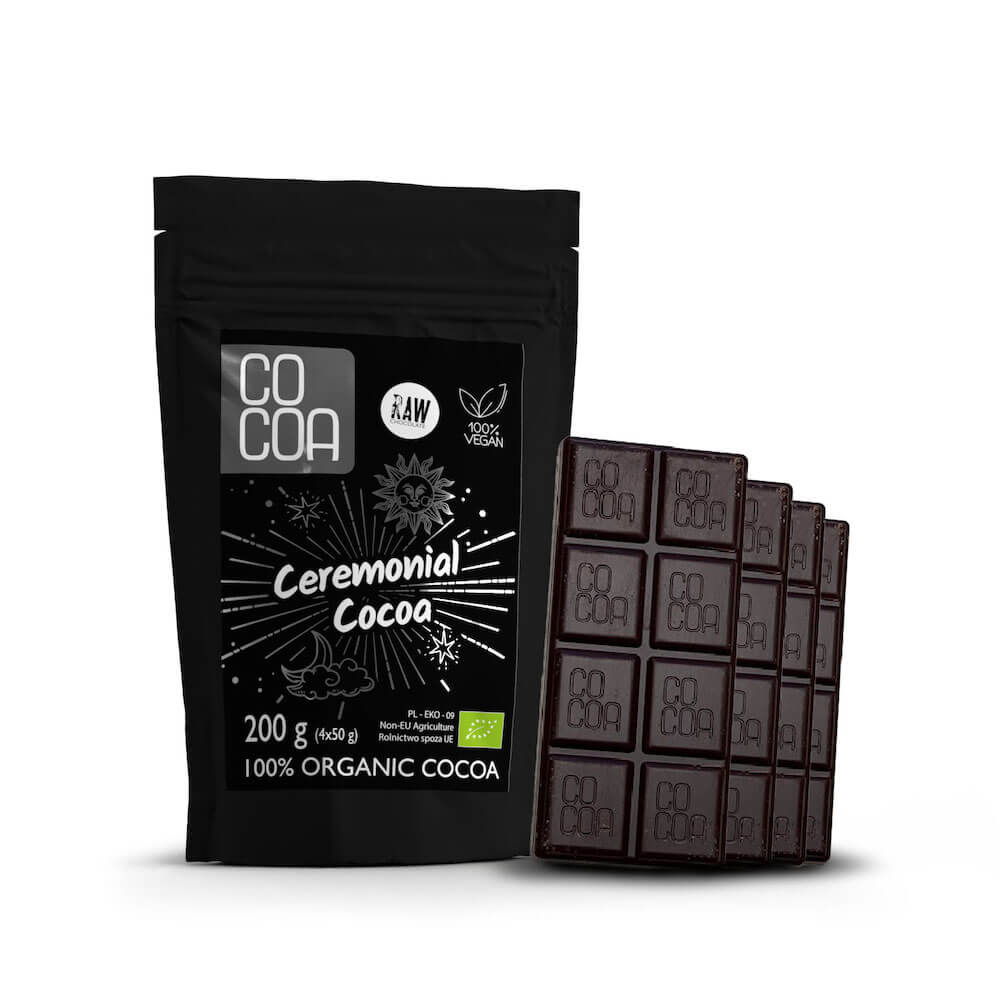
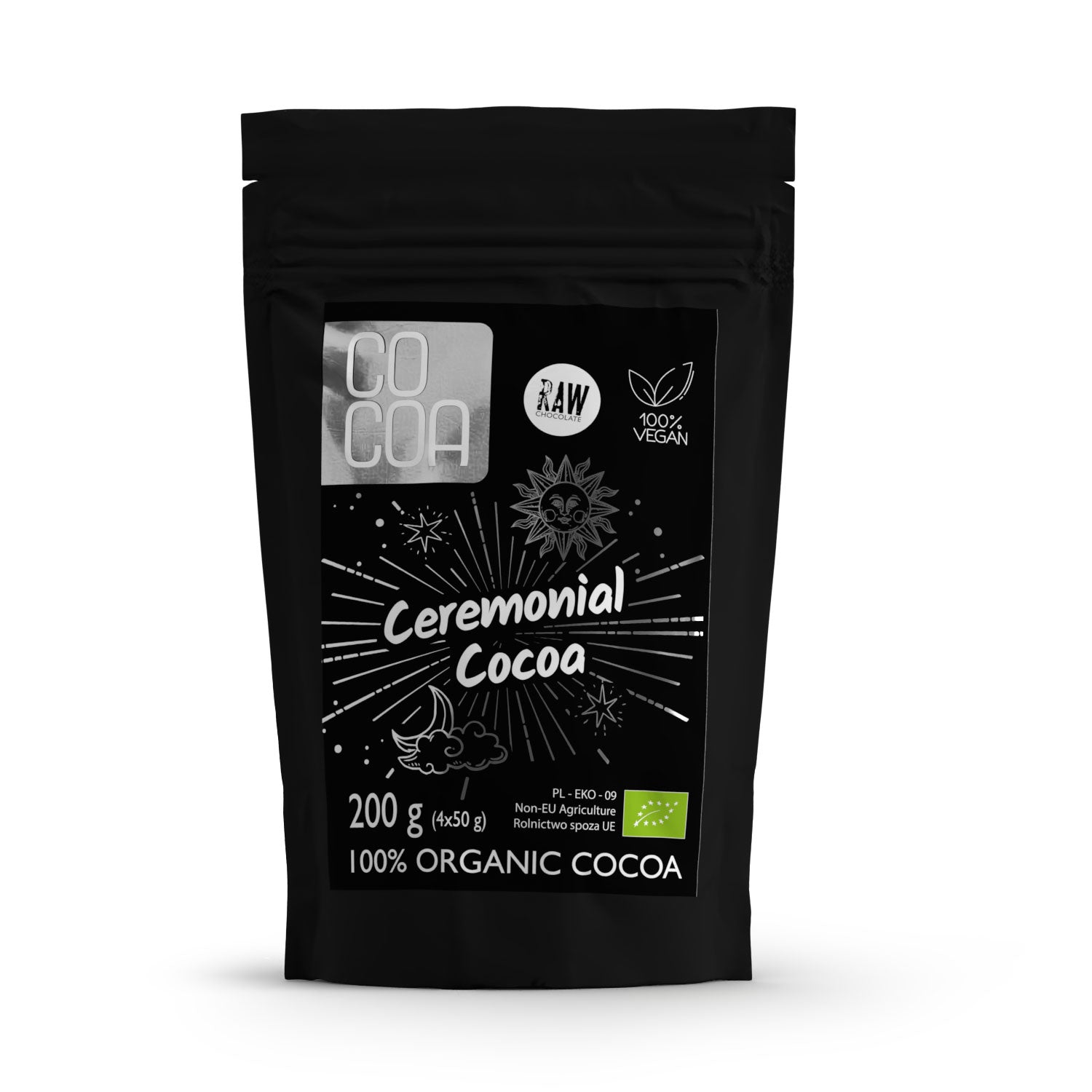
Organic Ceremonial Cacao (4 x 50 g) 200 g - Cocoa
5.2. What certificates should you look for?
Certificates are the easiest way to verify a producer's claims. When purchasing ceremonial cacao, it's worth looking for the following designations:
- BIO / Organic (EU organic certificate or USDA Organic) — confirms that the beans were grown without synthetic pesticides and artificial fertilizers, and the entire production chain is subject to regular inspections by an independent certifying body. This is the most important certificate from the perspective of raw material quality.
- Fair Trade — guarantees minimum purchase prices for farmers, prohibits child labor, and establishes environmental standards on the plantation. By buying Fair Trade certified cacao, you directly support the local community.
- Rainforest Alliance — a certificate emphasizing sustainable forest and ecosystem management, biodiversity protection, and workers' rights.
- Raw / Living Food — means that the product has not been subjected to temperatures above approximately 42–48°C. However, it is worth remembering that the "raw" certificate is not legally regulated in the EU like the BIO certificate — its credibility depends on the specific producer and certifying body.
Our customers' observations indicate that the BIO certificate combined with Fair Trade is the most frequently chosen combination among those who approach the purchase of ceremonial cacao consciously — it ensures both raw material quality and ethical sourcing conditions.
5.3. What to check on the label — ingredients and processing
The label of good ceremonial cacao should be very brief. The only ingredient should be cacao paste (cacao mass) or cacao beans — without added sugar, milk powder, palm oil, artificial flavors, or emulsifiers.
A few practical tips when reading the label:
- Look for terms like: 100% cacao mass, cacao paste, cacao liquor — these are different names for the same product.
- Avoid products that list de-fatted cacao or cacao powder as ingredients — this is not ceremonial paste, but a product after fat removal.
- Check if the producer provides information about the variety (Criollo, Trinitario) and country of origin — transparency in this regard is a good sign of quality.
- Roasting temperature rarely appears on the label, but it's worth looking for it on the producer's website — low roasting (below 50°C) is standard for ceremonial cacao.
5.4. Paste, powder, or nibs — which form to choose?
Ceremonial cacao is available in several forms, which differ in practicality and application profile. For preparing a traditional ceremonial drink, cacao paste is best—it contains the whole bean with all its natural fats and active compounds, and its creamy consistency when dissolved in hot water is difficult to replicate with other forms.

Ceremonial Cacao Perú Criollo - Chocante
Nibs (crushed beans) are a good option as an addition to granola, oatmeal, or yogurt—they retain the full profile of ingredients but are not suitable for preparing a drink without prior grinding. If you're looking for ceremonial cacao for baking or smoothies, nibs and paste will work equally well.
5.5. How to recognize high quality—taste and aroma
Good cacao paste should have an intense, deep flavor with noticeable notes of fruit, nuts, or delicate earthiness—depending on the variety and region of origin. The bitterness should be distinct but clean and non-irritating. If, after tasting raw paste, you mostly feel sourness or an unpleasant astringency—that's a sign of insufficient fermentation or poor quality raw material.
The aroma of freshly opened paste should be intensely chocolatey with fruity notes. A lack of aroma or the smell of rancid fat indicates an stale or improperly stored product.
It's worth trying several different varieties and origins to find the one that best suits your preferences—the differences between cacao from Peru, Guatemala, and Ecuador are clearly noticeable even to those without tasting experience.
If you don't know where to start—in our store you will find proven ceremonial cacao of various varieties and origins, which we select based on raw material quality and production transparency.
6. How to prepare ceremonial cacao at home?
Preparing ceremonial cacao does not require specialized equipment or experience—just cacao paste, hot water, and a blender.
Below you will find a basic step-by-step recipe, ready-made flavor variations, and a table of spice combinations worth trying.
6.1. Basic recipe—how to make ceremonial cacao?
This is a starting point for anyone beginning their journey with ceremonial cacao. Recipe for 1 serving:
- 15–20 g cacao paste (approx. 1.5–2 tablespoons grated or chopped)
- 250–300 ml water (heated to approx. 80°C—hot, but not boiling)
- sweetener to taste: a little honey, maple syrup, or agave syrup (optional)
- spices to taste: a pinch of cinnamon, chili, or vanilla (optional)
- Heat water to approx. 80°C—do not bring to a boil. Temperatures above 90°C do not significantly destroy cacao ingredients, but excessive boiling can change the texture of the drink and make fat emulsification difficult.
- Grate or chop the paste into small pieces—this will facilitate dissolution. You can also use a kitchen grater.
- Place the paste in a blender jar, pour hot water, and blend for 20–30 seconds on high speed. The blender emulsifies the cacao butter with water, creating a creamy, uniform drink with a characteristic foam.
- Add sweetener and spices according to your preferences. Sweeten gradually—the paste has an intense flavor, and often very little or no sweetener is needed.
- Serve immediately, preferably in a warmed mug or bowl.
Starting proportions: 10 g cacao per 300 ml water is a mild dose, good for first attempts. 20 g per 250 ml is a distinctly intense portion. Check what suits your body best—ceremonial cacao works differently depending on sensitivity to theobromine.

True Ceremonial Cacao - Drink of the Gods from Peru
6.2. Popular variants—recipes for different occasions
Below are four tried-and-tested versions worth trying. Each of them is a starting point—they are dosed for 1 serving, proportions can be freely adjusted.
Ceremonial cacao with plant milk
The mildest version for those just starting out or who prefer a creamy, less intense flavor.
- 15 g cacao paste
- 150 ml water (80°C)
- 150 ml coconut, almond, or oat milk (heated)
- a pinch of cinnamon and a little honey
Coconut milk gives the richest, thickest consistency. Oat milk is naturally sweeter and effectively balances the bitterness of cacao. Almond milk imparts a slightly nutty taste.
Ceremonial cacao with maca and cinnamon
A version for physically active people or those looking for an energizing drink before a workout.
- 20 g cacao paste
- 280 ml water (80°C)
- 1 teaspoon maca powder
- ½ teaspoon cinnamon
- a pinch of sea salt (enhances the cacao flavor)
Ceremonial cacao with chili—Aztec style recipe
Closest to the historical xocolatl drink—intense, spicy, unsweetened.
- 20–25 g cacao paste
- 280 ml water (80°C)
- a pinch of cayenne chili or a piece of dried chili
- a pinch of cinnamon
- optional: a few drops of vanilla extract
Add chili gradually and cautiously—in combination with cacao theobromine, the spiciness is perceived more intensely than usual.
Chilled ceremonial cacao for summer
A summer alternative—prepared the day before.
- 20 g cacao paste
- 300 ml water (80°C)
- a teaspoon of maple syrup
- a pinch of cinnamon or cardamom
Prepare the drink as in the basic recipe, cool to room temperature, then refrigerate for at least 2–3 hours. Serve with ice cubes. Do not dilute the drink with cold water before blending—cacao butter will not emulsify properly.

Ceremonial cacao can be prepared in many ways—from a classic hot drink to a chilled version with ice
6.3. What to combine ceremonial cacao with? Table of flavor combinations
Ceremonial cacao is a grateful flavor base—it pairs well with both warming spices and adaptogenic herbs. The table below will help you choose additions to your own preferences.
| Additive | Flavor profile | Effect / drink character | How much to add (1 serving) |
|---|---|---|---|
| Cinnamon | Spicy, warm, slightly sweet | Classic, mild, everyday | ¼–½ teaspoon |
| Chili | Spicy, warming | Intense, Aztec style | Pinch—use carefully |
| Cardamom | Floral, slightly citrusy | Aromatic, exotic | ⅛–¼ teaspoon |
| Vanilla | Sweet, creamy | Mild, dessert-like | Few drops of extract |
| Maca | Sweetish, slightly earthy | Energizing, pre-workout | 1 teaspoon (3–5 g) |
| Ashwagandha | Earthy, slightly bitter | Evening, calming | ½ teaspoon (approx. 300 mg) |
| Ginger | Pungent, spicy, fresh | Warming, autumnal | ⅛ teaspoon dried or a slice of fresh |
| Sea salt | Neutral—enhances flavor | Highlights cacao's depth, reduces bitterness | Pinch |
All mentioned superfoods are available in our superfoods category.
6.4. Most common mistakes when preparing ceremonial cacao
Based on our customers' observations, several mistakes recur most often, resulting in drinks with a flat taste or unpleasant consistency:
Boiling water instead of hot. Temperatures above 90–95°C do not destroy cacao, but boiling bubbles hinder proper fat emulsification during blending—the drink comes out less creamy. The optimal temperature is 80–85°C.
Stirring with a spoon instead of blending. Cacao paste contains approx. 50% fat, which does not mix with water without mechanical aid. Stirring with a spoon results in a drink with a visible layer of fat on the surface. A blender (even a hand-held one) emulsifies the drink in 20–30 seconds.
Too large a dose for the first time. Ceremonial cacao in a ceremonial dose (30–42 g) works distinctly—in individuals sensitive to theobromine, it can cause rapid heartbeat, dizziness, or nausea. Start with 10–15 g and observe your body's reaction.
Adding plant milk instead of water for blending. It's best to add milk after blending the paste with water, not before—cacao emulsification with pure water is more even, and then milk can be added to achieve the desired consistency.
Ceremonial cacao tastes best freshly prepared—just after blending, when the foam is still thick
7. Ceremonial cacao and contemporary wellness culture
Ceremonial cacao is experiencing a global renaissance today—and it's no accident. Growing interest in minimally processed foods, mindfulness practices, and conscious consumption has made a drink known for over 3000 years one of the symbols of the modern wellness movement.
Contemporary cacao ceremonies are organized worldwide—from yoga studio gatherings in Warsaw to transformational festivals in Latin America. Their format varies greatly: from intimate, meditative sessions in small groups to larger personal development workshops, corporate team-building events, or music events. The common denominator is intention—stopping, being present, and jointly drinking a thoughtfully prepared beverage. Modern ceremonies draw inspiration from Mayan and Aztec traditions but do not literally replicate them—it's more inspiration than reconstruction.

Ceremonial cacao is the perfect drink to share with loved ones
In an everyday context, ceremonial cacao is increasingly appearing as an alternative to coffee—a drink that provides a gentle, long-lasting stimulation without the distinct "jolt" and sudden energy crash typical of caffeine. Those who practice meditation and yoga appreciate it because—unlike coffee—it does not exacerbate anxiety and does not disrupt focus. In artisanal coffee shops and restaurants serving healthy food, ceremonial cacao appears on menus as a hot beverage, a base for smoothie bowls, or an ingredient in sugar-free desserts.
Ceremonial cacao also aligns with the conscious shopping trend—a product with organic and Fair Trade certification, sourced from small family farmers, is for an increasing number of consumers not just a taste choice, but also an ethical one. In our store, we observe that customers reaching for ceremonial cacao are increasingly asking about the specific origin of the beans and the name of the variety—a clear sign of growing awareness of what ends up in their cup.

Regardless of whether you treat ceremonial cacao as a morning ritual, a meditation drink, or simply a tasty alternative to powdered chocolate—its value lies in both its composition and the intention with which it is prepared. Try different varieties and origins available in our cacao category and find the one that best suits your daily rhythm.
8. FAQ—frequently asked questions about ceremonial cacao
8.1. Does ceremonial cacao contain caffeine?
Yes, but in much smaller quantities than coffee. A typical 20g serving of cacao paste provides about 12–40 mg of caffeine, depending on the variety and origin of the beans—for comparison, a single espresso contains about 60–80 mg.
The main stimulant in cacao is not caffeine, but theobromine—an alkaloid from the same chemical group, which acts more gently and for longer, without the characteristic "jolt" and sudden energy crash of coffee. People sensitive to caffeine generally tolerate ceremonial cacao well in doses up to 20g, but in the evening, it's advisable to limit consumption or avoid it entirely.
8.2. Can ceremonial cacao be drunk daily?
Yes—in doses up to 20g per day, ceremonial cacao is safe for healthy adults for daily consumption.
Large ceremonial doses (30–42g) are not recommended more often than a few times a week—due to the theobromine content, which in high amounts can cause undesirable effects such as rapid heartbeat or headaches.
It's also good to maintain a so-called "cacao-free window"—at least one day off per week—so that the body does not build up excessive tolerance to theobromine.
8.3. Is ceremonial cacao suitable for children?
In small amounts—yes, but with caution. Ceremonial cacao contains theobromine and caffeine, which is why it is not recommended as a daily drink for young children. Older children (over approximately 5-6 years old) can be given small portions—about 5-10 g of paste, heavily diluted with water or plant-based milk.
The European Food Safety Authority (EFSA) recommends a lower safe intake threshold for caffeine for children and adolescents than for adults—and the same precautionary principle applies to theobromine. If you have any doubts, it is worth consulting a pediatrician.
8.4. Can ceremonial cacao be used during pregnancy?
Ceremonial cacao in small doses is generally permissible during pregnancy, but it requires more caution than for non-pregnant individuals. It is recommended to limit the portion to about 10-15 g per day and to include cacao in the total daily caffeine balance from all sources—EFSA recommends that pregnant women do not exceed 200 mg of caffeine per day in total.
A serving of 20-28 g of paste provides about 25-40 mg of caffeine, so with moderate consumption, these values remain safe. Ceremonial doses (30 g and more) should be avoided during pregnancy—large amounts of theobromine can affect fetal circulation, especially in the third trimester.
If in doubt, it is best to consult your doctor.
8.5. How to store cocoa paste after opening?
Cocoa paste contains about 50% fat, which is a natural preservative—when stored correctly, it retains its freshness for many months. After opening, it is best to keep it in a tightly sealed container, in a dry and cool place, away from heat sources and direct light—a kitchen cabinet away from the oven works perfectly. The paste does not require refrigeration, although on hot days it can be placed there—in which case, before use, simply wait a moment for it to soften slightly.
Signs of spoilage include the smell of rancid fat or a distinct change in taste to an unpleasantly sour one. A white coating on the surface of the paste is usually a natural "fat bloom" and does not indicate spoilage of the product.
8.6. What is the difference between ceremonial organic cacao and regular organic cacao?
The BIO (organic) certificate refers only to the cultivation method—it confirms that the beans come from plantations free of synthetic pesticides and fertilizers. The term "ceremonial", however, refers to the quality of the bean, the variety, and the processing method—minimal processing, preservation of the whole bean with natural fat, and a specific flavor profile.
Cacao can be both organic and ceremonial (and this is a combination worth looking for), but the BIO label alone on cocoa powder does not make it a ceremonial product—the powder has still gone through the defatting process and is not suitable for preparing a traditional ceremonial drink.
8.7. Is "ceremonial grade" an official quality standard?
No—the term "ceremonial grade" is not legally defined or certified by any institution. It is an industry term that has become widespread in the last 15-20 years and is used to distinguish minimally processed cocoa pastes from industrial cocoa.
In practice, it usually means: whole bean without defatting, a specific variety (Criollo or Trinitario), specific geographical origin, and low roasting temperatures—but each producer can interpret these criteria slightly differently. Therefore, when purchasing, it is worth looking not only at the "ceremonial grade" label, but primarily at the ingredients (100% cocoa mass), BIO certificate, variety, and country of origin.
9. Summary
Ceremonial cacao is a product that combines several things at once: a rich history spanning over 3,000 years, a specific and well-documented composition of active compounds, and practical versatility in the kitchen. Its value lies not in magical properties, but in what it actually is—minimally processed, full-fat cacao that retains what industrial production usually removes.
If you are looking for a natural alternative to coffee, an ingredient for baking and smoothies, or simply want to consciously choose a product with a specific origin and certifications—ceremonial cacao is a choice with solid foundations. Start with a small dose, observe your body's reaction, and experiment with the taste.
In our store, you will find proven ceremonial cacao of various varieties and origins—from delicate Criollo from Peru to more intense varieties from Ecuador and Guatemala. We select each product based on its composition, certifications, and manufacturer transparency.
10. Sources
Below is a list of scientific and institutional sources on which the claims in this article are based.
- Oracz J. et al., Exploring the Therapeutic Potential of Theobroma cacao L.: Insights from In Vitro, In Vivo, and Nanoparticle Studies on Anti-Inflammatory and Anticancer Effects, PMC11590920, 2024.
https://pmc.ncbi.nlm.nih.gov/articles/PMC11590920/ - Katz D.L. et al., Cocoa and Chocolate in Human Health and Disease, Antioxidants & Redox Signaling, PMC4696435, 2011.
https://pmc.ncbi.nlm.nih.gov/articles/PMC4696435/ - Smit H.J., Theobromine and the Pharmacology of Cocoa, Handbook of Experimental Pharmacology, vol. 200, 2011. PMID: 20859797.
https://pubmed.ncbi.nlm.nih.gov/20859797/ - Nehlig A., The Neuroprotective Effects of Cocoa Flavanol and Its Influence on Cognitive Performance, PMC3575938, 2013.
https://pmc.ncbi.nlm.nih.gov/articles/PMC3575938/ - USDA FoodData Central — Cocoa powder, unsweetened, FDC ID 169593.
https://fdc.nal.usda.gov/fdc-app.html#/food-details/169593/nutrients - Baggott M.J. et al., Psychopharmacology of Theobromine in Healthy Volunteers, Psychopharmacology, PMC3672386, 2013.
https://pmc.ncbi.nlm.nih.gov/articles/PMC3672386/ - EFSA NDA Panel, Scientific Opinion on the Safety of Caffeine, EFSA Journal 2015;13(5):4102.
https://efsa.onlinelibrary.wiley.com/doi/10.2903/j.efsa.2015.4102 - Commission Regulation (EU) No 432/2012 of 16 May 2012 establishing a list of permitted health claims made on foods, other than those referring to the reduction of disease risk and to children's development and health.
https://eur-lex.europa.eu/legal-content/PL/TXT/?uri=CELEX%3A32012R0432