The article was updated on 03.04.2026
Mouth tapes and nasal strips are simple, non-invasive accessories that help maintain proper breathing during sleep — through the nose instead of the mouth. They can be helpful for habitual snoring, dry throat upon waking, and general nighttime discomfort resulting from mouth opening during sleep. However, they are not a treatment for sleep apnea — this is an important distinction that we will discuss in detail later.
Below you will find reliable information on how both types of patches differ, how they work, and for whom they are intended — as well as when a doctor's visit is needed instead of a patch. The article is based on scientific publications, including a systematic review from 2025 on the safety of using mouth tapes.
1. What are mouth tapes and nasal strips — and how do they differ?
Mouth tapes and nasal strips are two different products that are often confused or used interchangeably — yet serve entirely different purposes. It's important to understand this difference before purchasing, as choosing the wrong solution simply won't bring the desired effect.
1.1. Mouth tape — what is it and how does it work?
Mouth tape is a thin, flexible strip applied along the lips to keep the mouth closed during sleep. Its purpose is to limit airflow through the mouth and encourage nasal breathing — without force, without completely sealing the lips.
Most available models have a gentle, hypoallergenic adhesive that holds the lips closed, but can be easily removed at any time. Some tapes have a central opening or a special "H" shape that allows minimal mouth opening if necessary — this is an important safety feature.

Mouth tapes for sleeping 30 pcs. — Vilgain
1.2. Nasal strip — what is it and how does it work?
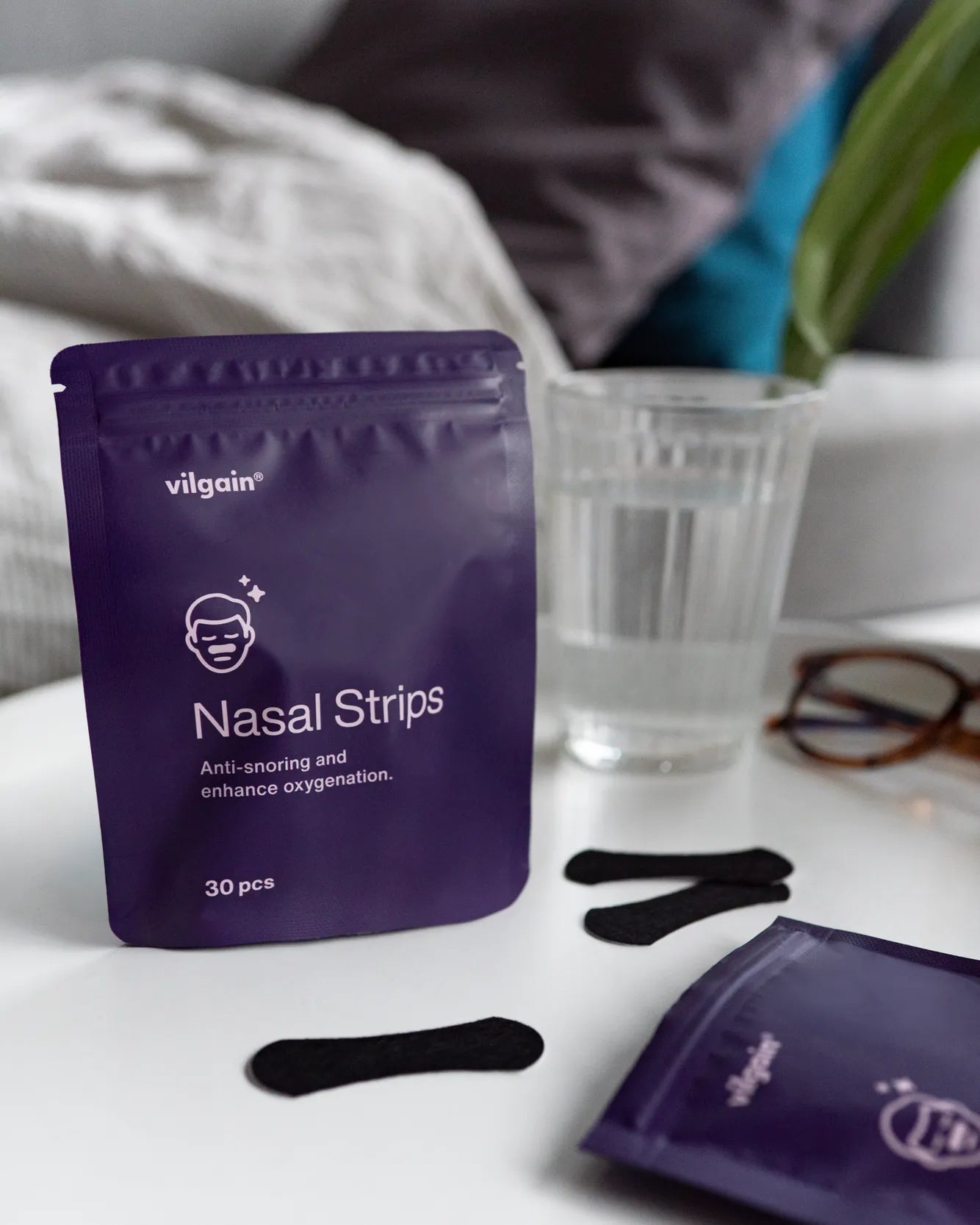
A nasal strip is an entirely different device — it does not close the mouth, but rather gently lifts the nasal alae, widening the airflow in the upper respiratory tract. It contains a spring-loaded strip that, when applied to the outside of the nose, tries to straighten, mechanically expanding the nostrils.
The effect is simple and immediate: more air flows through the nose with each breath. This is particularly useful for flattened nasal alae, deviated septum, or in cases of a stuffy nose when the mucous membrane is swollen.

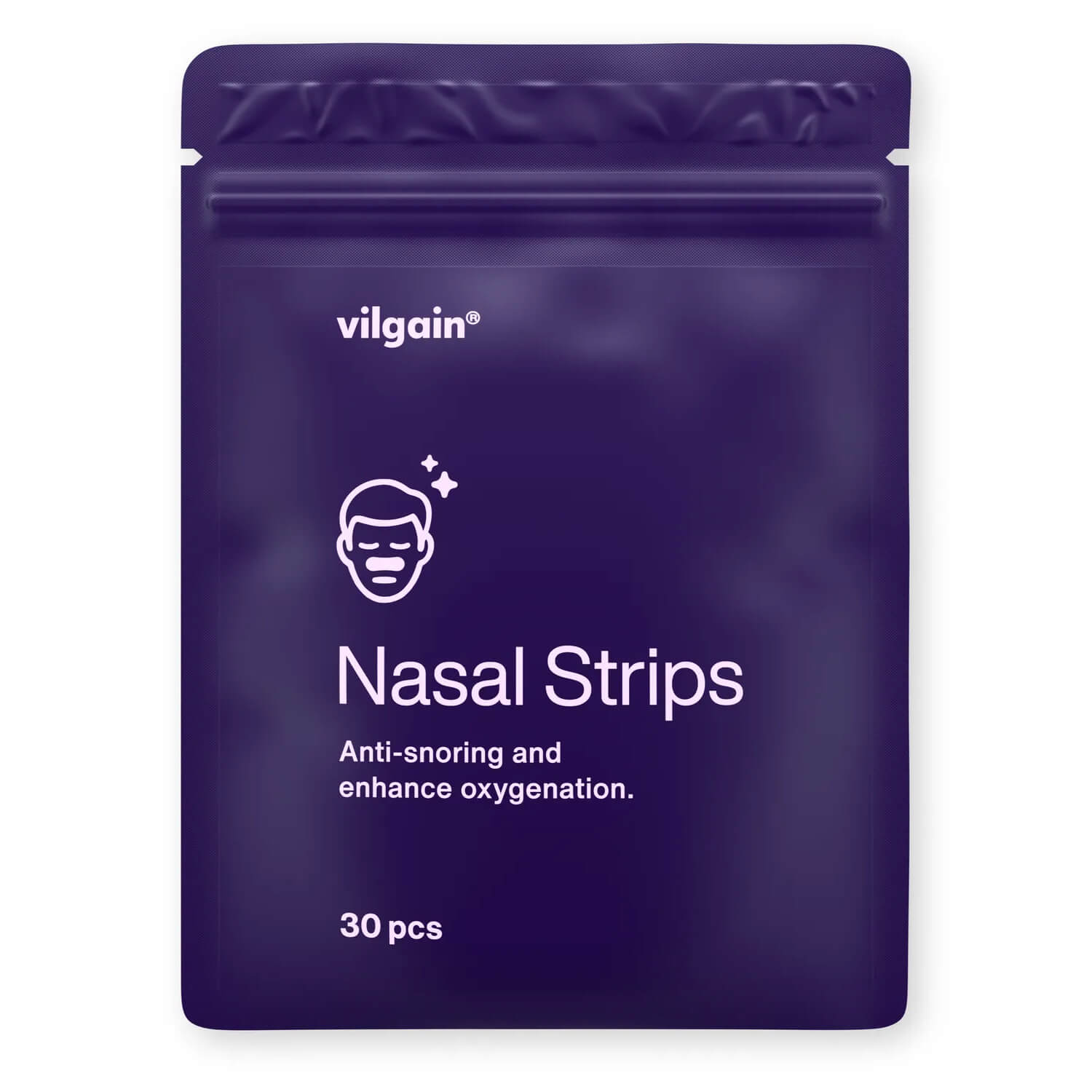
Nasal strips to facilitate breathing 30 pcs. — Vilgain
1.3. Mouth tape or nasal strip — which to choose?
Both products can complement each other, but they address different problems. The table below will help you choose the right solution depending on the situation.
| Mouth tape | Nasal strip | |
|---|---|---|
| Mechanism | Closes the mouth and forces nasal breathing | Expands nostrils, facilitating airflow through the nose |
| Where it sticks | On lips / around the mouth | On the outside of the nose |
| Main indication | Habitual mouth breathing at night, snoring | Obstructed nostril airflow, runny nose, deviated septum |
| When not to use | With a blocked nose, runny nose, serious breathing problems | With irritated or damaged nasal skin |
| Can they be combined? | Yes — with a clear nose, both tapes can work simultaneously | |
| For whom? | Snoring individuals, those who sleep with an open mouth, athletes working on breathing technique | Individuals with a runny nose, allergies, deviated septum; anyone who wants to facilitate nasal breathing |
2. Why is nose breathing healthier than mouth breathing?
The nose is not a random element of the respiratory system — it performs functions that the mouth is anatomically unable to replace. Scientific studies unequivocally confirm that chronic mouth breathing is associated with a whole range of unfavorable consequences, both for general health and for sleep quality.
2.1. The nose filters, humidifies, and warms the air — the mouth does not
The nasal cavity is equipped with cilia and mucous membranes that trap dust particles, pollen, bacteria, and viruses before they reach the lungs. Additionally, the nose humidifies and warms the inhaled air, so it reaches the respiratory tract already pre-prepared.
Mouth breathing completely bypasses this mechanism — dry, cool, and unfiltered air goes directly to the throat and trachea, irritating the mucous membranes. This is one of the reasons why people who sleep with an open mouth wake up with a dry throat, rough tongue, and a feeling of insufficient sleep.
2.2. What is nitric oxide and why is it important in nose breathing?
One of the most interesting — and best scientifically documented — properties of nasal breathing is the production of nitric oxide (NO). It is produced by the epithelial cells of the paranasal sinuses and under normal conditions reaches the lungs with each breath through the nose.
Nitric oxide acts locally as a vasodilator and promotes gas exchange in the lungs. Studies by Lundberg's team at Karolinska Institutet showed that during nasal breathing, significantly more NO reaches the lungs than during mouth breathing — and its autoinhalation is associated with a reduction in pulmonary vascular resistance and improved blood oxygenation.
NO produced in the sinuses also exhibits antibacterial activity and can support local defense mechanisms of the upper respiratory tract.
2.3. Mouth breathing and CO₂ balance in the body
Carbon dioxide (CO₂) is often mistakenly perceived solely as a byproduct of respiration. In reality, it plays a crucial role in regulating blood pH, oxygen transport to tissues (Bohr effect), and vasodilation.
The mouth allows for inhaling significantly larger volumes of air than the nose. With habitual mouth breathing at rest, hyperventilation — excessive expulsion of CO₂ — easily occurs, which disrupts acid-base balance and can paradoxically hinder tissue oxygenation. The nose, as a natural respiratory resistance, slows down inhalation and exhalation, helping to maintain the proper ratio of O₂ to CO₂.
2.4. What happens to the body when we chronically breathe through our mouths?
Chronic mouth breathing — especially at night — is associated with a whole range of side effects confirmed in studies:
- Dry mouth — leading to an increased risk of tooth decay, gum disease, and bad breath due to reduced saliva production
- Snoring and sleep disturbances — nocturnal mouth breathing is linked to a higher frequency of snoring and sleep apnea
- Respiratory tract irritation — lack of filtration and humidification increases the exposure of mucous membranes to irritants
- In children: changes in craniofacial development — long-term mouth breathing during developmental age can affect the formation of the jaw, dental arches, and head posture

3. How do mouth tapes and nasal strips work?
The mechanism of action of both types of patches is simple — but it's worth understanding it well to know what you can realistically expect from them, and when they won't replace a visit to a specialist.
3.1. How does mouth tape work?
Mouth tape acts as a gentle, mechanical "reminder" for the lip muscles — keeping them closed throughout the night. It does not stiffen the lips or completely block airflow, but effectively limits mouth breathing and directs inhalation through the nose.
In practice, this means that the body switches to its natural breathing pattern even without conscious effort from the user. As a result:
- the nose takes over the function of filtering, humidifying, and warming the air
- the tissues of the throat and soft palate have a chance to settle into a more stable position
- vibrations responsible for the sound of snoring are reduced
- the oral mucous membrane remains hydrated throughout the night

Mouth tapes for sleeping 30 pcs. — Vilgain
3.2. How does a nasal strip work?
The nasal strip contains a spring-loaded band placed inside the strip, which, when applied to the skin over the nostrils, tries to return to its flat shape. This elasticity lifts the nasal alae, thereby widening the nostril opening and reducing airflow resistance.
This is a purely mechanical action — the strip contains no active substances, does not chemically affect the mucous membrane, and does not cause dependence. The effect disappears after removing the strip.

Nasal strips to facilitate breathing 30 pcs. — Vilgain
Thanks to the wider opening of the nostrils:
- airflow through the nose becomes freer — especially with a runny nose, allergies, or flattened nasal alae
- tissue vibrations in the throat are reduced, which can limit snoring
- it's easier to maintain nasal breathing throughout the night, even with increased nasal resistance
3.3. Is it worth using both strips simultaneously?
Yes — and this is a strategy that some users find effective. The nasal strip increases the comfort of breathing through the nostrils, and the mouth tape ensures that the mouth remains closed. Both strips complement each other, especially for individuals who habitually breathe through their mouths and have a somewhat congested nose.
A necessary condition: the nose must be clear enough to breathe freely. Using mouth tape with blocked nostrils is contraindicated.
4. Who can benefit from nasal strips and mouth tapes?
Mouth tapes and nasal strips are not a solution for everyone — but for specific groups of users, they can make a clear, noticeable difference. Below we describe situations where using patches is justified, and those where a doctor's consultation is necessary first.
4.1. People who snore
Snoring usually results from vibrations of the soft tissues of the throat — the soft palate, uvula, and base of the tongue — caused by air flowing through partially narrowed airways. When the mouth is open during sleep, the tongue retracts, narrowing the pharyngeal space and intensifying vibrations.
Mouth tape, by keeping the mouth closed, can limit this mechanism. Nasal strips, in turn, increase airflow through the nostrils, reducing "suction" through the mouth. In people whose snoring is due to habitual mouth breathing, the effect can be noticeable from the very first night — although it should be noted that the cause is not the same for all snorers.
4.2. People who wake up with dry mouth and throat
Dry mouth upon waking is one of the most characteristic symptoms of nocturnal mouth breathing. Air flowing through an open mouth for several hours intensely dries the oral mucous membrane, reducing saliva production and creating an environment conducive to the multiplication of bacteria responsible for tooth decay and bad breath.
For these people, mouth tape works immediately — even on the first night, most users experience a significant improvement in comfort upon waking.
4.3. Athletes and physically active individuals
Some athletes — especially from running and endurance backgrounds — consciously train nasal breathing, treating it as a way to optimize performance. Mouth tape can be helpful as a tool to support the habit of nasal breathing during sleep, which translates into better nighttime recovery.
However, it is worth noting that research on the impact of nasal breathing on athletic performance focuses mainly on aerobic sports, and evidence for a direct improvement in performance is still limited and requires further research.

Nasal and mouth tapes to facilitate breathing (set 30+30 pcs.) - Vilgain
4.4. People with a runny nose, allergies, or a deviated septum
For this group, the primary product is a nasal strip — mechanical widening of the nostrils reduces respiratory resistance and facilitates airflow even with swollen mucous membranes. This solution is particularly useful seasonally — during upper respiratory infections or at the peak of pollen season.
In cases of deviated nasal septum, the effectiveness of the strip depends on the degree and nature of the deviation — if the problem is anatomically advanced, the strip may not provide sufficient relief, and an ENT consultation should be considered.
4.5. When strips are not enough — and when is a doctor's visit necessary?
- Suspected sleep apnea — if snoring is accompanied by breathing pauses, awakenings with a feeling of shortness of breath, excessive daytime sleepiness, or morning headaches, polysomnographic diagnosis is necessary. A mouth strip for undiagnosed or uncontrolled sleep apnea may be insufficient, and with nasal obstruction — potentially dangerous.
- Chronic nasal obstruction — requiring ENT evaluation (hypertrophy of turbinates, polyps, severely deviated septum).
- Respiratory system diseases — asthma, COPD, or other conditions where limiting airflow through the mouth may be risky.
- Children — always consult a pediatrician or ENT specialist before using strips on children.

5. How to use mouth and nasal strips — step-by-step instructions?
Proper application of the strips takes literally a few seconds, but a few simple rules determine whether they will effectively stay on all night and not irritate the skin.
5.1. How to apply a mouth strip?
- Clean and dry the skin. Wash your mouth and surrounding area, remove any remnants of balms, creams, and oils. Hypoallergenic adhesive adheres well only to dry, degreased skin — this is the most common reason for the strip coming off at night.
- Fit the strip to your mouth. Most models are shaped to fit the anatomy of the lips. Position it centrally so that it covers the gap between the lips across its entire width.
- Apply from the center outwards. Start by pressing the center of the strip, then gently smooth it towards the corners of your mouth — similar to applying a dressing strip. This will help avoid air bubbles under the adhesive.
- Check for comfort before falling asleep. The strip should keep your mouth closed but not cause tension or pain. If you feel discomfort — remove it and check if your skin was sufficiently clean and dry.
5.2. How to apply a nasal strip?
- Clean the skin of your nose. Remove sebum, sweat, and cosmetic residues — this applies especially to the bridge and wings of the nose, where the skin produces a lot of oil. You can use a cosmetic pad moistened with toner or a gentle cleansing agent.
- Dry thoroughly. The adhesive in nasal strips is designed to work on dry skin. Moisture — even minimal — significantly reduces its adhesion.
- Place the strip in the middle of your nose. The center of the strip should lie directly above the nostrils, and the springy inner strip should be across the nose, at the level of the wings. Do not apply the strip too high, near the bridge — there is nothing to lift there.
- Press the edges and wait a moment. After application, hold the edges of the strip with your fingers for a few seconds — the warmth of your skin activates the adhesive and improves adhesion.
- Check the effect. Inhale air through your nose — you will feel a distinctly freer flow. If you do not feel a difference, check if the strip is placed at the correct height.
5.3. What to avoid when using strips?
- Do not use a mouth strip if your nostrils are blocked — breathing solely through a blocked nose can be uncomfortable or impossible. In such a situation, choose a nasal strip or wait until the cold subsides.
- Do not apply to irritated or damaged skin — abrasions, rashes, allergic reactions, or active breakouts indicate waiting to apply.
- Do not use longer than recommended by the manufacturer — most strips are designed for a maximum of 8–12 hours. Wearing them for longer can irritate the skin or weaken the adhesive's grip.
- Do not ignore skin reactions — redness, itching, or a rash after removing the strip is a signal to discontinue the product and possibly consult a dermatologist. Although the materials used in the strips are hypoallergenic, individual reactions are possible.
- Do not use on children without consulting a doctor — this particularly applies to mouth strips.
6. What effects can be expected and after how long?
This is a question most people ask themselves before their first purchase. The answer depends on the problem you are struggling with and its cause — so it is important to have realistic expectations.
6.1. What can you feel from the first night?
Some effects are noticeable immediately — especially those related to the moisturization of the oral cavity and throat. People who previously woke up with dry mouth, rough tongue, or bad breath resulting from nocturnal mouth breathing most often notice a clear improvement after the first night of using the strip.
The reduction of snoring — if it results from opening the mouth during sleep — can also be noticed quickly. Partners of people using strips are often the first to notice the change.
6.2. When do more lasting effects appear?
Improved sleep quality, better regeneration, and more energy during the day are effects that build up gradually — as the body adapts to regular nasal breathing at night. Most users report a clear difference after 2–4 weeks of regular use.
It is also worth remembering that strips can help develop the habit of nasal breathing — over time, some people begin to breathe through their nose at night even without a strip, because muscles and tissues adapt to the new position.
6.3. What strips won't do — limitations to be aware of
An honest summary of the limitations is just as important as describing the benefits:
- Strips do not treat sleep apnea. If you have diagnosed obstructive sleep apnea (OSA), strips can at best be a supplement to treatment established by a doctor — most often with a CPAP machine or a mandibular advancement device. They cannot replace them.
- Strips do not remove anatomical causes. A significantly deviated nasal septum, polyps, or enlarged turbinates are problems requiring ENT evaluation — a nasal strip can temporarily facilitate breathing, but it will not change anatomy.
- Effects are not guaranteed for everyone. Snoring has many causes — not all of them result from opening the mouth during sleep. If you snore with your mouth closed (which you can check yourself or ask your partner to observe), a mouth strip probably will not bring a measurable change.

7. Frequently Asked Questions
Are mouth strips safe for children?
We do not recommend using mouth strips on children without prior consultation with a pediatrician or ENT specialist. Children's airways are anatomically narrower than adults', making any restriction of airflow through the mouth potentially more risky.
If your child breathes through their mouth at night, snores, or seems unrested, it is worth determining the cause first — enlarged tonsils, polyps, or allergies require separate treatment.
Can I use a mouth strip when I have a cold?
No — this is one of the primary contraindications. A mouth strip forces breathing exclusively through the nose, and with blocked nostrils, this can be impossible or highly uncomfortable. During a cold or upper respiratory infection, a nasal strip is a better choice, as it mechanically widens the nostrils and facilitates airflow — without blocking the mouth. Wait to use a mouth strip until your nose is freely clear.
Do mouth strips help with sleep apnea?
Mouth strips are not a treatment for sleep apnea and should not replace it. Sleep apnea is a condition requiring diagnosis and medical treatment — most often with a CPAP machine or a special oral appliance. A systematic review published in PLOS One (2025) showed that evidence for the effectiveness of oral occlusion in sleep apnea is minimal, and for individuals with nasal obstruction, it may even carry risks.
If you suspect sleep apnea, consult a doctor — before reaching for strips.
How long can nasal and mouth strips be used?
Strips are intended for single, nighttime use — manufacturers most often recommend wearing them for a maximum of 8–12 hours. They should not be used longer or reused, as weakened adhesive will not provide adequate adhesion, and adhesive residues may irritate the skin.
With regular use, it is worth giving the skin a break from time to time — especially if redness or itching occurs.
Can mouth strips be used during exercise or during the day?
Some people consciously practice nasal breathing during light physical activity — walking, yoga, or gentle running — and use mouth strips for this purpose. However, during intense aerobic exercise, the mouth is a natural airway that aids gas exchange when there is a high demand for oxygen, so using a strip during intense exercise is not recommended. If you want to train nasal breathing during the day, start with calm activities and always have the option to immediately remove the strip.
How to choose between a mouth strip and a nasal strip if I snore?
The key question is: do you snore with your mouth open or closed?
If snoring stops or decreases when you sleep with your mouth closed (you can check this yourself or ask your partner to observe) — a mouth strip will be an appropriate choice.
If you snore regardless of your mouth position, the cause is probably vibrations of tissues within the nose or throat itself — a nasal strip or a combination of both products might help here.
For persistent, loud snoring, it is always advisable to rule out sleep apnea with a doctor.
8. Summary — is it worth trying?
Mouth strips and nasal strips are simple, non-invasive products that can make a real, noticeable difference for specific individuals — especially if the problem is habitual mouth breathing at night, dry throat upon waking, or snoring resulting from opening the mouth during sleep.
Their action is based on well-documented physiology — nasal breathing is the natural, optimal way to ventilate the body, and mechanical support for this process at night can lead to better sleep and greater comfort upon waking.
At the same time, it is important to remember the limitations of these products: they do not replace diagnosis and treatment of sleep apnea, do not correct advanced anatomical problems, and do not work the same for everyone. If you have doubts about the cause of your breathing or sleep problems — the first step should be a visit to a doctor, not experimenting with a strip.
However, if your nose is clear, and the only problem is opening your mouth at night — trying them is simple, inexpensive, and safe. In our store, you will find mouth strips and nasal strips from Vilgain — made of hypoallergenic materials, with a gentle, skin-friendly adhesive.
9. Sources
- Lundberg JO, Farkas-Szallasi T, Weitzberg E et al. High nitric oxide production in human paranasal sinuses. Nature Medicine, 1995. PMID: 7585069
- Lundberg JO, Settergren G, Gelinder S et al. Inhalation of nasally derived nitric oxide modulates pulmonary function in humans. Acta Physiologica Scandinavica, 1996. PMID: 8971255
- Settergren G, Angdin M, Astudillo R et al. Decreased pulmonary vascular resistance during nasal breathing. Acta Physiologica Scandinavica, 1998. PMID: 9715735
- Weitzberg E, Lundberg JON. Humming greatly increases nasal nitric oxide. American Journal of Respiratory and Critical Care Medicine, 2002. PMID: 12119224
- Lundberg JO. Nitric oxide and the paranasal sinuses. The Anatomical Record, 2008. DOI: 10.1002/ar.20782
- Rhee J, Iansavitchene A, Mannala S et al. Breaking social media fads and uncovering the safety and efficacy of mouth taping in patients with mouth breathing, sleep disordered breathing, or obstructive sleep apnea: A systematic review. PLOS One, 2025. DOI: 10.1371/journal.pone.0323643
- Yoon A et al. Effects of Nasal and Oral Breathing on Respiratory Muscle and Brain Function: A Review. Thoracic Research and Practice, 2025. PMC: PMC12047190