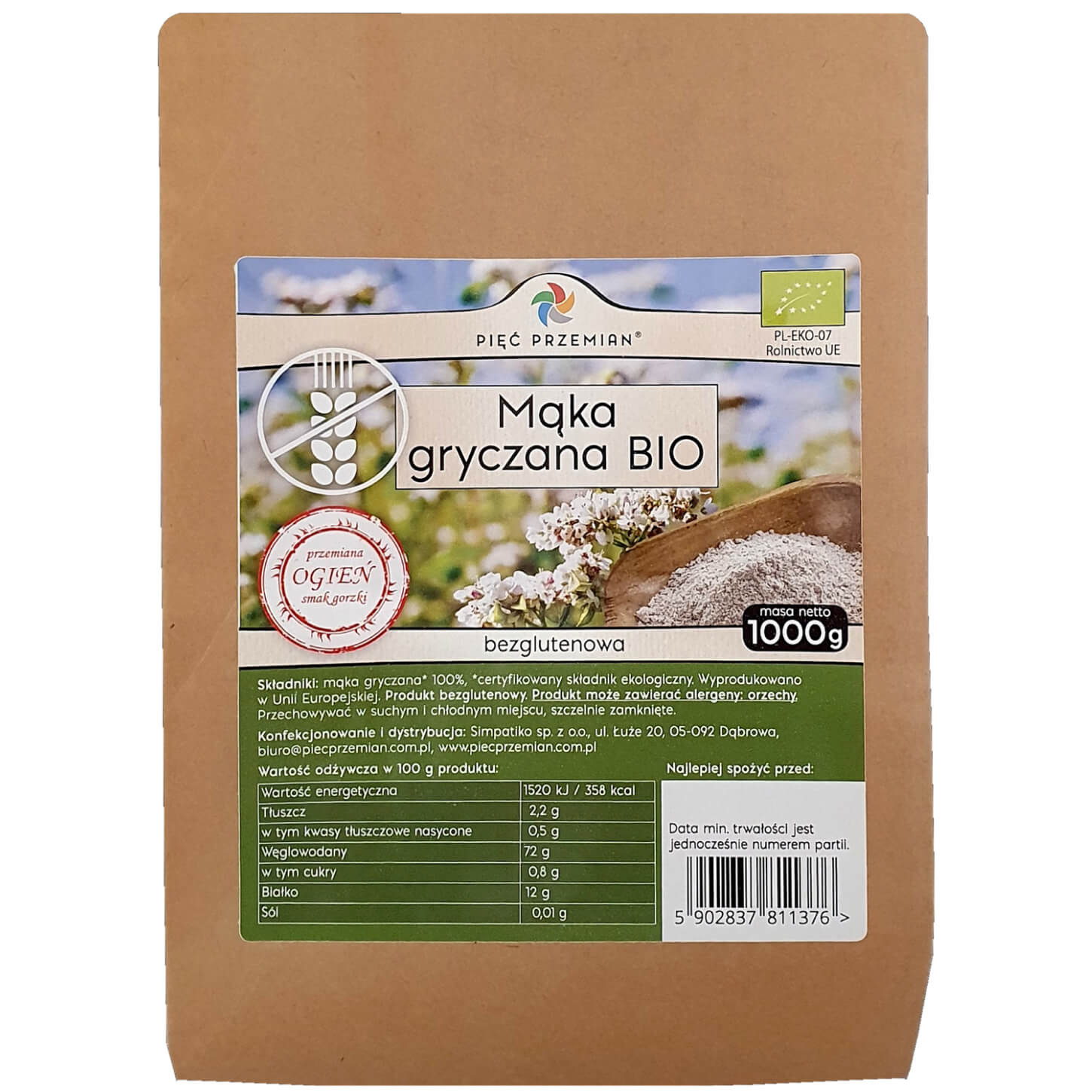
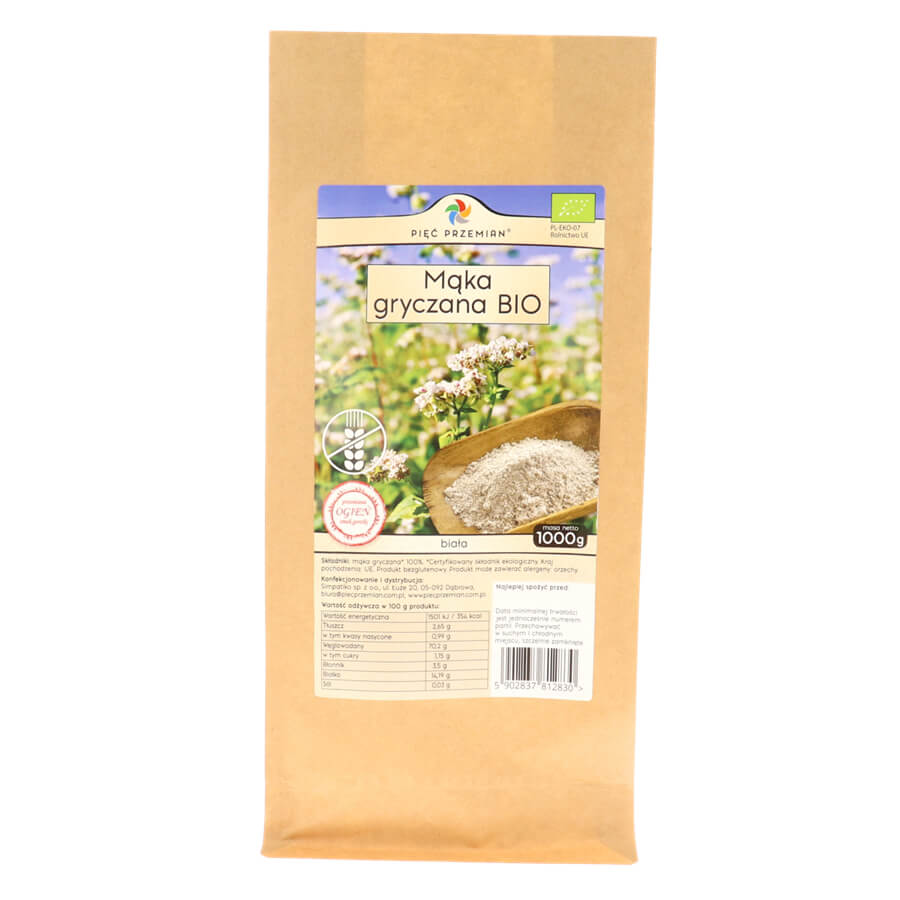
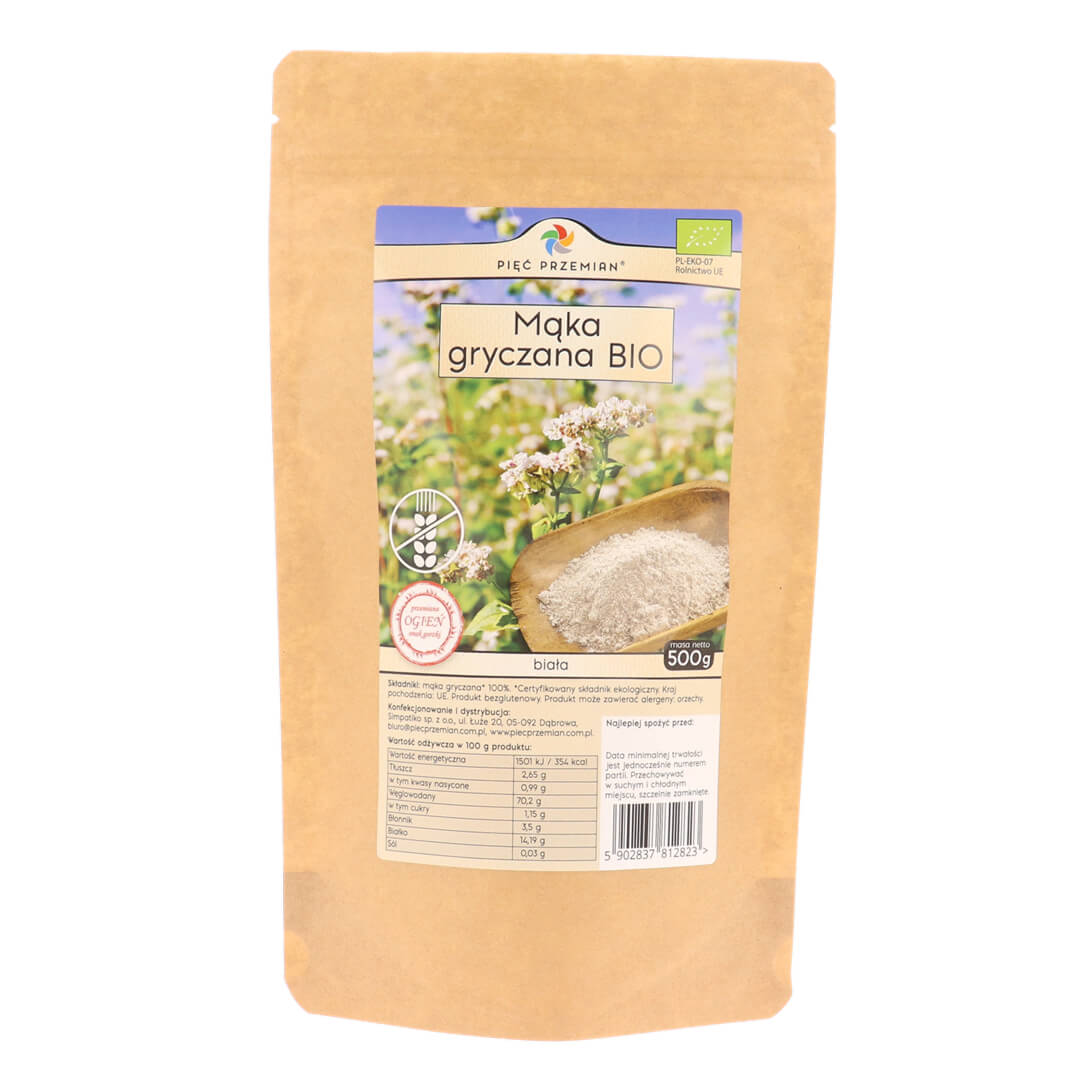
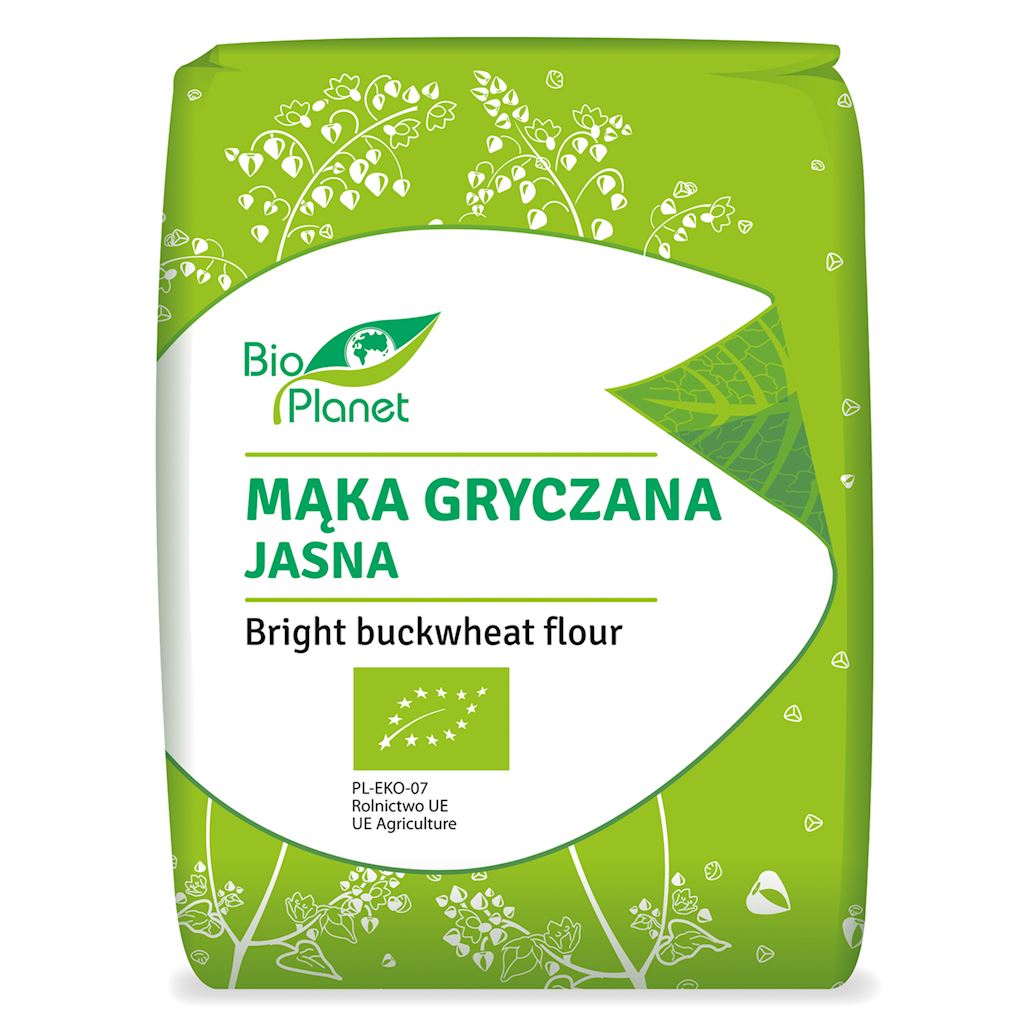
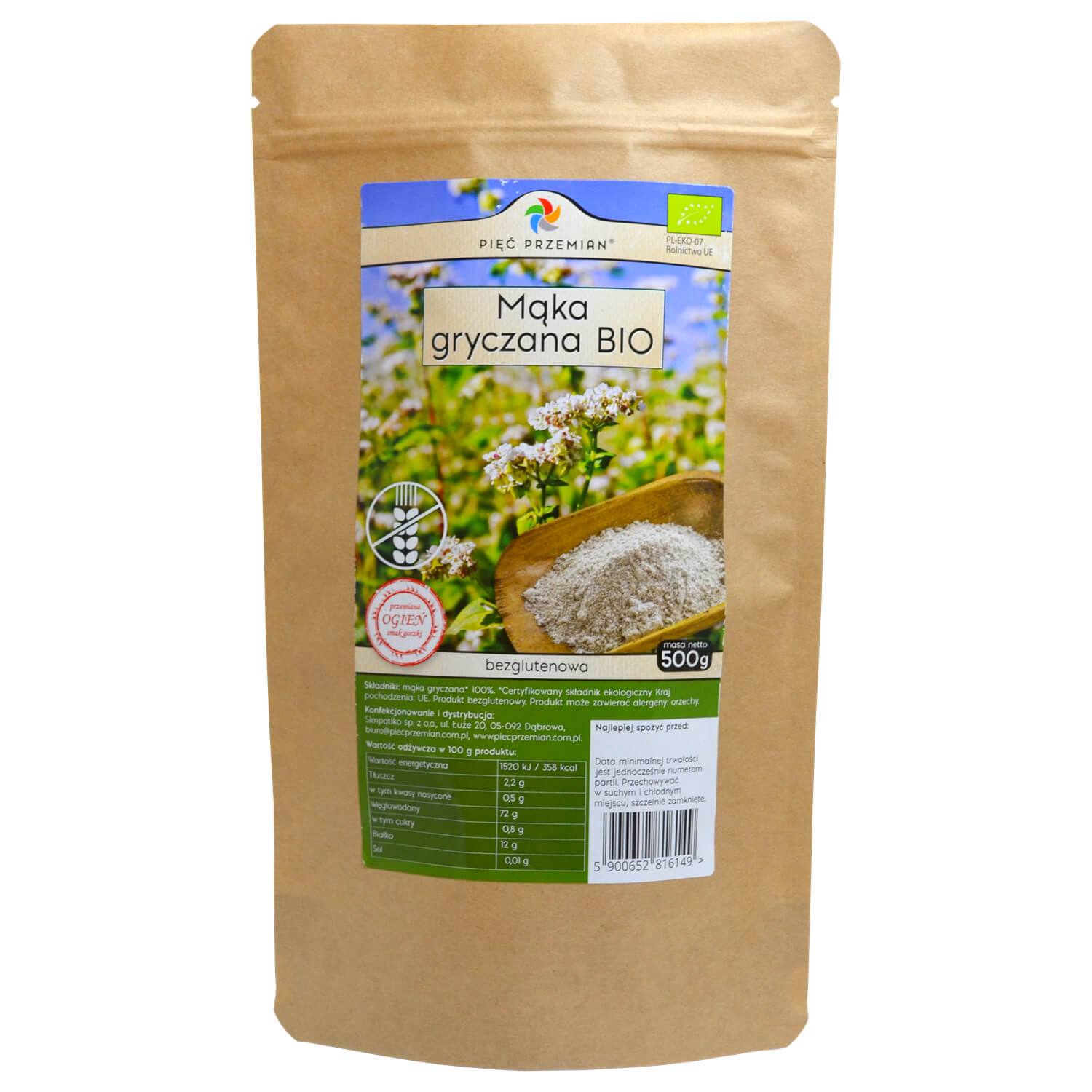
Buckwheat flour is a natural product that deserves attention and appreciation for its nutritional, flavor, and culinary properties. It is naturally gluten-free, which is why its properties and nutritional values should be appreciated by those on a gluten-free or vegetarian diet.
In our online store, you will find various types of gluten-free buckwheat flour sourced from certified farms. We invite you to learn a few facts about buckwheat flour, its nutritional properties, how to prepare it, and how to use it in the kitchen 😊
What is gluten-free buckwheat flour?
Buckwheat flour is a product made from ground buckwheat grains, which is one of the oldest and most valuable grains grown in the world. Buckwheat is a plant belonging to the Polygonaceae family, not to grasses like most cereals. Therefore, buckwheat does not contain gluten and is safe for people with celiac disease or gluten intolerance.
Organic buckwheat flour is characterized by a grey-brown color, which gives products made from it a darker hue. The taste of buckwheat flour is distinctive and resembles the taste of buckwheat groats. It also has a specific aroma that some people may find unpleasant. To soften its scent, you can toast it in a dry pan before use.

Organic buckwheat flour can be produced from different varieties of buckwheat, such as white, black, or green. White buckwheat flour is the mildest in taste and the lightest in color. Black buckwheat flour is the most intense in flavor and the darkest. Green buckwheat flour is medium in taste and color.
It can also be made from hulled or unhulled buckwheat grains. Hulled grains are stripped of the hard husk that protects the grain from pests and diseases. Unhulled grains retain the husk, which adds more fiber and crunch to products made from buckwheat flour.
It is a product that deserves attention and appreciation for its nutritional, flavor, and culinary properties. Gluten-free buckwheat flour is rich in protein, fiber, vitamins, and minerals. It is suitable for baking cakes, cookies, muffins, waffles, or pancakes. It adds fluffiness and moisture to dishes, as well as a nutty aftertaste.
Properties of gluten-free buckwheat flour
Buckwheat flour is a gluten-free flour that has many health and beauty benefits. It is rich in protein, fiber, B-group vitamins, and minerals such as magnesium, iron, zinc, and copper. It also has antioxidant and anti-inflammatory effects.
Here are some of the properties of buckwheat flour:
- Lowers cholesterol and the risk of heart disease - organic buckwheat flour contains plenty of dietary fiber, which binds to cholesterol in the intestines and prevents its absorption into the blood. This helps lower bad LDL cholesterol and protects against atherosclerosis and heart attacks. It also provides magnesium, which improves the function of the heart and blood vessels.
- Regulates blood sugar levels and prevents diabetes - buckwheat flour has a low glycemic index, which means it does not cause a sharp rise in blood sugar levels after consumption. It also provides protein that stabilizes glucose and insulin levels in the body.
- Improves digestive system function and prevents constipation - it is a source of soluble and insoluble fiber that supports digestion and intestinal peristalsis. It helps maintain proper bacterial flora in the gut and prevents the growth of pathogens.
- Supports the nervous system and improves mood - buckwheat flour is rich in B-group vitamins that support the nervous system. It also contains tryptophan, an amino acid that is a precursor to serotonin, the hormone of happiness. Consuming buckwheat flour can therefore improve memory, concentration, sleep quality, and mood.
- Strengthens bones and teeth - buckwheat flour provides calcium, phosphorus, magnesium, and silicon, which are essential for building and maintaining healthy bones and teeth.
- Nourishes skin and hair - buckwheat flour contains biotin, vitamin E, and zinc, which are important for skin and hair health. These ingredients moisturize the skin, soothe irritation, and have anti-inflammatory and anti-aging properties. Buckwheat flour also strengthens hair, prevents hair loss and breakage, and gives it shine.
As you can see, organic buckwheat flour has many health and beauty benefits. It is worth including it in your diet and enjoying its taste and properties 😊
How to use organic buckwheat flour in the kitchen?
Gluten-free buckwheat flour is very versatile and can be used for many different dishes in the kitchen. Here are a few ideas for what you can make with buckwheat flour:
- Gluten-free Mexican-style buckwheat pancakes. This delicious dish consists of thin buckwheat flour crepes stuffed with a filling of minced meat, beans, corn, and tomato sauce. You can serve them with salad, avocado, or plain yogurt.
- Gluten-free buckwheat brownie. This is the perfect dessert for those with a sweet tooth who want to avoid gluten and sugar. Buckwheat brownies are moist, chocolatey, and aromatic. To prepare them, you only need a few ingredients, such as buckwheat flour, natural cocoa, xylitol, plant-based milk, coconut oil, and natural chocolate.
- Gluten-free bread. If you are looking for a simple recipe for gluten-free bread that tastes like traditional wheat bread, this recipe is for you. Buckwheat flour bread is fluffy, soft, and has a crispy crust. To make it, you only need buckwheat flour, water, yeast, sugar, salt, and chia seeds or flaxseed.
- Buckwheat yeast cake. This is another variant of yeast cake using buckwheat flour, which is light and healthy. This cake contains no fat or eggs, only buckwheat flour, yeast, water, cane sugar, and fruit for decoration. You can choose any seasonal fruit or preserves to vary the flavor of this cake.
As you can see, gluten-free buckwheat flour offers many opportunities for culinary creativity. You can use it for both savory and sweet dishes. If you want to try new flavors and avoid gluten, buckwheat flour is the perfect choice for you.
Does organic buckwheat flour contain gluten?
Organic buckwheat flour is a product made from ground buckwheat grains, which are naturally gluten-free and safe for people with celiac disease or gluten intolerance. However, buckwheat can become contaminated with gluten during cultivation, harvesting, transport, or processing. Therefore, it is worth checking whether a given product has a gluten-free certification. Such flours are produced in an environment separated from other raw materials and are tested for gluten content.