

Description
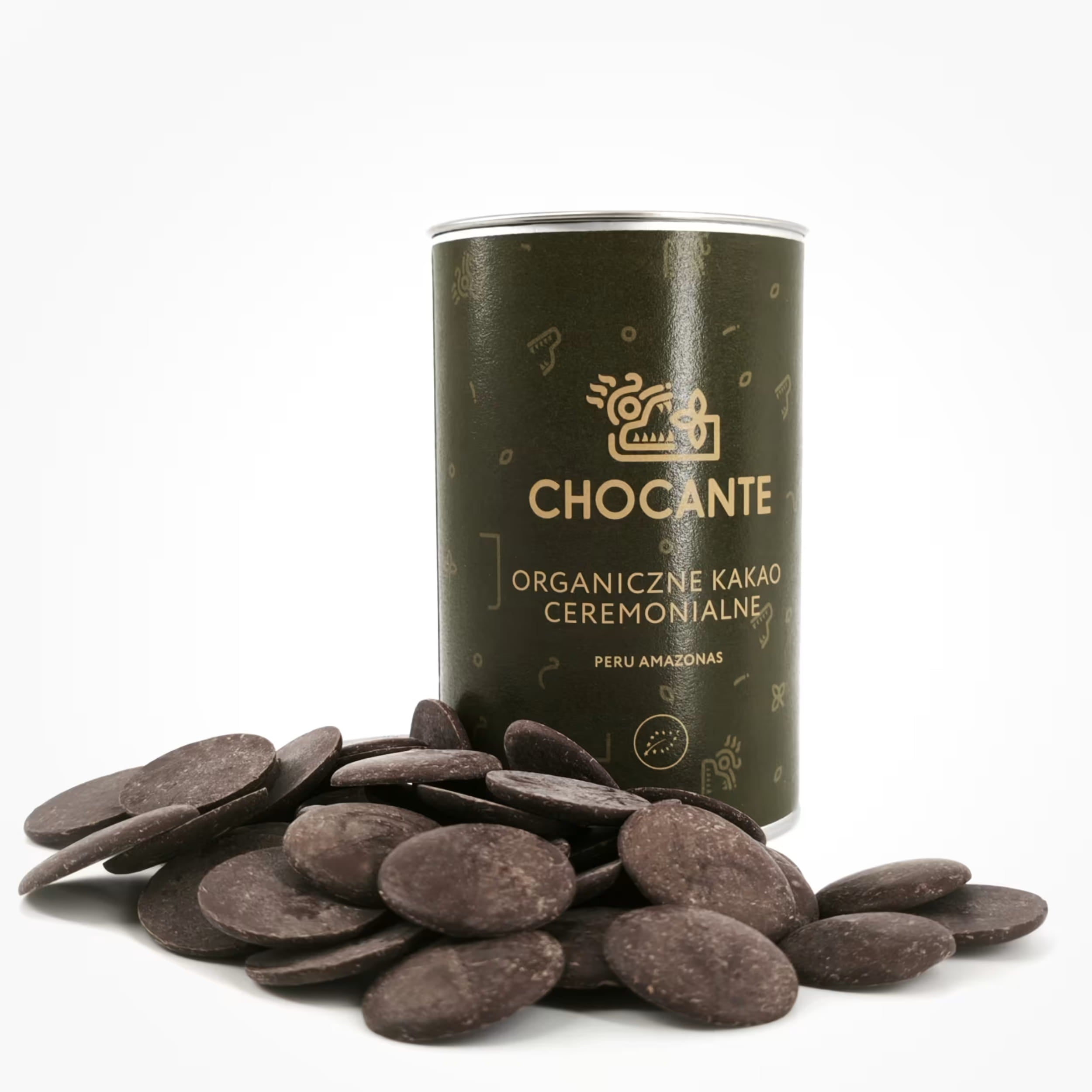
Ceremonial Cacao Perú Amazonas Organic 200g - Chocante
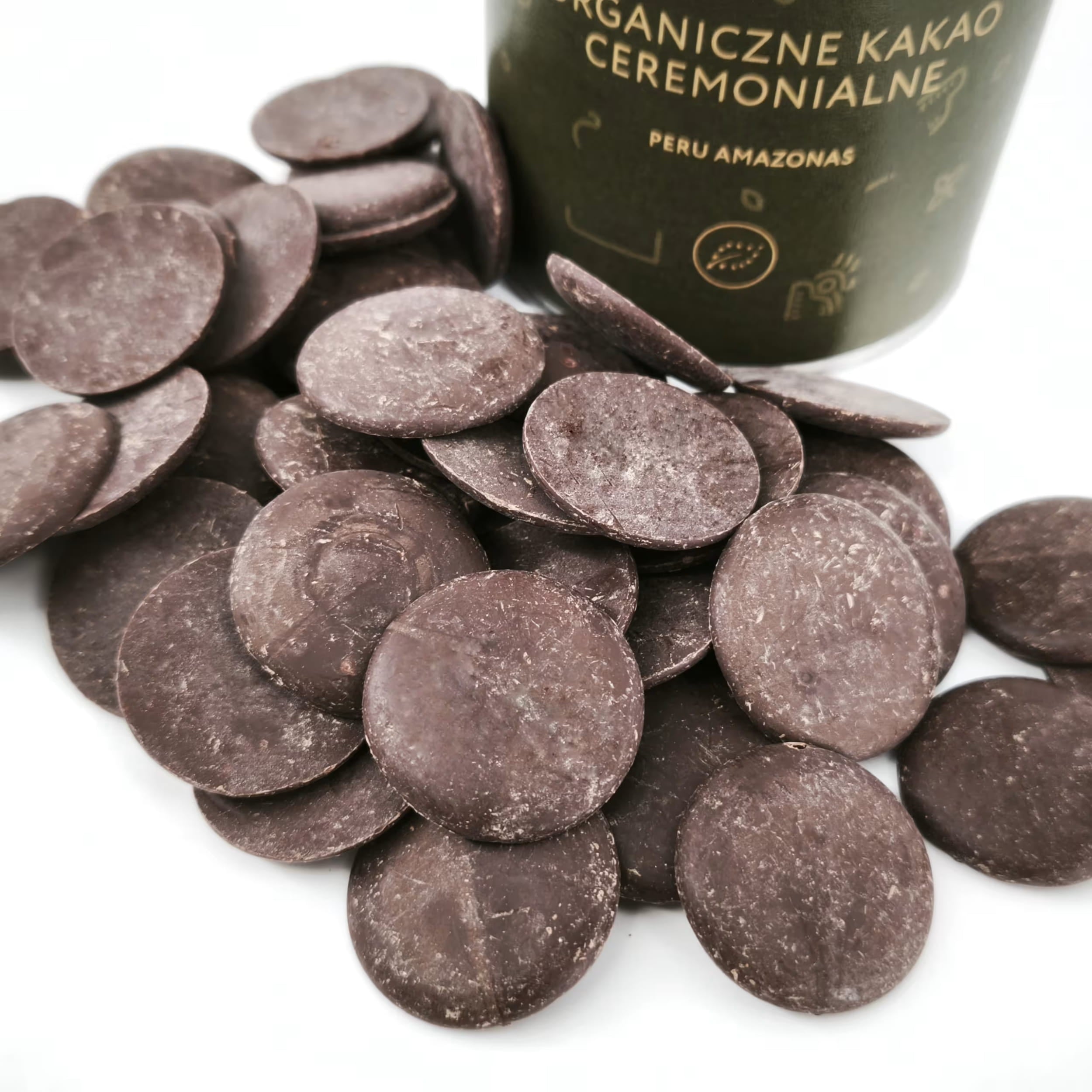
Ceremonial cacao (full-fat cacao paste, cacao mass) Perú Amazonas Organic comes from the heart of the Peruvian Amazon - from the regions of Junín, Ayacucho, Cusco, and Ucayali. The paste is made from ground, fermented, and dried cacao beans from certified organic farms - with no added sugar or other ingredients, 100% cacao.
The cacao comes from native Peruvian cacao varieties - including Chuncho and the VRAE-15 and VRAE-99 lines - grown on a small scale by local communities in the Apurímac, Ene, and Mantaro river valleys (VRAEM region) and in La Convención province. Chuncho is one of the oldest native cacao varieties in Peru, known for its distinct, complex flavor and traditionally cultivated by the Machiguenga community.
- Variety: Chuncho (VRAE-15, VRAE-99)
- Taste: Slightly dry, semi-sweet
- Origin: Peru, Junín, Ayacucho, Cusco, Ucayali regions
- Packaging: Tin
Origin
The beans come from certified organic plantations and farms covered by the Rainforest Alliance program, which ensures high raw material quality while respecting the local environment. Cacao trees grow here in the varied microclimate of the Amazon, at an altitude conducive to the slow ripening of the fruits.
The Chuncho variety constitutes only a small percentage of Peruvian cacao production - these are trees with lower yields than hybrid crops, grown mainly by small, family producers, which allows for maintaining artisanal quality.
Flavor and Aroma Profile
Perú Amazonas Organic cacao is distinguished by a deep, chocolatey aroma with notes of tropical fruits (e.g., mango, pineapple) and a delicate, nutty-caramel aftertaste. Subtle hints of vanilla and flowers appear in the background. The bitterness is balanced by a gentle sweetness, and the paste itself - when heated - has a smooth, velvety consistency.
Ceremonial Cacao - Tradition and Composition
Cacao bean paste (Theobroma cacao), known as ceremonial cacao, is a form of cacao preparation traditionally used in rituals by Central and South American cultures, including the Maya and Aztec peoples, for whom cacao had significant cultural and symbolic importance. Today, this form of paste - without added sugar or other ingredients - is used both in ceremonial practices and as a base for hot chocolate or other cacao beverages.
Cacao beans naturally contain theobromine - an alkaloid with a mild stimulating effect, significantly weaker than caffeine - as well as polyphenols and flavanols, compounds present in raw, unprocessed cacao.
Usage
Cacao paste can be used not only to prepare a classic ceremonial drink but also as a base for hot chocolate, an addition to smoothies or cocktails, an ingredient in homemade desserts (e.g., brownies, chocolate cake), or savory sauces.
Ingredients
Cacao paste (ground cacao beans)* 100% (*certified organic ingredient)
Nutritional value of the product per 100 g
| Energy value: | 2380 kJ / 568 kcal |
| Fat: of which saturated fatty acids: |
53 g 32.3 g |
| Carbohydrates: of which sugars: |
13.02 g 3 g |
| Fiber: | 14.7 g |
| Protein: | 28.1 g |
| Salt: | 0.05 g |
Preparation Method
Break off about 20g of cacao from the block and chop it finely, then pour into a tall container - a ceremonial dose is usually 40-50g per person. Heat 250ml of water or plant-based drink to 70-80°C and pour over the cacao. Add a pinch of salt and, if desired, cinnamon, cardamom, or chili. Blend for 20-30 seconds until the drink is smooth and covered with foam. For a smaller portion, you can also dissolve about 10g of cacao in 150ml of hot water or plant-based milk (80-90°C).
Recommended storage conditions
Store in a dry and cool place, away from direct sunlight.
Additional information