Young barley
2 products
Showing 1 - 2 of 2 products
Organic young barley is a highly popular product from the superfoods family. Superfoods are food products that are characterized by an extraordinary amount of nutrients and numerous health benefits.
It is a nutrient-dense product obtained from the young shoots of common barley (Hordeum vulgare), usually harvested at the beginning of its vegetation, when the plant reaches about 15-20 cm in height.
Properties of young barley
Young barley has many health properties due to its wealth of vitamins, minerals, fiber, and chlorophyll. It is this last ingredient that gives it its green color.
What properties does organic young barley have and how can it support your health and beauty?
- Wealth of nutrients: Young barley is a source of many important nutrients, such as protein, vitamins (A, C, E, and K), minerals (calcium, iron, magnesium, potassium), and chlorophyll. Thanks to this, it can help supplement nutritional deficiencies and increase the overall immunity of the body.
- Supporting digestion: The chlorophyll contained in young barley can help improve digestion and prevent constipation. In addition, green barley contains digestive enzymes that can help better absorb nutrients from food.
- Antioxidant properties: Young barley contains antioxidants such as vitamin C, E, and beta-carotene, which help protect cells from the harmful effects of free radicals.
- Anti-inflammatory properties: Green barley contains substances with anti-inflammatory effects, such as saponins and polysaccharides, which can help soothe inflammation in the body. As a result, it can contribute to reducing the risk of inflammatory diseases, such as autoimmune diseases.
- Lowering blood sugar levels: Young barley contains fiber and substances with antioxidant effects that can help regulate blood sugar levels. Thus, it can be helpful in the prevention of diabetes and metabolic diseases.
- Improving skin appearance: The chlorophyll contained in young barley can help cleanse the body and prevent acne. In addition, it contains vitamin C, which is important for skin health.
Young barley grass or young barley juice?
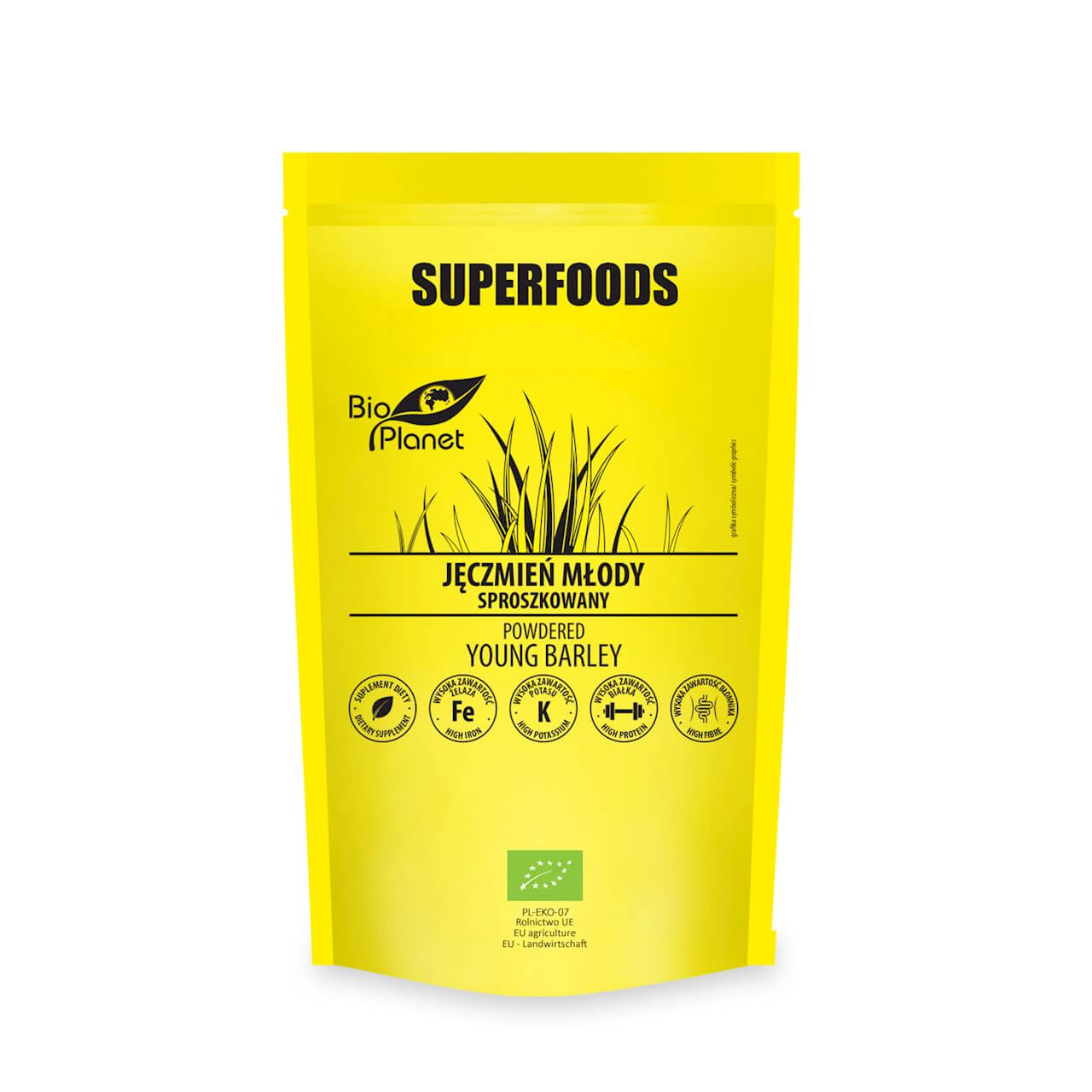
Young barley grass is the young barley shoots that are harvested during the growing season, usually 7-10 days after sowing. They are harvested in the form of grass and then can be dried and processed into powder or extract. Young barley grass contains many nutrients, such as protein, fiber, vitamins, and minerals, as well as chlorophyll.
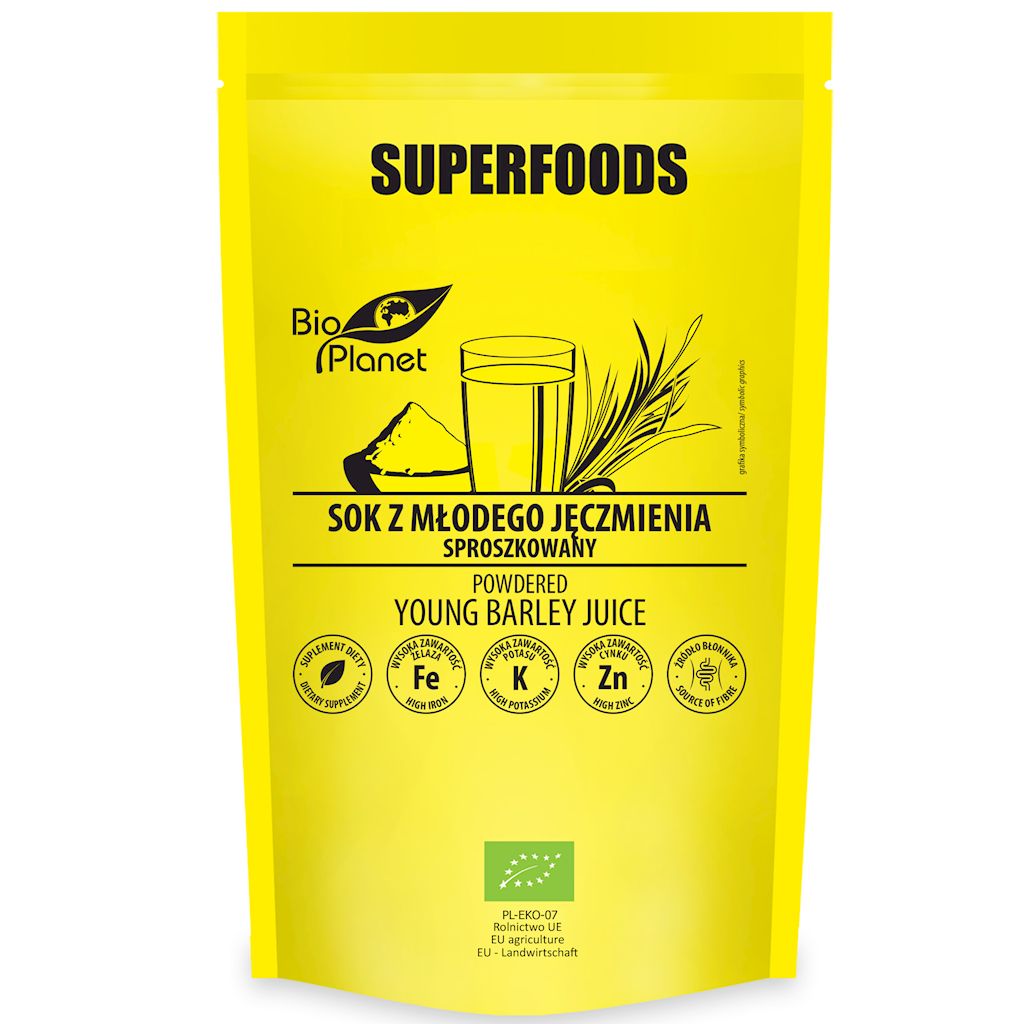
Young barley juice is a product obtained by pressing juice from young barley shoots. The process of obtaining the juice consists of squeezing juice from young barley grass using a special press or juicer. The juice can then be dried under pressure at a low temperature.
Powdered juice differs from powdered grass in that it has more bioactive substances and less fiber, which is removed during pressing. The grass is the basic raw material that can be immediately powdered or juiced beforehand.
BIO young barley
Young barley obtained from organic crops has many advantages and benefits for health and the environment. Here are a few reasons why it is worth choosing young barley from organic crops:
- No harmful chemicals ‒ pesticides or artificial fertilizers are not used in organic crops, which means that young barley obtained from such crops does not contain residues of pesticides, herbicides, or heavy metals that are harmful to health.
- High nutritional value ‒ young barley obtained from organic crops is characterized by a higher content of nutrients, such as protein, vitamins, and minerals, compared to barley from conventional crops.
- Beneficial impact on the environment ‒ organic crops contribute to environmental protection and sustainable development because they are not harmful to the soil and do not cause erosion.
- Supporting local farmers ‒ by choosing young barley from organic crops, we support local farmers and promote sustainable agriculture development.
- Better taste and quality ‒ young barley obtained from organic crops is characterized by better taste and quality, which results from the lack of use of artificial fertilizers and pesticides that can affect the taste and aroma of the plants.